Machinery downtime often starts with a small problem. A conveyor shakes. A gearbox runs hot. A loader makes a grinding sound. A production line slows down. These issues might look minor at first, but one worn bearing often creates a much larger repair job.
Heavy-duty bearings help machines carry high loads, handle pressure, and keep moving in tough operating conditions. They support equipment that works under weight, speed, impact, heat, dirt, and vibration. When you choose the right bearing, you help protect uptime, reduce repair delays, and keep your team focused on production instead of emergency fixes.
Why Machinery Downtime Starts With Small Component Failures
A bearing supports movement between machine parts. It reduces friction, carries loads, and helps rotating or moving parts stay aligned. When a bearing starts to fail, the machine often gives early signs. You might hear noise, feel vibration, see heat buildup, or notice slower movement.
Heavy-duty bearings matter in high-stress machinery because they handle forces that standard bearings might not support well. Construction equipment, agricultural machines, conveyors, cranes, crushers, and power transmission systems often run under heavy pressure. These machines need durable bearings built for high-load applications.
Bearing reliability affects machinery performance. A weak or mismatched bearing creates heat, friction, and wear. That wear spreads to shafts, housings, seals, belts, and gears. Over time, one small component failure affects the whole system.
What Makes Heavy-Duty Bearings Different From Standard Bearings
Heavy-duty bearings are built for stronger loads and tougher working conditions. They often use stronger bearing materials, larger contact areas, better sealing, or designs that support higher forces.
High-Load Bearings for Demanding Conditions
High-load bearings support equipment that carries or moves heavy weights. They help machines work under pressure without losing alignment. This matters for equipment that lifts, pushes, pulls, crushes, or carries materials for long hours.
Load capacity bearings should match the real force your machine faces. The average load is not enough. Some machines face shock loads during startup, stopping, lifting, or impact. These short bursts of pressure create serious stress on bearing parts.
Durable Bearings for Harsh Operating Conditions
Harsh operating conditions include dirt, moisture, heat, vibration, chemicals, and impact. These conditions shorten bearing life when the wrong product is used.
Sealed bearings help protect internal parts from contaminants. Stainless steel bearings help resist corrosion. Custom bearing materials support special working conditions where standard steel might wear too fast.
The right durable bearings help extend service life and support bearing failure prevention.
Common Heavy-Duty Bearing Types Used in Industrial Equipment
Different machines need different bearing products. A good bearing selection starts with the type of load and motion involved.
Roller Bearings for Heavy Equipment Bearings Applications
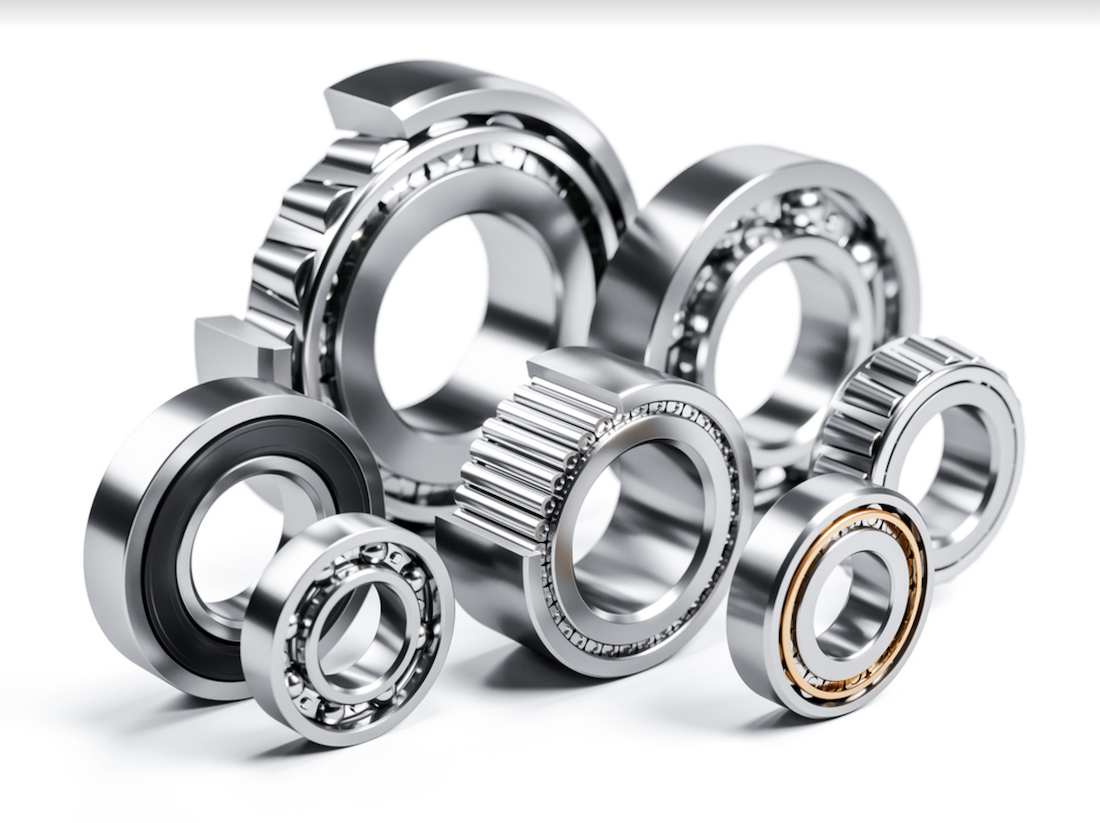
Roller bearings work well for heavy equipment bearings because they spread pressure across a larger surface. This helps support high radial loads in conveyors, gearboxes, crushers, and construction equipment.
They are common in industrial equipment bearings because they handle force well and support long operating hours.
Ball Bearings for Speed and Smooth Movement
Ball bearings support smooth rotation and lower friction. They work well in motors, pumps, fans, and equipment that need speed more than extreme load support.
Some heavy-duty systems still use ball bearings when the load is moderate and smooth motion matters.
Thrust Bearings and Needle Bearings for Specific Load Directions
Thrust bearings support axial loads, where the force moves along the shaft direction. Needle bearings help when space is limited, but load support is still needed.
These bearing solutions help match the bearing to the exact direction and amount of force in the machine.
Mounted Bearings and Sealed Bearings for Tough Environments
Mounted bearings simplify installation and support certain equipment layouts. Sealed bearings help keep dirt, moisture, and debris out of the bearing.
Both types support industrial maintenance because they help reduce contamination and make replacement easier in demanding work areas. For equipment that needs related parts, custom manufacturing services for plastic components also support specialized machine designs, spacers, sleeves, rollers, and other custom parts.
How Heavy-Duty Bearings Help Reduce Machinery Downtime
Heavy-duty bearings reduce machinery downtime by helping equipment run longer between repairs. They support load, reduce friction, and protect connected parts from damage.
When bearing performance improves, the machine runs with less vibration and heat. This helps protect shafts, housings, gears, and seals. It also helps maintenance teams spot problems earlier.
Proper bearing selection supports bearing failure prevention. A bearing that matches load, speed, environment, and installation requirements lasts longer than one chosen by size alone. Two bearings might look similar, but their load ratings, seals, materials, and speed limits might differ.
This is why industrial bearing solutions should match the machine, not only the part number.
Heavy-Duty Bearings Across Major Industries
Heavy-duty bearings support many industries. Each one has different repair risks and uptime needs.
Construction Equipment Bearings for High-Load Applications
Construction equipment bearings work in loaders, cranes, excavators, and other machines that carry high loads. These bearings face impact, dirt, and vibration. A failed bearing delays crews, raises repair costs, and affects project schedules.
Agricultural Bearings for Dirt, Moisture, and Seasonal Use
Agricultural bearings work in tractors, harvesters, seeders, and conveyors. These machines face soil, moisture, uneven ground, and long workdays. During planting or harvest, downtime creates costly delays. Strong bearing inventory helps teams prepare before the busy season starts.
Robotic Bearings and Automation Bearings for Controlled Movement
Robotic bearings and automation bearings support repeated motion. These systems need smooth and consistent movement. Heavy-duty bearing options help when automated equipment carries loads or runs for long periods.
Medical Bearings for Reliable Operation
Medical bearings need clean, quiet, and accurate movement. While many medical devices use precision bearings, some systems also need durable bearing parts for steady motion and long service life.
Best Practices for Bearing Maintenance and Replacement
Good bearing maintenance starts with regular inspection. Check for noise, heat, vibration, poor lubrication, and visible wear. These signs often appear before complete failure.
Use replacement bearings and repair bearings that match the machine’s needs. Confirm load rating, speed rating, size, seal type, material, and lubrication requirements before installation.
Track bearing maintenance patterns. If the same bearing fails often, review alignment, contamination, load, and installation method. Repeated failure usually points to a deeper issue.
Keep MRO bearings, OEM bearings, and industrial spare parts available for critical machines. This helps your team respond faster during urgent repairs.
Choosing a Bearing Supplier for Heavy-Duty Bearing Solutions
A bearing supplier should help your team find the right product without wasting time. Look for clear specifications, product variety, fast shipping bearings, and strong bearing inventory.
Bearing distributors with ready-to-ship bearings help reduce delays during equipment repair and machine repair. This matters when production schedules are tight, and the team needs parts quickly.
A supplier with broad bearing solutions helps your team handle both planned maintenance and emergency repairs.
If your team needs to buy bearings online, look for a supplier with clear product details, strong bearing inventory, and ready-to-ship bearings. Fast access matters because a missing replacement part turns a simple equipment repair into longer machinery downtime.
How Heavy-Duty Bearings Improve Uptime and Long-Term Equipment Reliability
Heavy-duty bearings help machines carry force, resist wear, and run longer in demanding conditions. They support equipment reliability by reducing friction, protecting connected parts, and improving performance under load.
Start by reviewing your most important machines. List the bearings they use. Check which parts fail most often. Confirm load, speed, material, seal, and operating environment. Then keep critical replacement bearings available before failure stops production.
Work with a supplier that offers strong bearing inventory, ready-to-ship options, and clear product details. The right heavy-duty bearings help reduce machinery downtime, improve maintenance planning, and keep industrial equipment working with fewer interruptions.



Speak Your Mind