Enthusiasts travel to Modena for Ferrari and Maserati, to Stuttgart for Porsche and Mercedes, to Maranello and Sant’Agata and Zuffenhausen. Comparatively few make the equivalent trip to the West Midlands, which is strange, because for most of the twentieth century this was where a startling proportion of the world’s cars were designed and built.
Austin at Longbridge. Jaguar and Triumph and Rootes around Coventry. Rover, Alvis, Riley, Singer, Standard, Lea-Francis. If your collection includes anything British from before about 1980, it almost certainly came from within thirty miles of Birmingham.
Why Almost Nobody Makes This Trip
The reason is partly that the Midlands does not sell itself. There is no equivalent of the Modena tourist circuit, no coordinated heritage trail, and no single site that functions as an obvious destination.
It is also that the industry’s collapse left the region ambivalent about its own history. Where Italy built a museum next to the factory, Britain largely demolished the factory and moved on.
What that means for a visiting collector is that the trip requires assembling rather than following. The material is all there, spread across three counties, and nobody has arranged it for you. That is a genuine obstacle and it is also why the people who do make the trip tend to have it largely to themselves.
The Buildings Are Still There, If You Know What to Look For
Most of the factories are gone or unrecognizable. What survives, and what almost nobody looks at, is the wider architecture the motor age produced.
Historic England’s introduction to buildings and infrastructure for the motor car makes the case for treating that whole category as heritage: not only car factories but petrol stations, car showrooms, domestic garages, car parks, motorway service stations, motels, and the roadhouses and cafes where motorists stopped for refreshment.
The guide notes that motor vehicles arrived in the later 1890s and had displaced horses as the main means of transporting goods by the end of the First World War, that many middle class families acquired cars between the wars, and that car ownership was commonplace by the 1960s. It also flags surviving examples that carry listed status, including early showrooms of real architectural ambition, one of them a Daimler building on Paradise Street in Birmingham dating from 1911.
That reframes the trip. You are not only looking for factory gates. You are looking at a landscape that was rebuilt around the car, and much of the interesting fabric is showrooms, garages and roadside buildings rather than assembly halls.
The Museums Are the Anchor of Any Itinerary
Two institutions do most of the work for a visiting collector, and both sit outside Birmingham rather than in it.
The British Motor Museum at Gaydon in Warwickshire holds a very large collection of historic British cars drawn from the British Motor Industry Heritage Trust and the Jaguar heritage collection. Coventry Transport Museum, part of the Culture Coventry Trust, holds one of the largest publicly owned collections of British vehicles anywhere and tells the city’s story through the rise and fall of its dominant industry, including the land speed record cars.
Both are worth a full half-day rather than an hour. Check current opening arrangements before you travel, since museum hours and special exhibitions change and neither is somewhere you want to arrive on a closed day.
Getting Around Is the Actual Problem
Here is the practical constraint that shapes the whole trip. The sites are dispersed across three counties, and public transport does not connect them in any useful way.
Gaydon is in open Warwickshire countryside. Coventry is a separate city. Malvern, if you want to see where Morgan still builds cars, is another county again. Trying to do this by train and taxi turns a comfortable three-day itinerary into a week of waiting.
Birmingham is the sensible base: central to everything, well connected internationally, and the practical place to arrange luxury car hire in Birmingham if you want the driving between sites to be part of the trip rather than an inconvenience. For a collector who has flown in specifically to look at cars, there is a reasonable argument for spending the days between museums in something worth driving.
What the Factory Sites Look Like Now
Manage your expectations here, because this is where visiting enthusiasts are most often disappointed.
Longbridge has been extensively redeveloped since the collapse of MG Rover in 2005, with part of the site continuing in automotive use under later ownership and much of the rest turned over to housing and retail. The Coventry plants have similarly been absorbed into other uses.
Some sites retain a commemorative marker or a surviving building; others have nothing. Research the specific location before you drive to it, and treat the visit as pilgrimage rather than sightseeing. Standing where the Mini was built is worth doing even when there is nothing left to see, but it helps to know that in advance.
The Archives Nobody Thinks to Ask About
For collectors researching a specific car, the Midlands holds something more valuable than the museums themselves.
When British Leyland created charitable trusts in the 1980s to preserve the collections, the intention covered not only vehicles but company archives. For anyone trying to establish the build history of a particular car, that documentation can be more useful than any number of display halls.
Access arrangements vary and generally require contacting the relevant trust in advance rather than turning up. If you have a specific chassis number and a question, make that inquiry weeks before you fly rather than while you are standing in the lobby.
Time It Around Something
The Midlands trip works considerably better if it overlaps with an event.
The British classic calendar concentrates between spring and early autumn, and several major shows and concours fall within reach of Birmingham. Building a trip around one of those gives you the cars in motion as well as the cars behind ropes, and puts you among people who know the local history far better than any guidebook.
The trade-off is accommodation, which books early around event weekends. Fix the dates first and the beds second.
Three Days, Not Two
The workable shape is three days minimum. One for Gaydon, one for Coventry and the surviving city fabric, and one for whatever your particular obsession requires, whether that is Malvern, a factory site, or an archive appointment.
Add a fourth if you want to drive rather than just arrive. The roads west into Shropshire and south into the Cotswolds are genuinely good, and they are the reason to have something interesting parked outside the hotel.
The Midlands will never be Modena. It is not scenic, it does not trade on glamour, and it has been ambivalent about its own industrial past for fifty years. But for a certain kind of collector, it is the place where more of the cars in the reference books actually came from than anywhere else on earth, and remarkably few people bother to go.
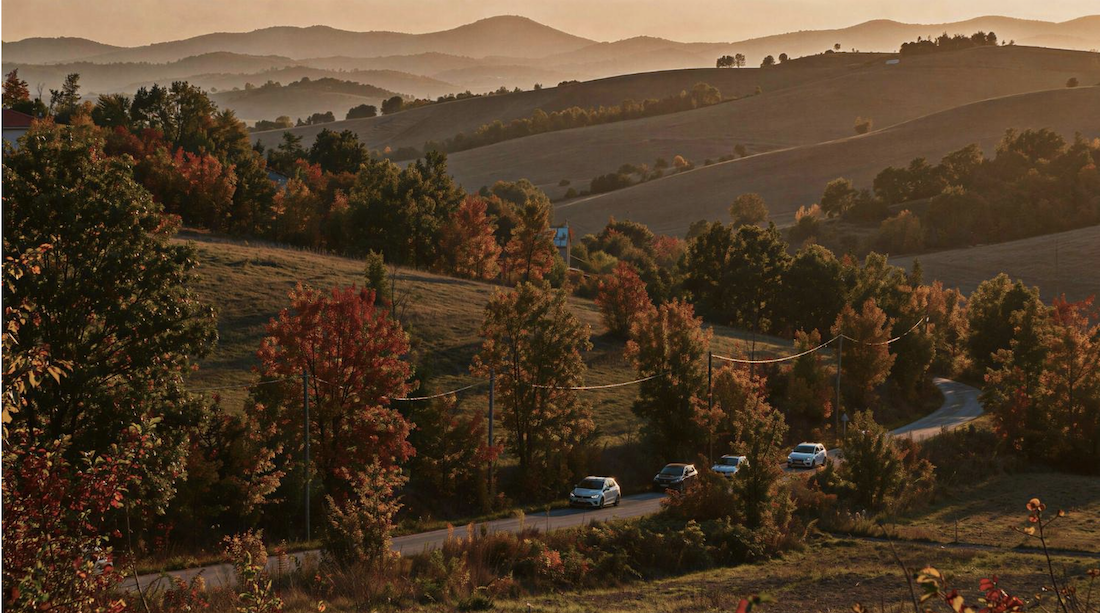
Image by kavinthad03 on Magnific



Speak Your Mind