by Mike Gulett –
The collector car market has always been shaped by different generations of car lovers. What car people loved in their youth, they wanted to own later when they could afford it. For decades, the Baby Boomers dominated car collecting and the car market followed their interests. Big American convertibles, chrome-laden classics, muscle cars and 1950s nostalgia became the center of the car collector universe.
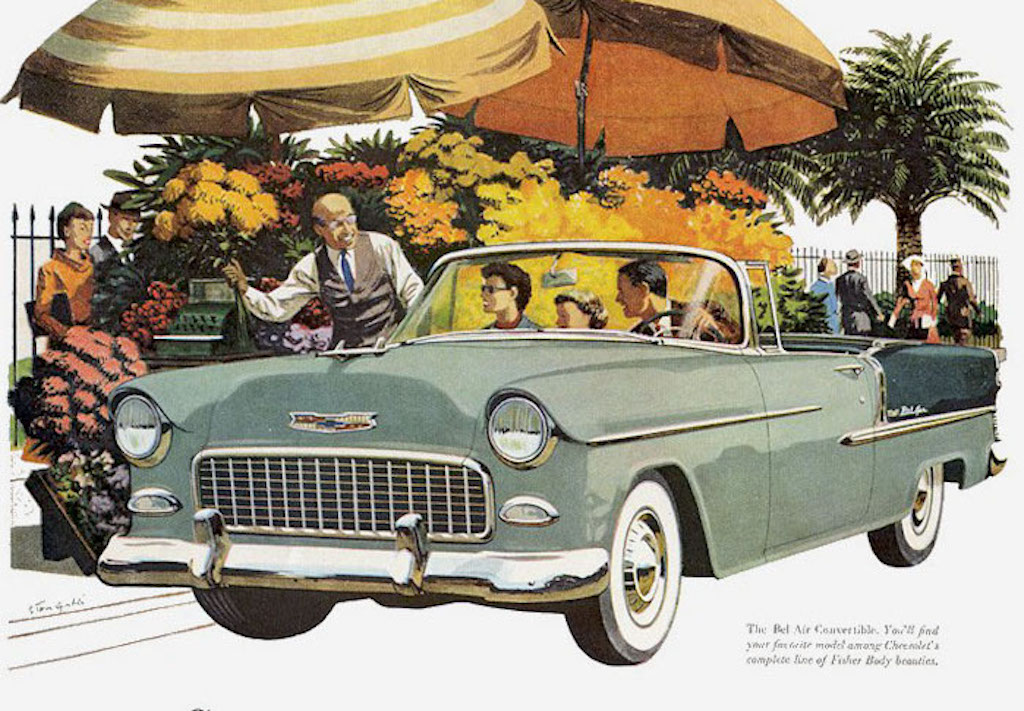
1955 Chevrolet
The market may be shifting away from traditional Baby Boomer-era favorites and toward a new, later generation of collector cars. The question is no longer whether tastes are changing. The real question may be: are we nearing the end of the Baby Boomer collector car era?
For years, the collector car market seemed almost predictable. A restored 1957 Chevrolet Bel Air, a Hemi ‘Cuda or a Corvette represented the pinnacle of desirability for many collectors. Auction houses built entire catalogs around these cars because the buyers were there, often in large numbers and with the money to buy.
Today, some of those same cars are spending longer on the market, attracting fewer bidders and in some cases selling below target prices. That does not mean these cars have suddenly become undesirable. Great cars will always have admirers. But it may mean that something is changing.
Younger collectors simply did not grow up with most of these cars. Their bedroom posters pictured different cars. Their automotive dreams were shaped by turbochargers, Japanese performance cars, European sports sedans and analog supercars from the 1980s and 1990s.
An air-cooled Porsche 911 may stir stronger emotions in a Gen X buyer than a tri-five Chevy ever could. The same goes for the Acura NSX, BMW M3, Ferrari 360 or Toyota Supra. These are the cars tied to younger collectors’ memories, and nostalgia is very important in the collector car market.
Interestingly, younger buyers also seem to value usability more than showing at a concours. They often prefer a car they can drive and enjoy over one that sits on the grass at a concours event. Driver-quality examples with good stories may attract more attention than perfectly restored museum pieces.
This shift may also explain why some categories remain exceptionally strong while others soften. Analog cars with engaging driving experiences continue to perform well because they offer something modern cars increasingly lack: simplicity, involvement and a personality.

Aston Martin Vanquish, Ford GT, Ferrari 360 Modena, Porsche Carerra GT and Lamborghini Murciélago
Another noticeable trend is the growing divide between “important” cars and “desired” cars. Historically important cars do not always translate into emotional demand from younger generations. A younger enthusiast may fully appreciate the significance of a classic Packard or Lincoln Continental and still have little desire to own one.
Meanwhile, a slightly scruffy BMW E30 M3 or Porsche 964 can create intense bidding wars because buyers see themselves in those cars. They remember them from magazines, movies and their high school parking lots.
This generational transition is a natural change. The collector car world has gone through similar shifts before. Prewar classics once dominated the collector landscape until postwar sports cars and muscle cars took over. One difference now is the speed of change. Online auctions, social media and global markets accelerate trends much faster than in previous decades.
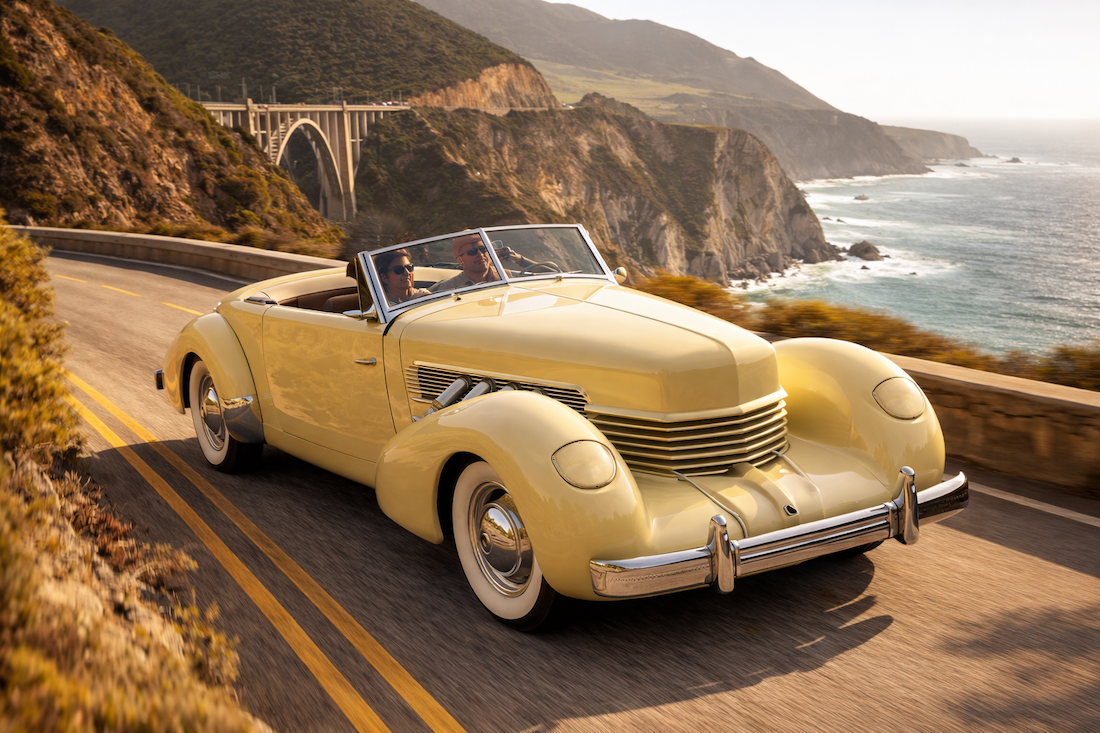
Cord 810/ 812
There is also a broader philosophical change taking place. Many younger collectors seem less concerned with prestige and more interested in authenticity. They are willing to embrace imperfect paint, higher mileage and modified cars if the driving experience feels genuine and exciting.
The future collector market may become less about trophy ownership and more about personal connection.
That does not mean the traditional classics will disappear. Truly exceptional examples with provenance, rarity and beauty will always matter. A great Duesenberg, Mercedes Gullwing or early Ferrari will remain blue-chip automobiles regardless of generational trends.
But the middle of the market, where most enthusiasts actually buy and sell cars, appears to be evolving.
Perhaps the biggest lesson is this: collector cars have never been purely about investment. They are emotional treasures tied to memory, identity and aspiration. As generations change, so do the cars those people dream about.
And right now, the dream garage seems to be changing.
Let us know what you think in the Comments.
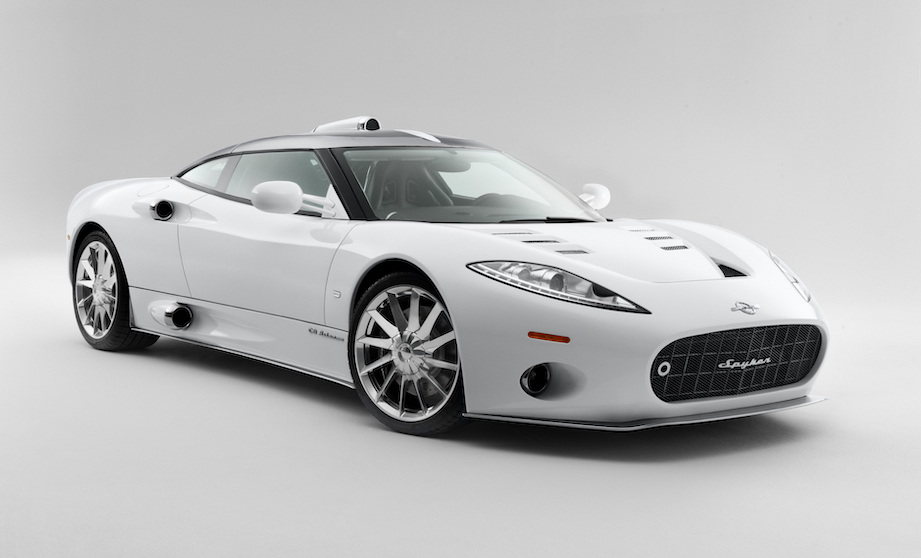
Spyker C8 Aileron – Photo by Spyker
Research, some text and some images by ChatGPT 5.2.



I think you are spot on in your analysis. Really nice cars will always bring premium prices though due to the extreme cost of restoration. So the delta between drivers and concour quality may widen as time goes on.
Mike,
This may be true to a certain extent, and, yet, at the same time, you never might know, because it could not be true. The current issue of “Old Cars Weekly” has a wonderful story of a young man who bought a 1960 Buick Invicta while in high school at age 17, and spent the next 8 years restoring it, completing it in 2024. He even used it as his high school senior project.
Yes, a lot of the owners featured in Old Cars Weekly are Boomers or even a bit older, but quite often they feature somebody from Generation X or Generation Z that puts the time and money into a restoration of a classic car from the 1950s, ’60s. or ’70s.
Glenn in Brooklyn, NY
Michael,
Seeing your AI image selection has shocked me about as much as painting a mustache on the Mona Lisa. As a lover of classic cars, your depiction of a “Cord 810/812” is disturbing if not blasphemous, and no doubt has Gordon Buehrig and Alex Tremulis rolling in their graves. So here we go… 1) Just for starters, this could not be an 810 Cord, as only the 812 had outside flex pipes, 2) The front bumper looks like it is from a 50s-era Buick, 3) the transmission cover has lost all its sensuous curves and, sin of sins, the elegant CORD front coat of arms emblem has been replaced with a black smudge, 4) I warn your readers, Don’t Zoom In. The iconic flex pipes look like aerosol cans and why-oh-why are there 4 rather than 2 pipes showing, 5) The smooth hood, now has an added spine running down its midline while the louvers have been stripped of their beautiful aluminum trim, 6) The otherwise gorgeous Duesenberg model SJ side screens have been replaced with something more appropriate for a Terraplane, 7) the hubcaps would be more fitting on a Willy’s Jeepster, 8) pray tell, why are there riveted rims added to the headlight covers, 9) outside mirrors and winglets, which never existed, 10) what looks like a molded rear fiberglass tonneau cover (only fiberglass didn’t appear for another 15 years)… and then 11) look at the road! It has PCH shown with a double center yellow line… only on the shoulder; and the driver is driving the car on the wrong side while behind him is a divided highway, but not in front. Michael, I am certain you (and many of my fellow readers) have on their library shelves, Henry Rasmussen’s Survivor series. On the cover of that book, is one of the most phenomenal photos ever taken of a cigarette cream Cord Sportsman. Owned by Doug Johnson, and taken with ACD designer Gordon Buehrig standing alongside, this photoshoot was taken circa 1977 with the World Trade Center in the background. With permission, I share another from HR’s series, which I published in the book, “ACD Reunion” vol. 2 (2010).
Cordially,
John Baeke
P.S. All criticism above, lighthearted. 🙂