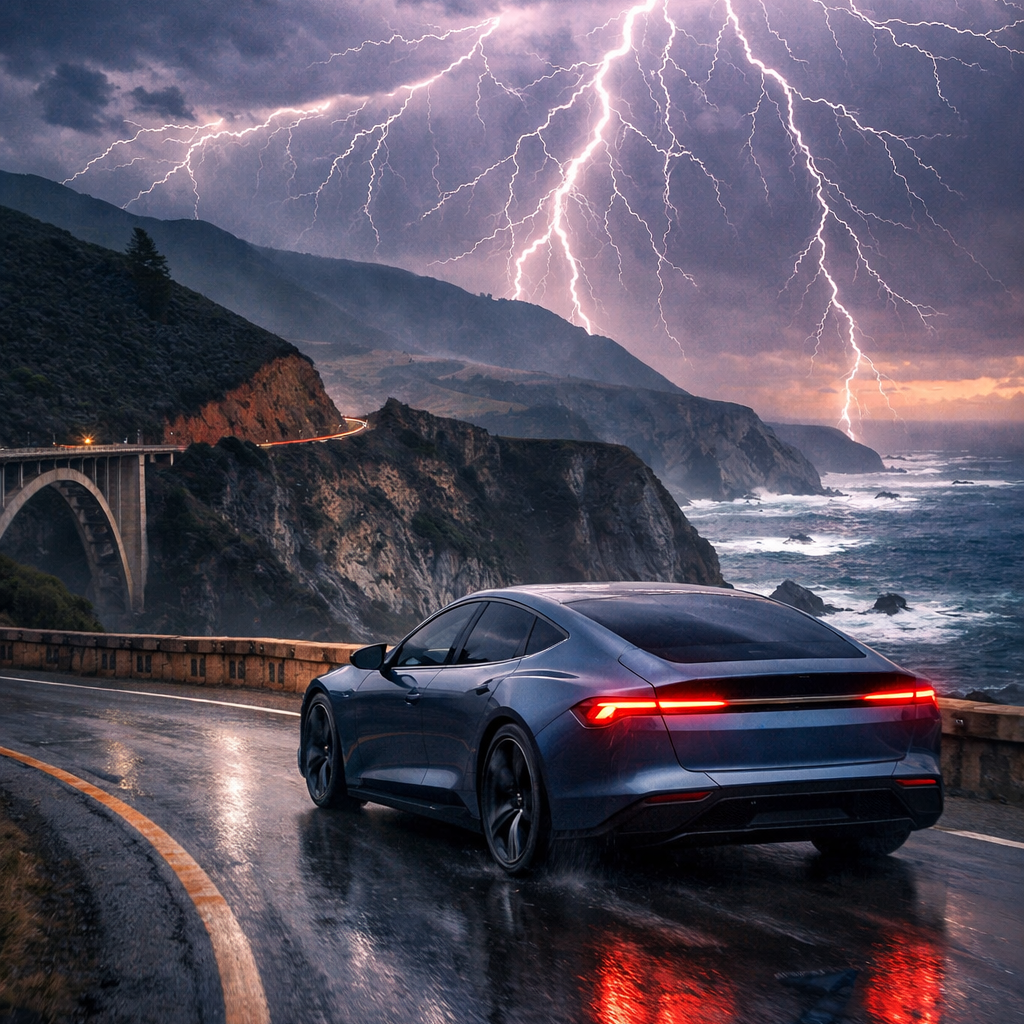
For the automotive enthusiast, there is nothing quite like a clear road and a crisp engine note. However, the open road is not always a friendly place. Mother Nature often has different plans, turning a routine commute or a weekend cruise into a high-stakes test of skill and patience. Whether it is a sudden summer downpour or a blinding winter flurry, the environment dictates how your vehicle interacts with the pavement.
Understanding the physics of your car and the limitations of visibility is vital for staying safe. According to data from the Federal Highway Administration, approximately 12% of all vehicle crashes in the United States are weather-related. These incidents result in nearly 4,000 deaths annually. Staying out of those statistics requires more than dumb luck; it requires a proactive approach to vehicle maintenance and driving technique.
The Foundation of Traction: Tires and Visibility
Before the clouds even gather, your safety starts in the garage. Tires are the only point of contact between your car and the road. In wet or icy conditions, the depth of your tread determines how effectively water or slush is displaced. If your tires are bald, you are essentially driving on hockey pucks.
Visibility is the second pillar of safety. Ensure your wiper blades are fresh and free of streaks. A high-quality rain repellent treatment on the windshield can also help water bead and roll off, providing a clearer view of the road ahead. Check that all exterior lights—headlights, taillights, and turn signals—are functioning correctly. In bad weather, being seen is just as important as seeing.
Adjusting Your Technique for Rain and Hydroplaning
Rain is most often the cause of weather-related accidents. The first few minutes of a rainfall are often the most dangerous because the water mixes with oil and dust on the road surface, creating a slick film.
When driving in these conditions, the most important adjustment is speed. Hydroplaning is when water builds up between the tires and the road surface, leading to a loss of steering and braking control. If you feel the steering wheel get “light” or the car start to drift, do not slam on the brakes. Instead, ease off the accelerator and keep the steering wheel straight until you regain traction.
Increasing your following distance is equally vital. Standard dry-weather rules suggest a three-second gap, but in the rain, you should double that. This extra space gives you time to react to sudden braking from the vehicle in front of you.
Mastering the Frozen Road
Winter weather presents a whole new set of challenges. Snow and ice drastically reduce the coefficient of friction, meaning every movement—steering, accelerating, and braking—must be performed with extreme smoothness.
If your car has an Anti-lock Braking System (ABS), do not pump the brakes if you start to skid. Apply firm, steady pressure and let the system do its job. If you drive a vintage car without ABS, you will need to practice threshold braking—applying as much pressure as possible without locking the wheels.
When driving in bad weather, remember that four-wheel drive or all-wheel drive helps you get moving, but it does not help you stop. Many drivers gain a false sense of security from these systems and end up traveling too fast for the conditions. Gravity and momentum affect every vehicle the same way once the tires lose their grip.
The Danger of the Grey: Fog and Low Visibility
Fog can be one of the most deceptive weather conditions because it distorts your perception of speed and distance. In heavy fog, many drivers instinctively follow the taillights of the car ahead. This is a mistake known as “target fixation.” If the lead driver goes off the road or crashes, you’re likely to go off the road or crash too.
Use your low-beam headlights or dedicated fog lights. High beams should be avoided, as the thick water droplets in the fog reflect the light back into your eyes, creating a blinding white wall. If visibility drops to near zero, find a safe place to pull over completely—well off the shoulder—and turn off your lights so other drivers don’t mistakenly follow you into the ditch.
Wind and High-Profile Hazards
High winds are often overlooked as a threat, but they can be treacherous, especially for those driving SUVs or vans. A strong crosswind can push a vehicle out of its lane in a heartbeat.
Keep both hands on the wheel at the nine and three o’clock positions for maximum control. Be particularly cautious when passing large trucks or driving across open bridges, as these areas are prone to sudden gusts.
Data suggests that even light rain or moderate snow can significantly increase crash risk compared to dry conditions. This suggests that human error—specifically the failure to slow down—is a major factor in these accidents.
Modern Tech: Friend or Foe?
Modern cars come packed with electronic aids like electronic stability control and traction control. While these systems are life-savers, they cannot override the laws of physics. They are designed to help you maintain a chosen path, but they cannot create grip where none exists.
Furthermore, avoid using cruise control in wet or icy conditions. Cruise control attempts to maintain a constant speed; if your wheels begin to slip, the system may actually accelerate to compensate, causing a total loss of control. In bad weather, you should always be the one in total command of the throttle.
The Survival Kit
If the weather is severe enough to leave you stranded, preparation is key. Every car should have a winter emergency kit containing:
- A heavy blanket or sleeping bag
- A small shovel and a container of kitty litter or sand for traction
- Jumper cables
- A flashlight with extra batteries
- Non-perishable snacks and water
The Golden Rule of Bad Weather Travel
The most effective way to avoid an accident in bad weather is to stay off the road entirely. Check weather reports before you leave. If the National Weather Service issues a travel advisory, take it seriously. No appointment or social event is worth the risk of a totaled car or a hospital stay. If you are already on the road and conditions deteriorate, do not be afraid to stop at a rest area or hotel to wait it out.
The Calculated Path to a Safe Arrival
Staying safe when the sky turns dark is about a change in mindset. It is a transition from the joy of the drive to the discipline of the pilot. By maintaining your vehicle, understanding the specific risks of different weather types, and slowing down, you ensure that you and your car live to see another sunny day on the pavement. Driving is a privilege that requires constant adaptation; respect the elements, and the road will respect you back.


Speak Your Mind