by Mike Gulett –
I have never owned an American muscle car but they have always intrigued me. I was lured away by European sports cars before I could own muscle cars. Our subject today is one American muscle car that does attract my attention for it’s beauty, power, uniqueness and origin story.
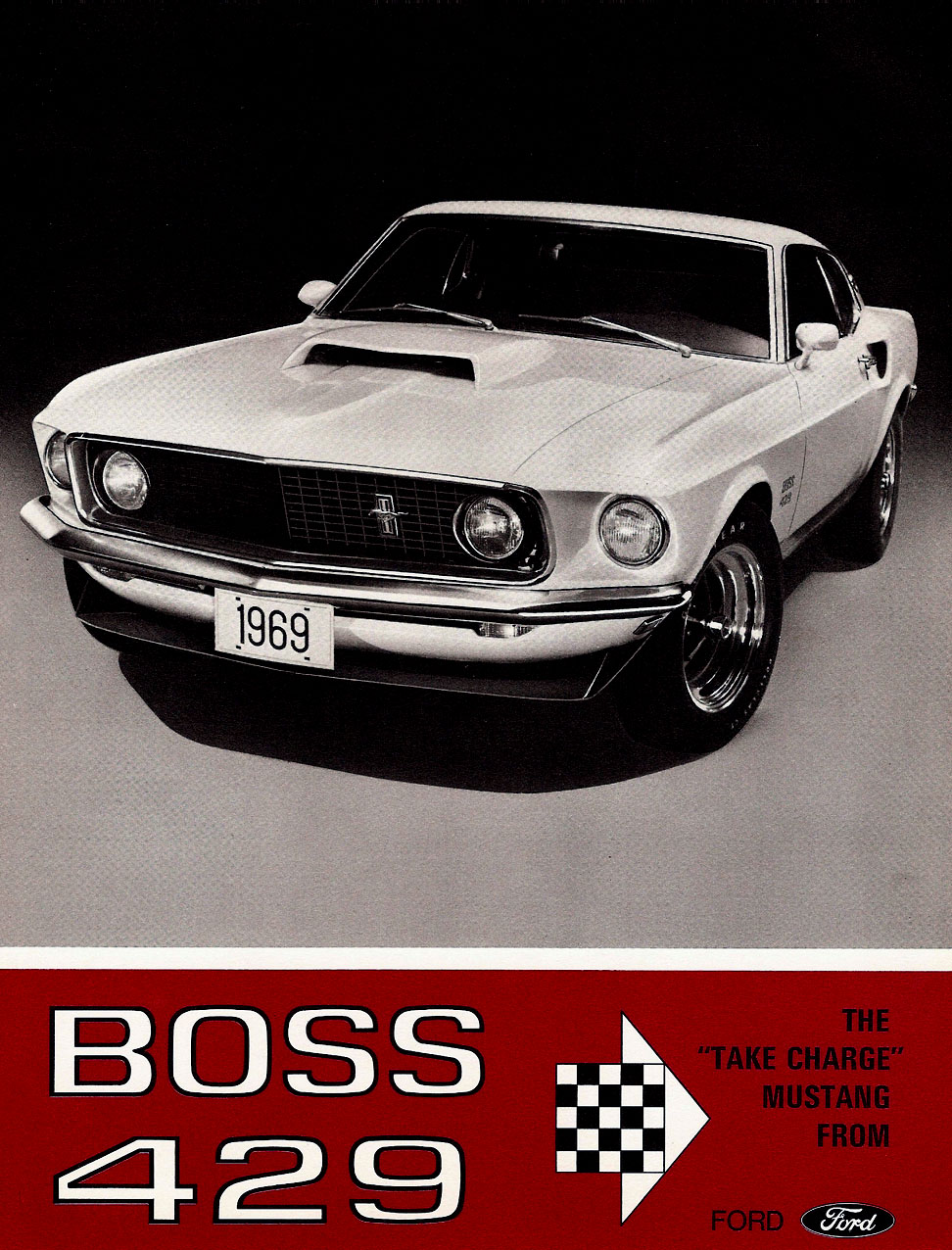
Ford Mustang Boss 429
Among all the Mustangs none is surrounded by quite the same aura as the Ford Mustang Boss 429. Built not to dominate city streets or even the drag strip, the Boss 429 existed for one primary reason: to conquer NASCAR. In doing so, it became one of the rarest, most technically fascinating, and most valuable American muscle cars ever produced.
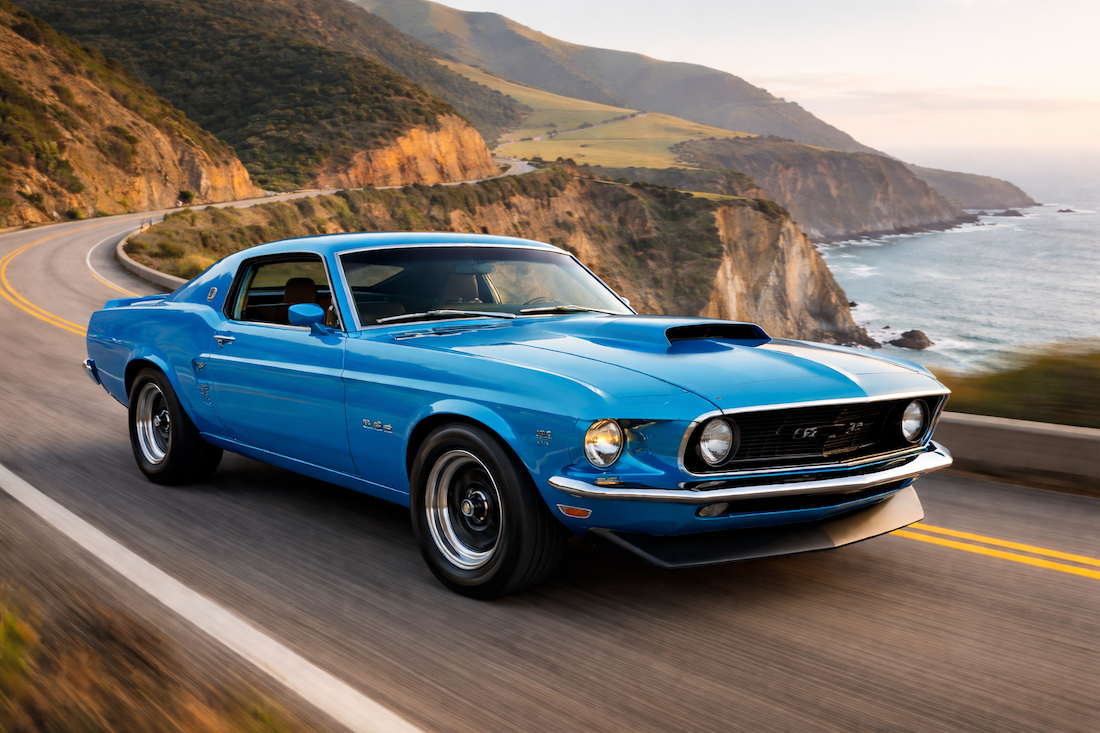
Racing First, Street Second
By the late 1960s, NASCAR rules required manufacturers to sell at least 500 examples of any engine they intended to race. Chrysler had already unleashed its fearsome Hemi, and Ford needed an answer — and it was the Ford Boss 429 engine, a 7.0-liter (429 cubic inch) V8 designed explicitly for sustained high-rpm racing.
This engine was never meant for a conventional Mustang. Its massive hemispherical-style combustion chambers and canted valves made it physically quite large. So large that is would not fit into a Mustang engine bay.
Kar Kraft
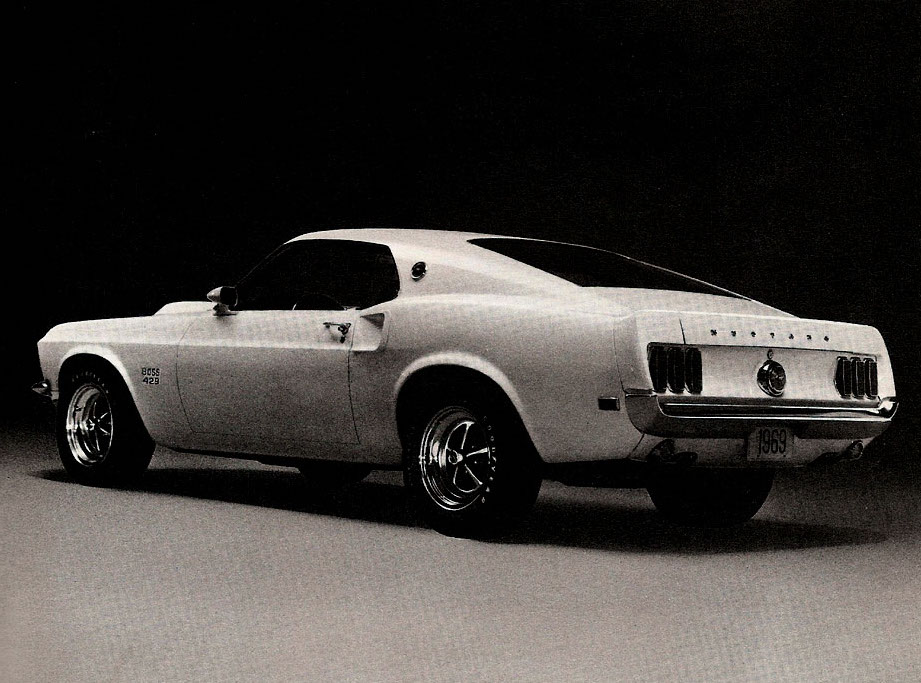
To solve the packaging problem, Ford turned to Kar Kraft, a low-volume engineering company that had previously worked on the GT40 program. Every Boss 429 began life as a partially completed Mustang shipped to Kar Kraft, where extensive modifications were carried out by hand.
The shock towers were relocated, the front suspension re-engineered, and the battery moved to the trunk. The result was a Mustang that looked subtly aggressive but hid a race engine tamed for street legal use. The front fenders may look like a regular Mustang from a distance but they are unique to the Boss 429.
Production ran from 1969 to 1970, with fewer than 1,400 examples completed in total.
A Unique Engine
The Boss 429 was rated at 375 horsepower—identical to several other big-block Mustangs of the era. In reality, this was a gross understatement. NASCAR teams were seeing well over 600 horsepower in race trim, and even street versions were severely detuned only to meet emissions and reliability standards.
The engine’s oversized ports, forged internals, and race-bred architecture made it unlike any other Mustang powerplant. While not especially quick off the line compared to lighter muscle cars, the Boss 429 was devastating at high speeds, exactly as it was intended.
An Unusual Mustang
The Boss 429 was never a great street car. Its nose-heavy weight distribution, stiff suspension, and finicky tuning made it far less driver friendly than a Boss 302 or Mach 1. Buyers at the time often overlooked it, and many sat unsold on Ford dealer lots.
Yet this very mismatch—between purpose and practicality—is what makes the Boss 429 so compelling today. It represents a moment when manufacturers bent street cars around racing rules, not the other way around.
NASCAR Glory
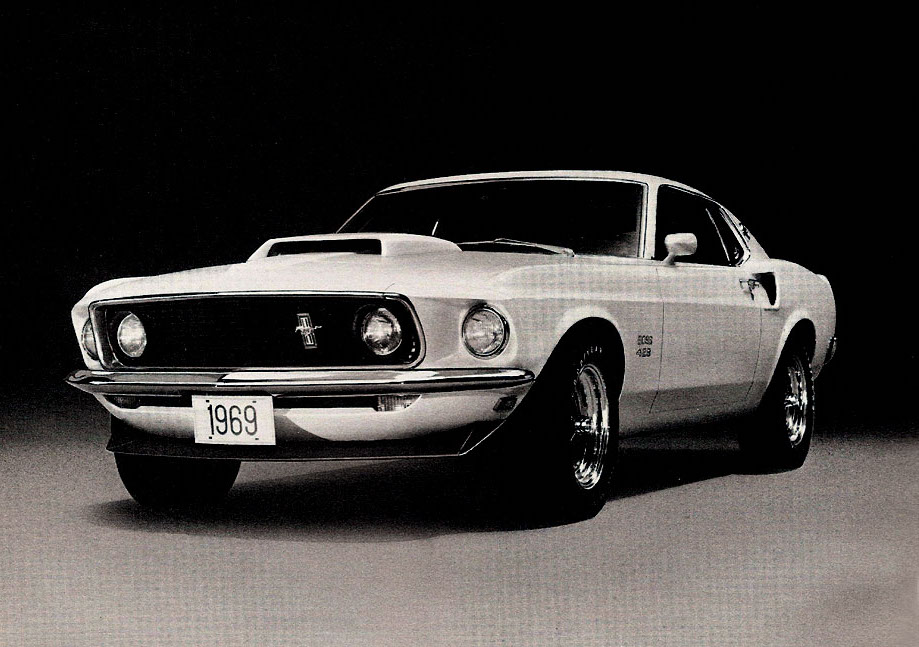
The mission of the Boss 429 engine was fulfilled on the track, although the Boss 429 did not race itself. Ford’s NASCAR teams used the engine to great effect in other car models, culminating in championship success in the early 1970s. Once the homologation requirement was met and rules evolved, the need for the Boss 429 street car vanished almost overnight.
But the legend had already been established.
Legacy
Today, the Boss 429 sits at the summit of Mustang collecting. More than rarity alone, collectors value the Boss 429 for what it represents: the purest expression of Detroit’s racing obsession during the muscle car era.
Unlike Mustangs built for style or sales volume, the Boss 429 was engineered with a single-minded focus. It is not just a Mustang—it is a rolling piece of NASCAR history.
Why the Boss 429 Still Matters
The importance of the Ford Mustang Boss 429 lies in its defiance of logic. It was expensive and complicated to build, difficult to sell, and impractical to drive—yet Ford built it anyway, because winning did matter. In an era increasingly defined by regulations and compromise, the Boss 429 stands as a reminder of when engineers were allowed to chase greatness first and ask questions later.
Let us know what you think in the Comments.
Research, some text and some images by ChatGPT 5.2. Some images compliments of Ford.


Growing up with very limited resources, I didn’t immerse myself in the muscle car culture. Now, of course, most enthusiasts I know were actively involved, and they have for the most part, preserved their participation in that culture. After reading this article, I look back and realize that my second “boss” in my adult work life owned a Boss Mustang, and although I naively equated it to being wasteful and probably even annoying, I never realized any of this background nor it’s import. Never even had a ride in it. Not that I had owned any “keepers” in that day, I do know, looking back, that had I been interested in muscle cars, I could have been an active player, but focused on other investments. Damn. I might’ve been close! No telling if I could’ve contained enthusiasm enough to survive that era and hang on to a car like that, though.