by Mike Gulett –
I recently acquired my first electric car, a new Lucid Air Pure, and I am pleased with the experience so far. It has changed my daily driving routine. I do not need to manually unlock the doors because they do so as I approach with a wireless key. I do not need to start the engine it is ready to go when I get in (no warming up needed either) and I also do not need to disengage the parking brake as that happens automatically when I put it in gear. And there is only one forward gear so shifting is a thing of the past. The process of parking and exiting the car is just as automated and easy.
There was a time when driving required more work and a personal engagement between the driver and the car.
You managed throttle with your right foot and balance with your hands. You learned the weight of a clutch pedal, the resistance of unassisted steering, the way a carbureted engine stumbled slightly before smoothing out. A fast drive was not just about speed—it was about coordination, a mechanical sympathy.
Today, many of the world’s fastest cars are also the easiest to drive quickly. Computers monitor wheel slip hundreds of times per second. Suspensions read the road and adjust in milliseconds. Gearboxes anticipate your next move. Stability control systems smooth mistakes before you even realize you made them.
Which raises a question: have modern cars become too perfect? Like my Lucid Air.
Imperfection
Analog cars were not flawless. They wandered on crowned roads. They required warm-up rituals. They demanded attention. Certainly my former Lamborghini Espada required the full attention of the driver and some specialized knowledge of the car.
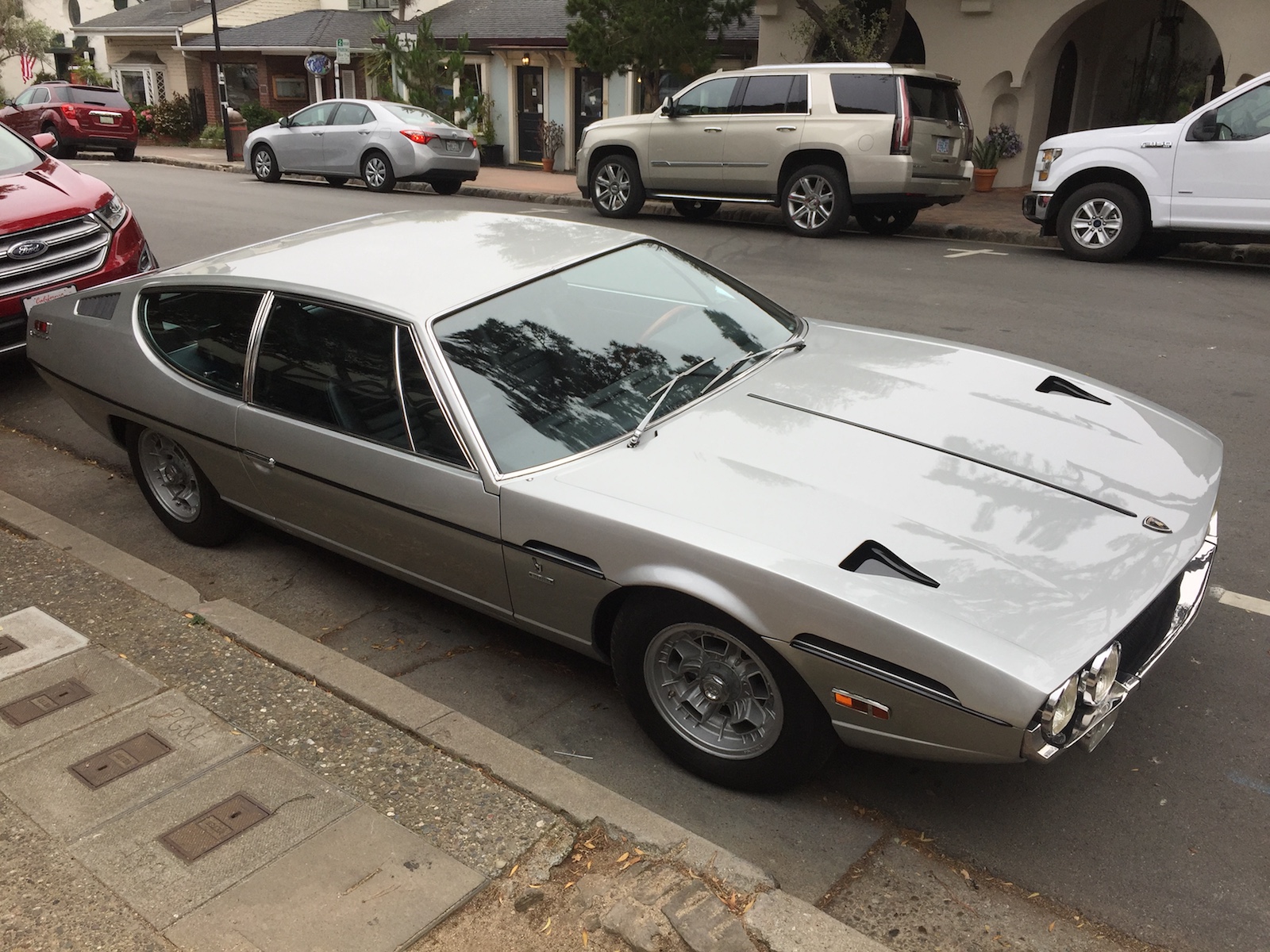
Lamborghini Espada on the streets of Carmel
But in those imperfections lived a personality.
Unassisted steering communicated texture—the slight tug of camber, the grain of pavement, the loading of the front tires mid-corner. Manual transmissions forced rhythm into your driving. Even braking required nuance; lock a wheel and the car would remind you immediately. On the Lucid Air I have become adept at one-pedal driving where I rarely press the brake pedal.
Driving was a conversation. The car would speak; the driver would listen and respond.
The Algorithm
Modern performance cars are fantastic engineering achievements. Dual-clutch transmissions shift faster than any human could. Torque vectoring systems subtly guide a car through corners with invisible precision. Electric powertrains deliver instant thrust without vibration or hesitation.
On a track, a contemporary performance car can make an average driver feel like a pro. The car compensates, predicts and corrects.
Cars are safer, faster, more efficient, and more reliable than at any time in history.
Speed
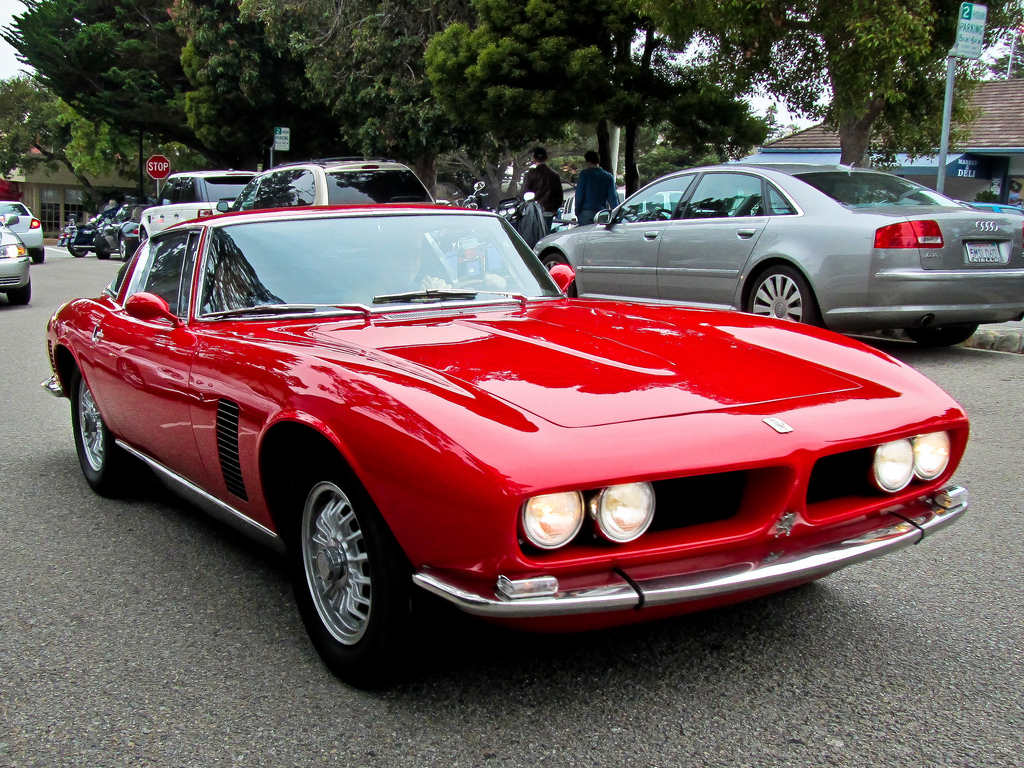
In an older sports car, like my former Iso Grifo, speed felt earned. The process of building momentum—balancing throttle through a turn, timing a downshift just right—created satisfaction beyond just the speed.
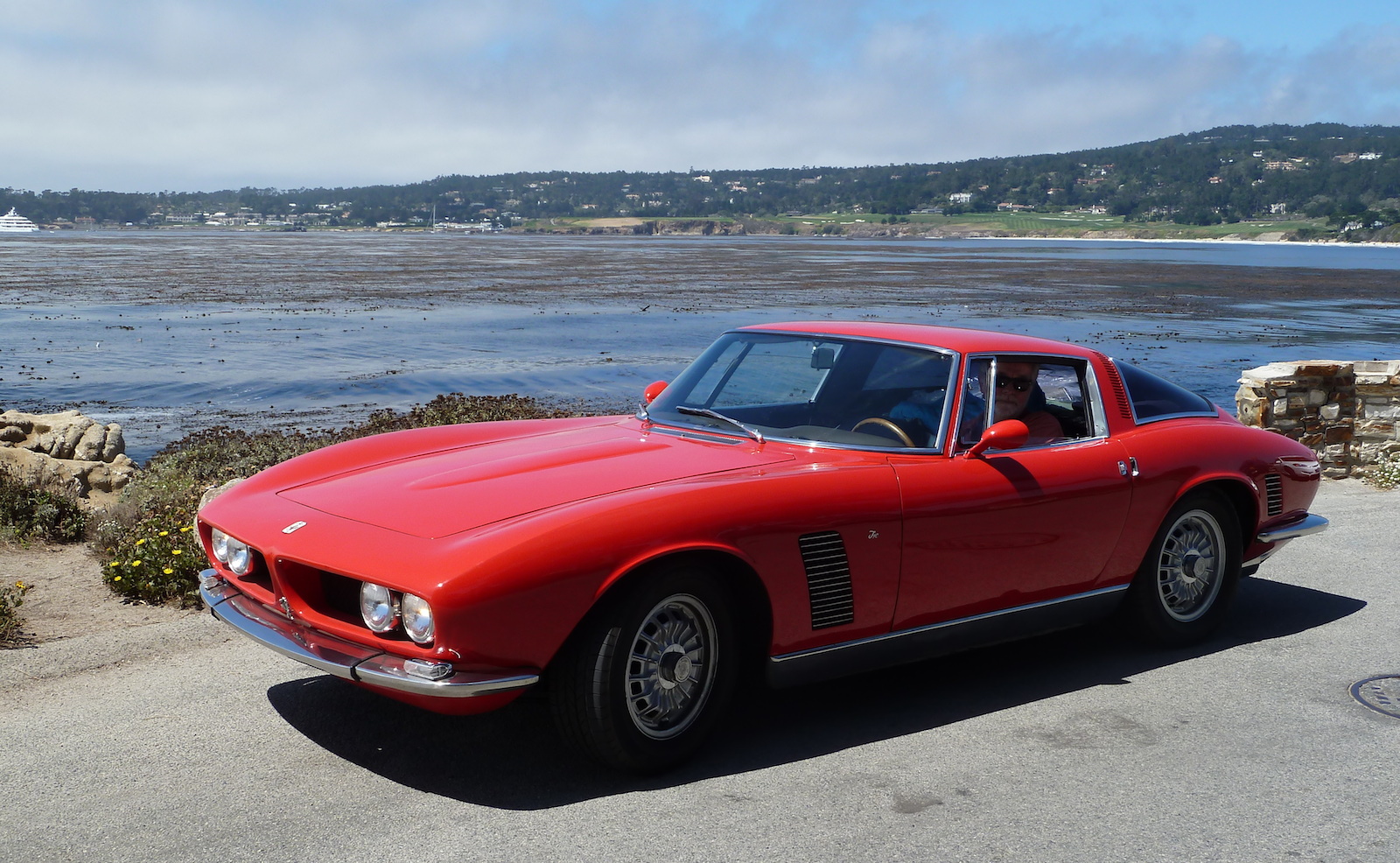
Iso Grifo Series 1 in Carmel
Modern cars often eliminate that struggle. With adaptive dampers, launch control, advanced traction systems, and seamless gear changes (if any are needed) performance can feel frictionless.
While the limits have risen dramatically, the emotional climb to reach them may have flattened out.
When everything works perfectly, there is less for the driver to overcome or even to do.
Precision vs. Personality
Algorithms are astonishingly good at optimizing. They deliver the ideal air-fuel mixture, the ideal braking force distribution, the ideal suspension setting for a given condition.
But optimization can also remove a car’s quirks.
Older cars had biases—understeer here, oversteer there, a shifter that preferred a firm hand. You adapted to them. In doing so, you built a relationship. It certainly takes some skills to drive my Aston Martin Vanquish S smoothly with the automated manual paddle shifting and the V12 engine.
Modern cars aim for neutrality. They are designed to behave predictably in almost every scenario. That predictability builds confidence in the driver, but it can also reduce surprise and takes less skill.
And surprise, in controlled doses, is part of the joy of driving and it creates some uncertainty.
The Illusion of Effortlessness
Electric vehicles represent the apex of algorithmic perfection. Instant torque. Near-silent acceleration. Minimal mechanical drama. No gear shifting and less knowledge and skill from the driver.
They are astonishing in their capability. But for some drivers, the experience feels more like using software than managing machinery.
There is no crescendo of revs, no tactile vibration through the gear lever, no mechanical crescendo building toward redline. The power simply arrives—clean and complete — from the start.
It is very impressive. Yet it can feel emotionally distant and maybe empty.
We Do Romanticize the Past
It would be wrong to pretend analog cars were universally better. They overheated. They rattled. They leaked oil. They required constant maintenance. They were slower, less safe, and often frustrating and could be unreliable.
Modern cars have democratized performance. They allow more drivers to explore speed with less risk.
The question is not whether technology is good. It clearly is.
But doesn’t the perfection reduce driver participation?
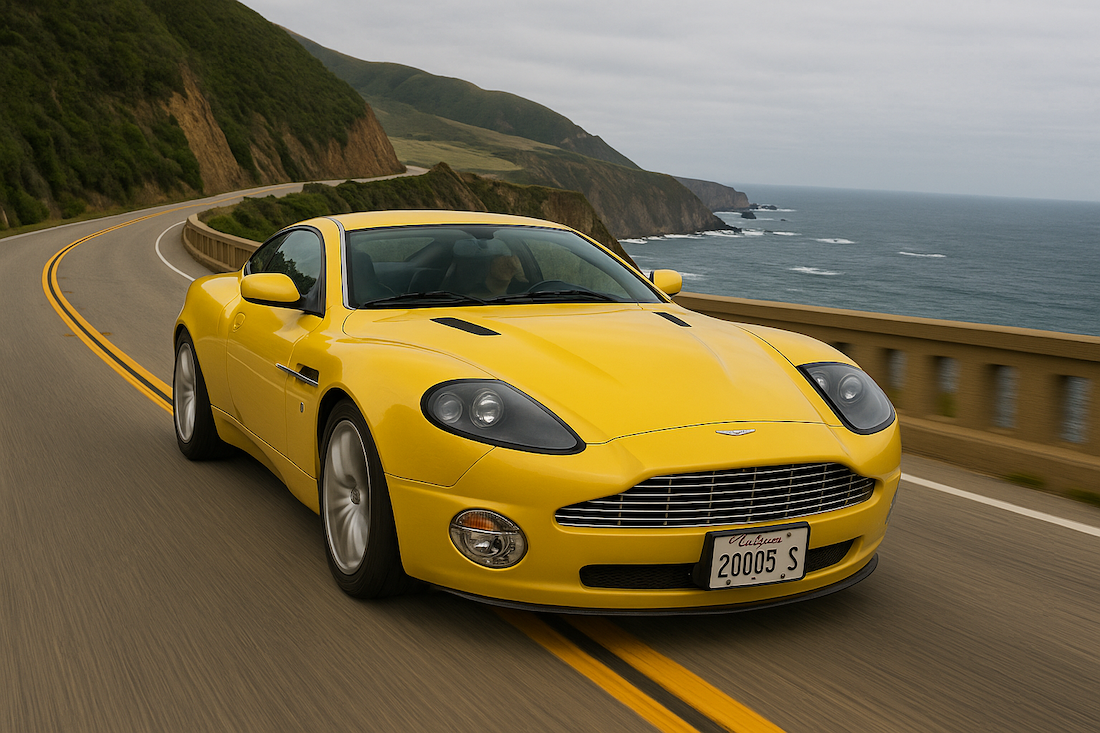
Aston Martin Vanquish S
“Imperfection” by Design
Interestingly, some manufacturers now engineer feel back into their cars. Artificial exhaust notes. Simulated gear shifts in electric vehicles. Steering calibration tuned not for maximum efficiency, but for feedback.
In other words, designers are reintroducing texture that software once erased.
This suggests something important: even in an age of optimization, drivers still want sensation.
We do not only want to arrive quickly. We want to arrive having done something and having earned the experience.
The Middle Ground
Perhaps the future lies not in choosing analog or algorithm, but in blending them thoughtfully.
A modern car can retain precision while allowing space for the driver’s input to matter. Technology can assist without dominating. Algorithms can guard the edges without flattening the center.
Perfection, after all, is not the absence of flaws—it is maybe the presence of balance.
Are Modern Cars Too Perfect?
In measurable terms, no. They are extraordinary. In emotional terms, sometimes, maybe.
The most memorable drives are not always the cleanest or the fastest. They are the ones where you felt slightly challenged, slightly responsible, slightly connected to something mechanical that needed your special skill.
An analog car may not be objectively better. But it reminds you that driving is a skill, not a software download.
Maybe that is what some of us miss—not imperfection itself, but participation. When the machine does everything flawlessly, the question lingers:
What’s left for us to do?
Let us know what you think in the Comments.
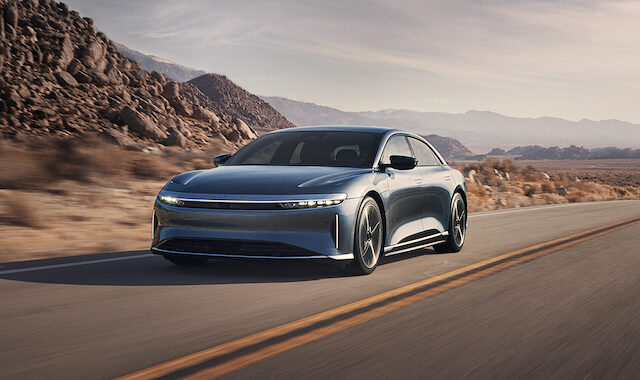
Lucid Air – Photo by Lucid Motors
Research, some text and some images by ChatGPT 5.2.


Agree. There is no longer a connection between car and driver,ground feel abdcactual driver inputs.
Corvette lost me when pop up headlamps when away and I had 3, the cars today are too futuristic for me
Well said Max. Totally agree,
My automotive life started when I took the test for a drivers license in a 1955 Bel Air 265V8 with three on the tree and have never intentionally owned an automatic transmission car since because, lets face it, older automatics, in the 60s through the early 90s sucked.
I went through a series of British, Italian and Japanese sports cars each with their personal quirks and appreciated each one.
In latter life, I’ve gone through the past 30 years owning A4 then A5 Audis because I like the brand and have had minimal problems — all were 6 speed manual, all did very well in varied New England weather and I always had control of how my car acted.
I was responsible for the machine and if something negative happened, it was my fault not a software malfunction.
Who gets to take the blame for an accident caused by a software malfunction?
Who gets to claim the car did this on its own or it didn’t warn me that I would have a situation — it always did before and the sensors always told me before hand?
Another nail in the coffin of personal responsibility — as if we needed another!
Mike,
The perfection of new cars with everything done for the driver has actually led to a plethora of horrible drivers on the road. Drivers are no longer paying attention to actual driving, at least here in the NYC Lower Tri-State Area (the five boroughs of New York City, Long Island, Northern New Jersey, Westchester County, and Western Connecticut). Driving in this area is now a stressful, daily deathmatch. To contrast where I live and you live, when I drove from San Diego to San Francisco a few years back, not one single time did anybody blow their horn. Here, it is a chronic background soundscape. In additon, nobody seems to follow the rules of the road anymore: illegal u-turns on busy avenues, driving through stop signs, going the wrong way down one-way streets and avenues, with the latest trend being making red lights optional. I forgot to mention that there is an epidemic of double-parking, and an equally large epidemic of scooters, electric bikes, motorized boards, mopeds, and every conceivable type of regular manual bicycle, with none of them following the rules of the road, driving 30 to 60 mph everywhere. Every single time I drive a car is an incredibly stressful experience, especially if you actually care about others on the road.
Glenn in Brooklyn, NY.
Glenn,
Is what you describe really related to new car technology?
I firmly believe that because of all the new car technology, that drivers have put all caution to the wind, and have ceased to focus on following the rules of the road and actual safe driving, feeling that the tech will cover for all their omissions and errors. Mike, try driving in Brooklyn if you do not believe me – it is definitely not for the faint of heart – I turned in my rent-a-car to Enterprise 3 days early because I could not take the severe stress of driving here anymore!!!
Glenn,
All of my car rides in NYC have been with a professional driver in charge. Driving in California is much less stressful.
Try it!
The zeal of interior deigners to take away operation of heater/AC and many other functions from being operated by knobs and seitches and instead making them on a computer screen is maddening. For one thing the screen reflects light and you have to take your eyes off the road to dial it in. And what if the screen goes bad? No way to manually chsnge A/C, heat, etc.I yearn for the old days of rocker switches, toggle switches, on an off buttons. Fortunately my latest car is 18 years old and still has manual controls for most things. I espeially like you scan srart it with the fob but it’s not push button on the dash or console because thieves have fpund ways tp get around keyless starting.
Wallace,
I agree with you 100%. Although it did have a screen, the 2021 Dodge Challenger I rented and drove from Las Vegas to San Diego to San Francisco still had great knobs to control HVAC and the radio. What was really nifty was that their were even two radio control switches on the steering wheel for tuning and volume. That car had a V6 that made 303 horsepower, and I even got a ticket going 105 in San Bernandino on Route 66. If I had the cash and garage space, I’d go out and buy that magnificent beast tomorrow!!!
Glenn in Brooklyn, NY.