by Mike Gulett –
American custom cars were never about transportation – they are about imagination, identity and the belief that a factory-built automobile was only a starting point for creative expression. In the hands of a gifted designer and builder, a car could become sculpture, speed could become style (with or without the actual speed), and a car could become a personal statement of style and beauty.
Few figures embody this spirit more clearly than George Barris, Ed “Big Daddy” Roth, and Darryl Starbird—three men who defined what custom cars looked like and what they meant to America.
George Barris
George Barris knew something crucial early in his career: custom cars were cultural objects, not just mechanical ones. In postwar California, Barris helped transform the rough-edged hot rod into a refined custom—lowered, smoothed, and beautifully stylish and elegant. His cars flowed like aircraft fuselages, their proportions carefully massaged until factory seams disappeared and form became the only purpose.
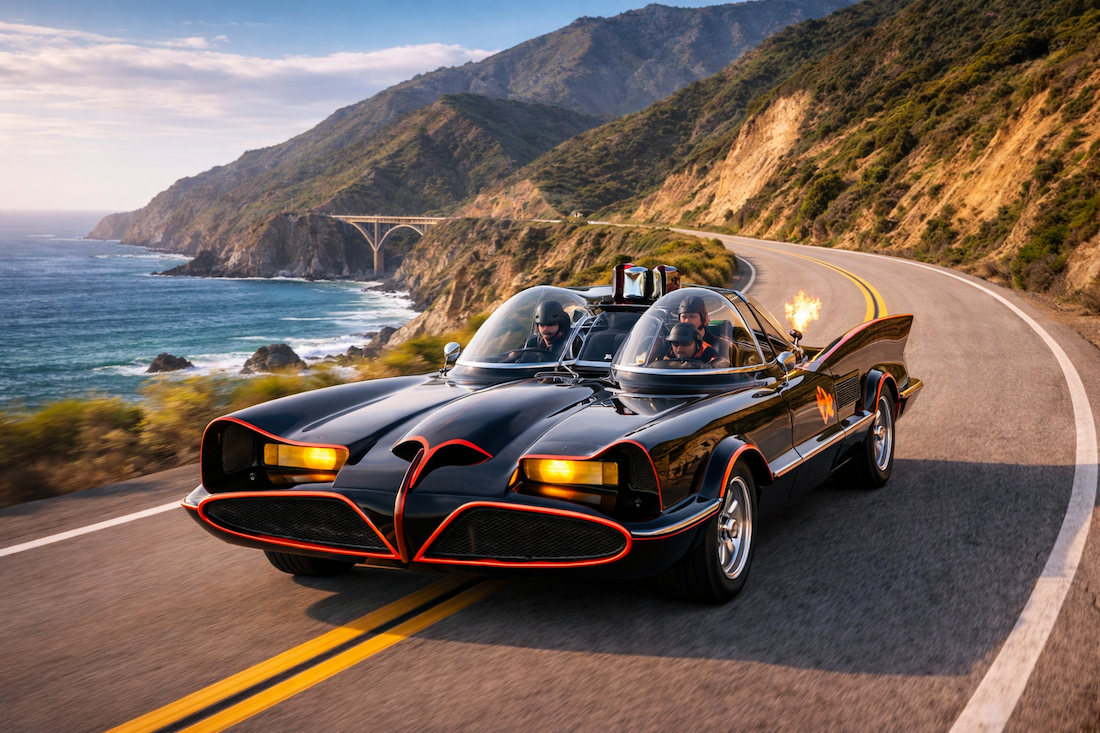
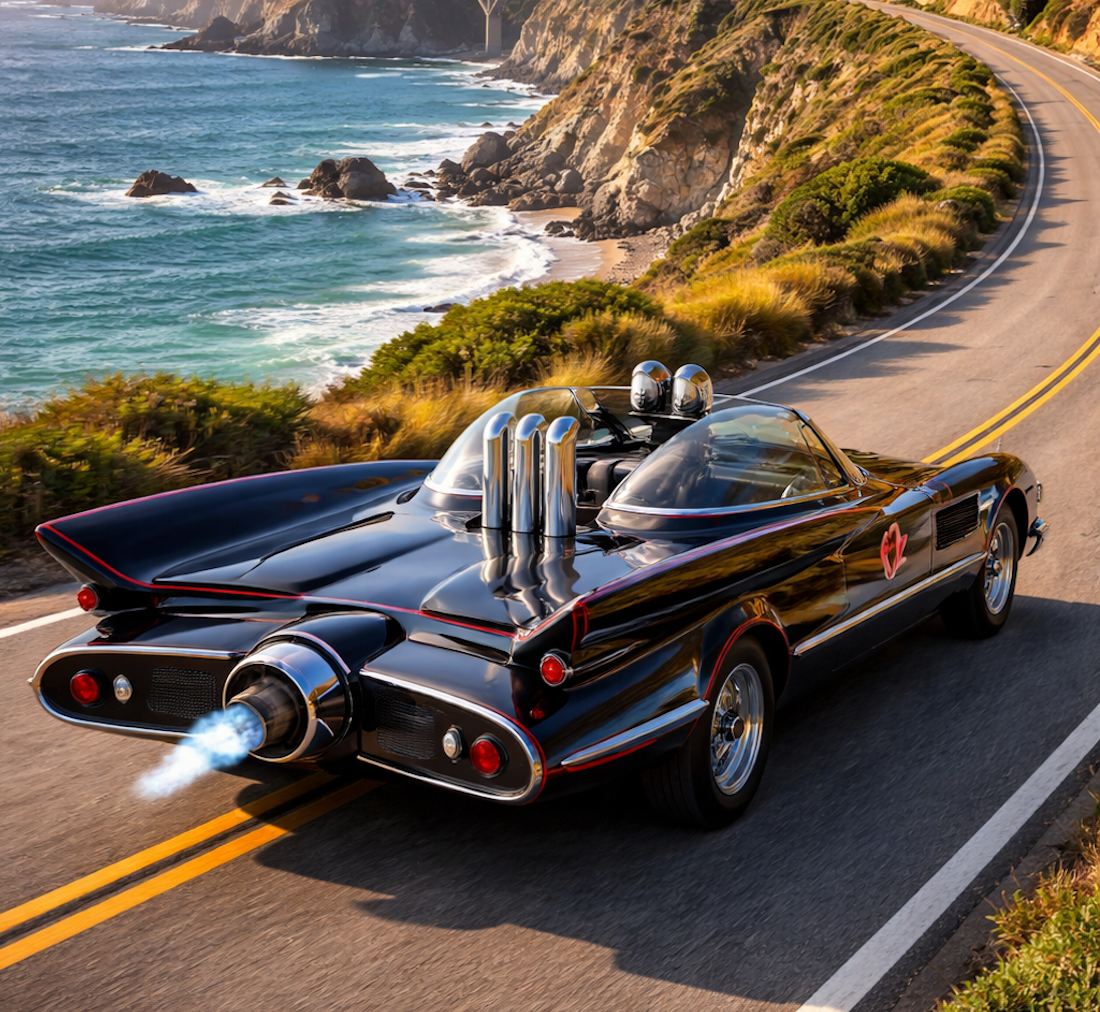
Barris’s genius wasn’t limited to fabrication. He grasped publicity and storytelling as well. By placing custom cars in magazines, movies, and television, he transitioned the movement out of backyards and onto the national and world stage. His work for Hollywood—most famously the Batmobile for the 1960s TV show—cemented the idea that a custom car could be instantly recognizable and iconic.
In many ways, Barris made custom cars legible to the public. He gave them names, personalities, and narratives. Without him, custom cars might have remained a local curiosity. With him, his cars became part of America’s visual language, which was translated for the whole world to see and understand.
Ed “Big Daddy” Roth
If Barris brought custom cars into the spotlight, Ed Roth blew the doors off entirely. Roth treated cars as canvases for his imagination. His creations—bubble tops, exposed engines, cartoon like proportions—ignored conventional beauty in favor of shock, humor, and fantasy. And driving was not nearly as important as how they looked and the emotions they stirred up in the people who saw them.
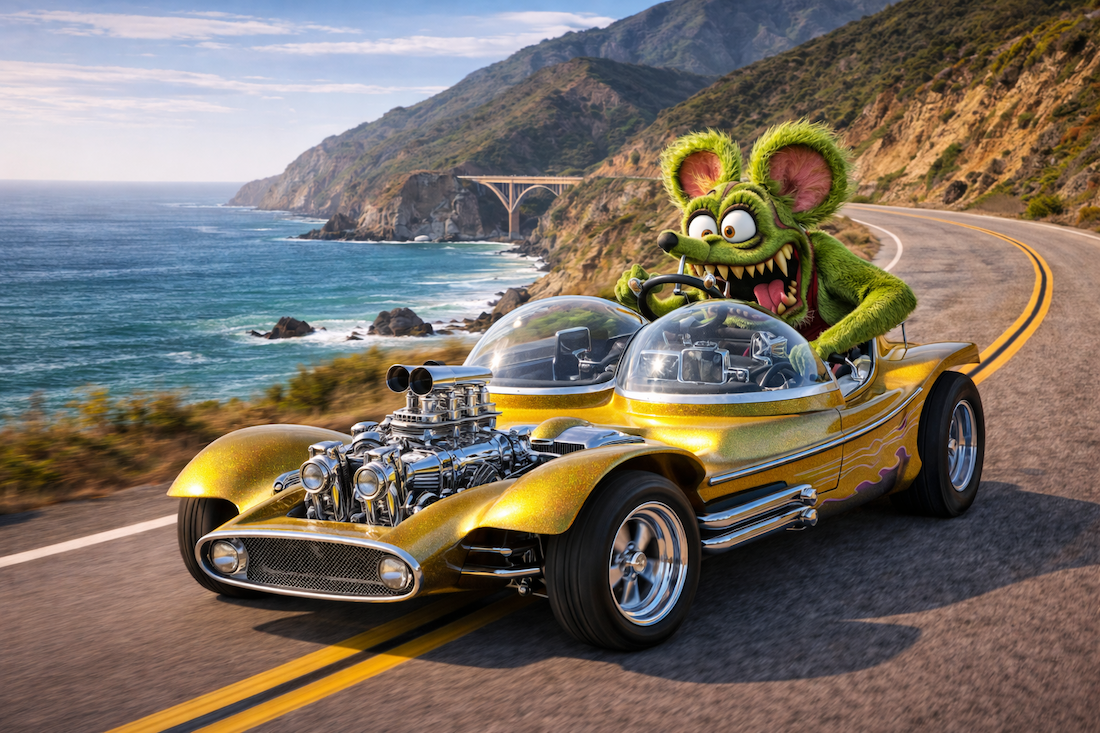
Roth’s genius lay in his refusal to separate cars from art. His vehicles were not meant to blend in or even necessarily drive well. They were meant to provoke emotions and thoughts. They asked the viewer to reconsider what a car could be. This philosophy spilled into his artwork, especially Rat Fink, which captured the rebellious, mischievous energy of hot rod culture better than any polished photograph ever could.
Roth represented the counterculture side of custom cars. Where Barris refined, Roth exaggerated. Where others smoothed, Roth distorted. Yet together, they formed a complete picture of American creativity—one foot in craftsmanship, the other in chaos and art.
Darryl Starbird
Darryl Starbird bridged his imagination with precision. His show cars—like the legendary Predicta—felt as if they had arrived from a decade that hadn’t happened yet. Bubble canopies, jet-age forms, and aerospace influences defined his work, but unlike some show cars, Starbird’s designs retained balance and intent.
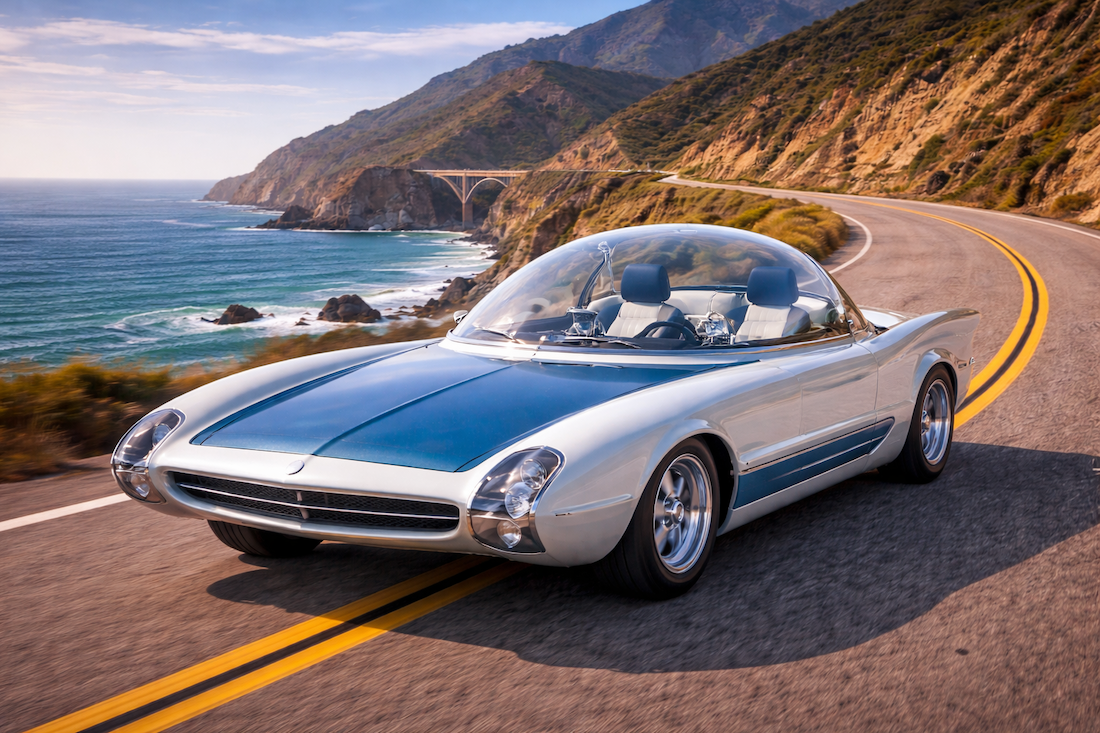
Apparently Starbird understood that the future needed structure. His cars were radical, but never random. They reflected America’s optimism during the Space Age, when technology promised progress and design promised elegance. Starbird’s influence extended beyond the cars themselves; his indoor car shows helped legitimize custom cars as serious design objects worthy of exhibition halls and museum-like presentation. Or art on wheels.
Why These Custom Car Creators Matter
Together, Barris, Roth, and Starbird defined the emotional range of American custom cars:
-
Barris showed how customs could shape popular culture
-
Roth proved they could be art, satire, rebellion and wild
-
Starbird demonstrated they could envision the future
They also influenced Detroit more than Detroit ever admitted. Lower rooflines, integrated bumpers, wild concept cars, and bold colors all trace their lineage back to custom builders working with torches and lead filler, not corporate committees.
They also have influenced many other custom car designers who have created and shared their beautiful creations over the years, which I certainly do appreciate.
My Perspective
Custom cars matter because they are profoundly a part of the human experience. They are imperfect, personal, expressive and inspire some of us to do greater things. They reflect the era in which they were built and the personality of the hands that shaped them. In a car world defined by software updates and nearly identical vehicles (and colors), custom cars remind us that individuality once ruled the car world—and still can, if we let our imaginations have some say so.
Custom cars are rolling art, born not in design studios but in garages and dreams. And thanks to builders like Barris, Roth, and Starbird, they remain one of America’s most original contributions to global car culture and perhaps to art.
Let us know what you think in the Comments.
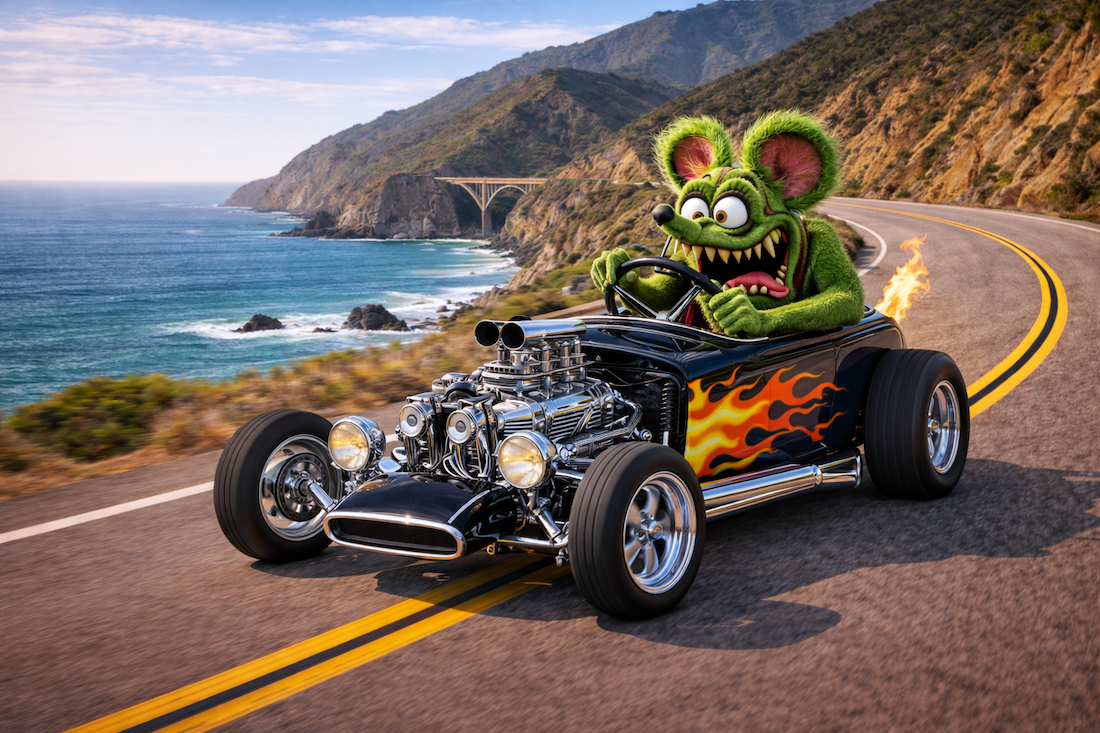
Research, some text and some images by ChatGPT 5.2.


Proud to have counted George as a friend. I’d like to see Gene Winfield in this lineup.
Cindy, A Gene Winfield article is coming up tomorrow.
More than 50 years after Starbird’s bubble-top car (is it the Predicta?), its headlights appear to have been mimicked by the Mercedes SLS!
Great fun and memories are speed by your article. These creators inspired lots of car doodles on my paper in English class!
Dean Jeffries was an important customizer too. He also collected some cars for himself and it’s too bad the Ford GT roadster he got for free, he didn’t see it sell out of his estate for over a million.