by Mike Gulett –
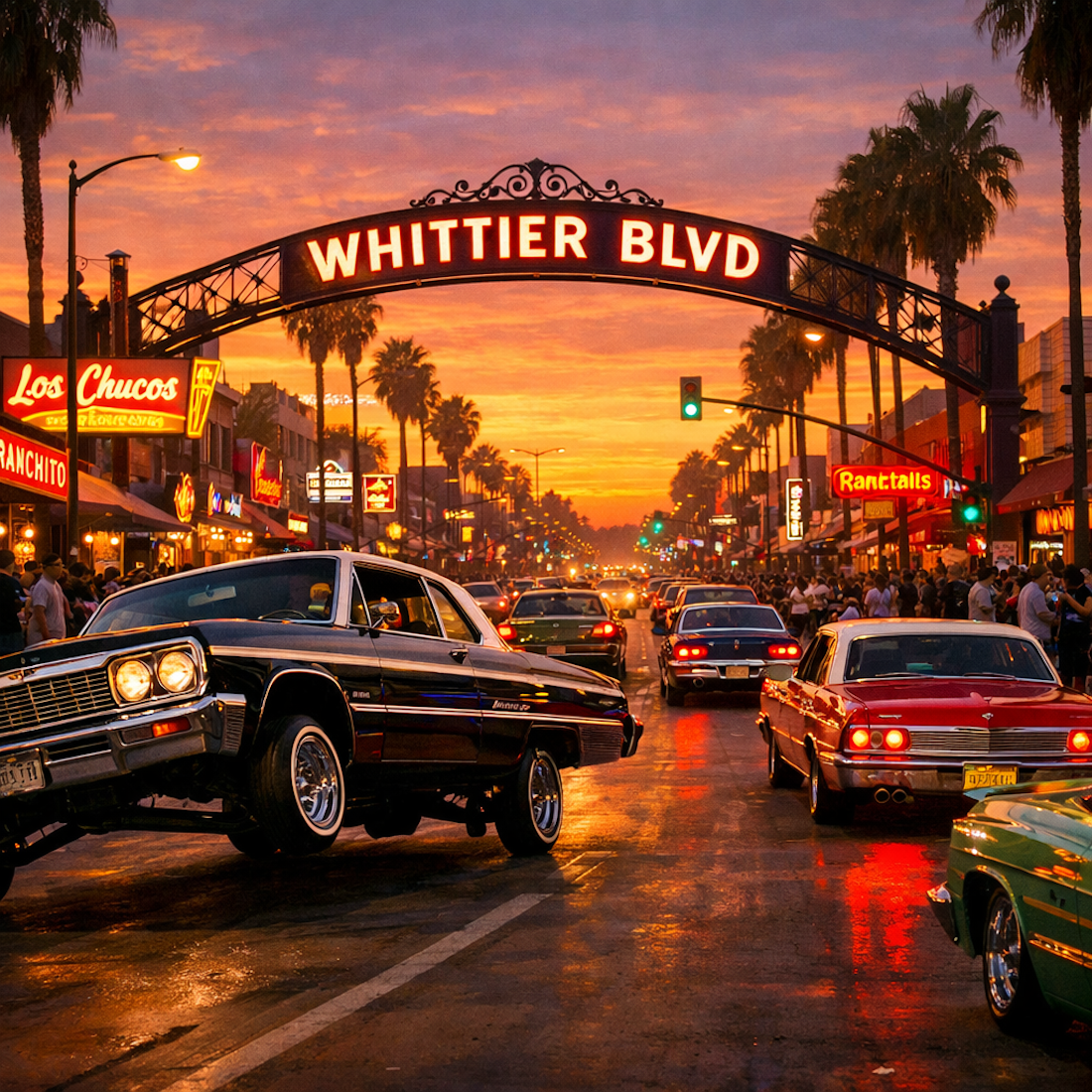
Style Over Speed
Lowriders emerged in the 1940s and 1950s within Mexican-American communities in Southern California. At a time when mainstream car culture celebrated speed, lowrider creators embraced something different:
“Low and slow”
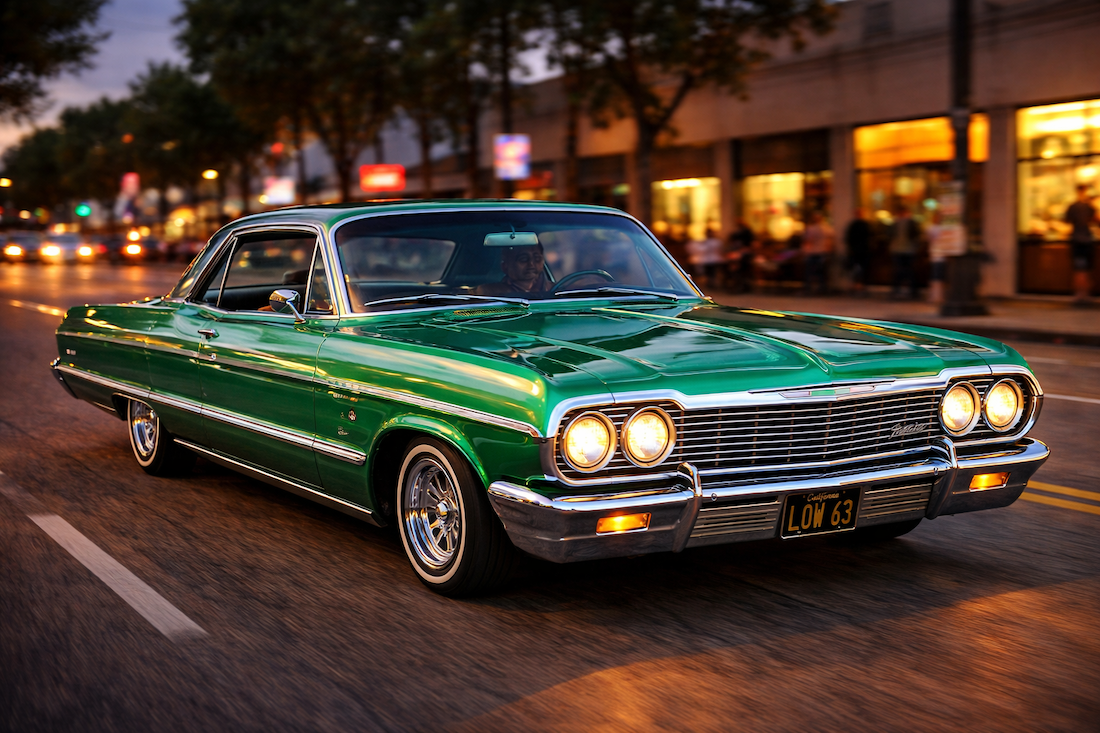
Instead of going faster, the goal was to cruise in style, with dignity, and presence. Early builders lowered their cars using sandbags, cut springs, or custom suspension work. The preferred canvas became the full-size American car—especially 1950s–1960s Chevrolets like the Bel Air and Impala—because of their long lines and attractive body shapes.
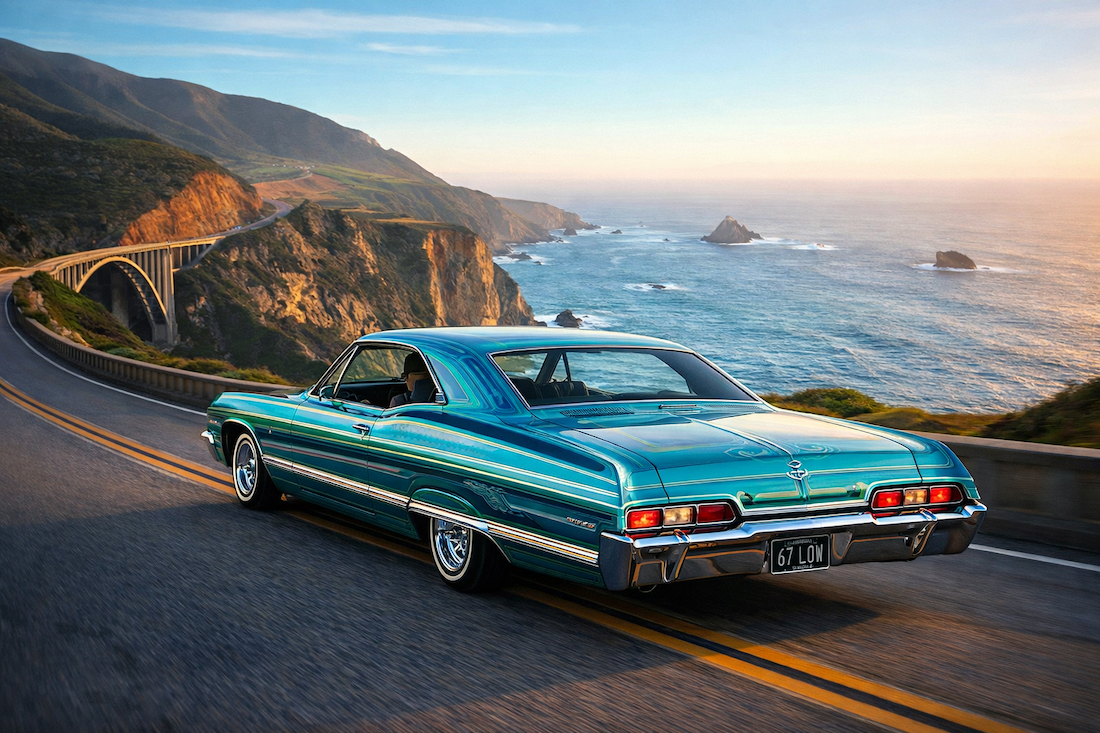
Lowriding was never just about cars. It was about visibility, pride, and creating beauty.
The Art of the Lowrider
A true lowrider is less a vehicle and more a rolling sculpture. Every detail is important:
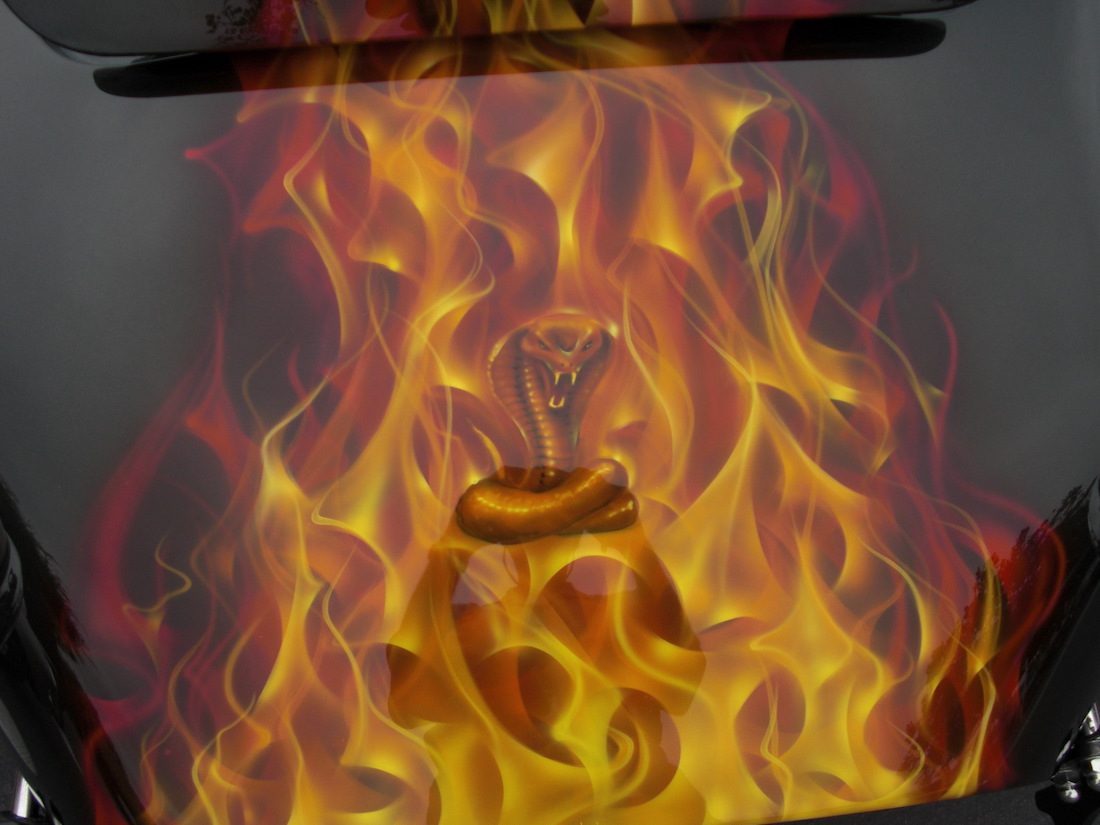
Paint
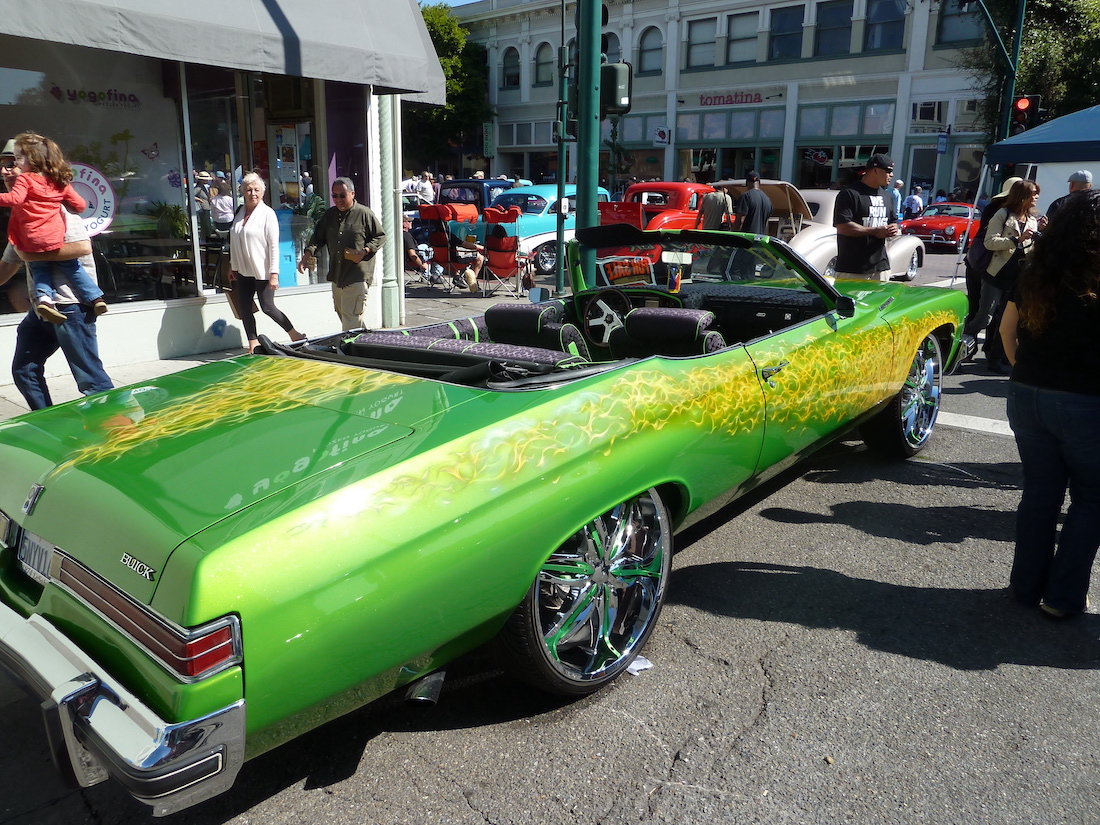
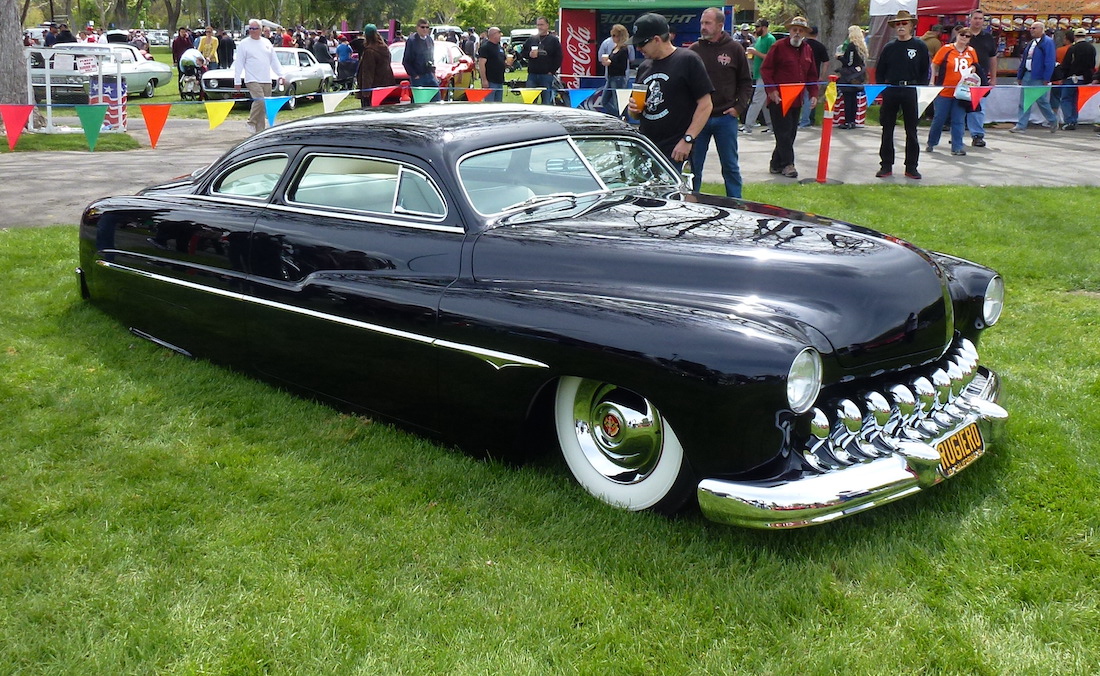
Candy colors, metalflake, lace patterns, pinstriping, murals, and multi-layer graphics create depth, interest and motion even when the car is parked.
Interior
Tuck-and-roll upholstery, velour or leather, engraved steering wheels, and custom dashboards turn the cabin into a showpiece of the owner’s style.
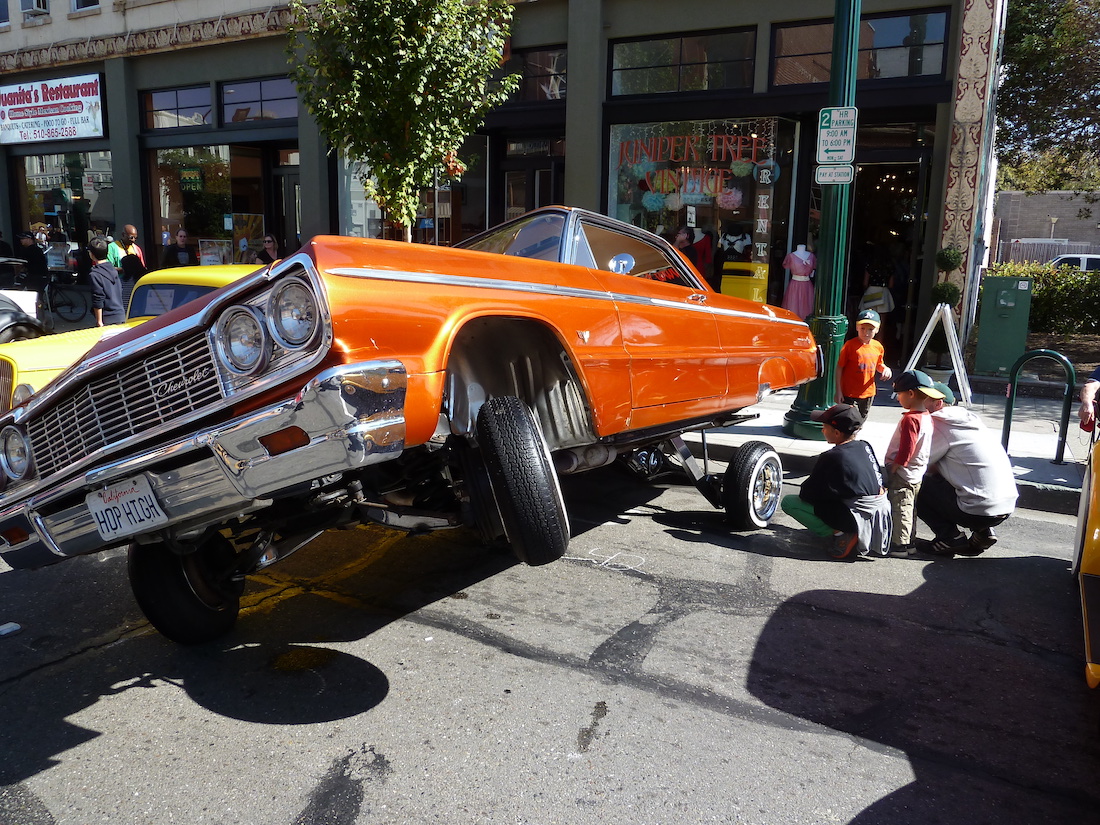
Hydraulics
Introduced in the late 1950s and refined over decades, hydraulic systems allow cars to adjust ride height, tilt, or even “hop.” Yes, they can “hop”. What began as a workaround to meet legal ride-height requirements became a defining feature of the lowrider culture.
Chrome and Detail
Engraved engine parts, polished undercarriages, and immaculate presentation reflect the owner’s dedication and taste. Many cars take years—sometimes decades—to complete.
Cruising
More than shows or competitions, lowriding lives on the boulevard.
Whittier Boulevard in East L.A., Mission Street in San Francisco, and countless other streets up and down the coast became gathering places where families and friends cruised together and celebrated together. The act of cruising—slow, social, and celebratory—turned public streets into community spaces.
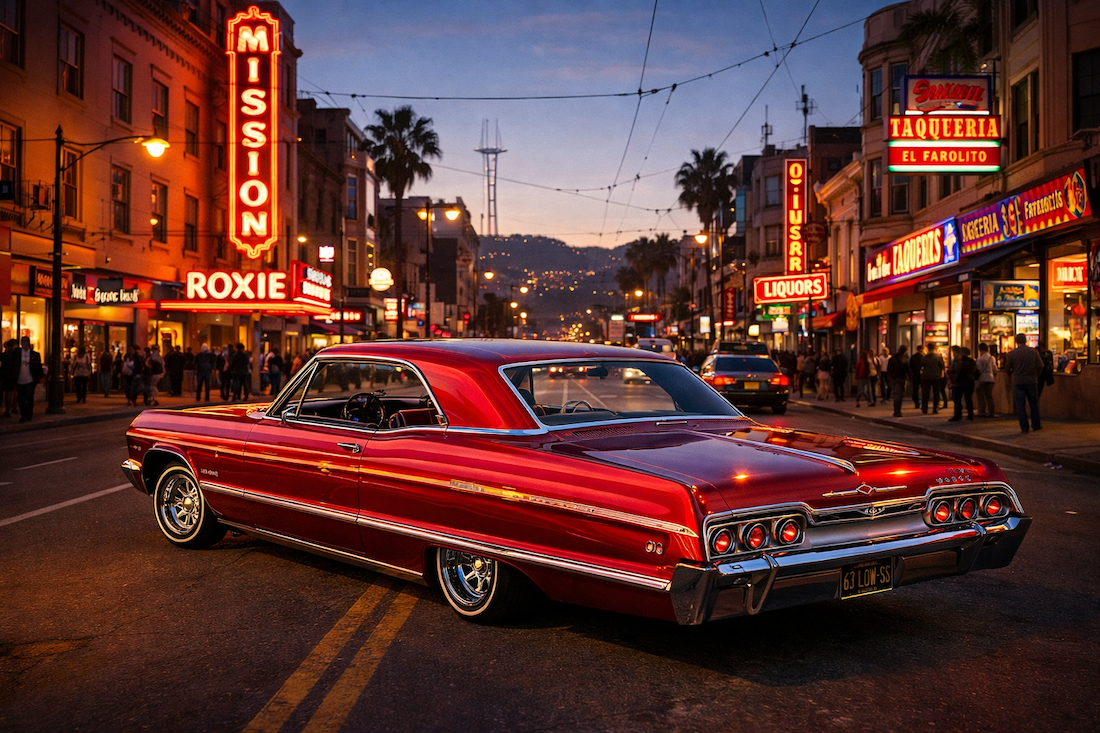
Clubs formed around shared values of respect, mentorship, and mutual support. Multi-generational participation is common: grandparents, parents, and children working together on the same car.
In many ways, lowrider culture is less about machines and more about belonging to a community.
Resistance and Recognition
For decades, lowriders faced misunderstanding and discrimination. Cruising bans were enacted in several California cities beginning in the 1970s and 1980s, often targeting neighborhoods associated with lowrider gatherings.
Yet the culture endured.
In recent years, there has been a powerful shift. Cities including San Jose, Modesto, and others have lifted cruising bans, recognizing lowriding as an important cultural tradition. Museums now display lowriders as legitimate art. Universities study the movement as part of Chicano history and American cultural expression.
Cultural Identity
Lowriders tell stories. Murals may depict family heritage, religious imagery, neighborhood pride, or historical themes rooted in Mexican and Chicano identity. The cars become personal expressions—mobile narratives of memory, struggle, and achievement.
For many owners, building a lowrider is an act of cultural preservation. It connects generations and keeps traditions alive through craftsmanship, shared knowledge and shared goals.
Influence Beyond the Boulevard
California lowrider culture has shaped global design:
-
Custom paint and metalflake techniques influenced hot rods and show cars.
-
Music videos, film, and photography spread the aesthetic worldwide.
-
Lowrider magazines, especially Lowrider (founded in 1977), documented and legitimized the movement.
-
Today, lowrider communities exist across the United States, Japan, Europe, and Latin America.
Yet California remains its spiritual home.
Why Lowrider Culture Matters
Lowriding is important because it represents:
Art – handcrafted, highly personal automotive design.
Heritage – a living expression of Mexican-American and Chicano culture.
Community – family-centered clubs and shared public spaces.
Perseverance – thriving despite decades of misunderstanding.
American Creativity – transforming mass-produced cars into individual works of art.
Perhaps most importantly, lowriders redefine what car culture can be. They remind us that automobiles are not only about performance, technology, or status—they can also be about identity, storytelling, and pride.
Low and Slow, and Here to Stay
As the sun sets over a California boulevard and a candy-painted Impala glides past at idle, the philosophy becomes clear. Lowriding is not about arriving quickly.
It is about being seen.
It is about craftsmanship and the art.
It is about community and family.
And like the cars themselves, the culture moves forward—low, slow, and with unmistakable style and pride.
Let us know what you think in the Comments about Lowriders.
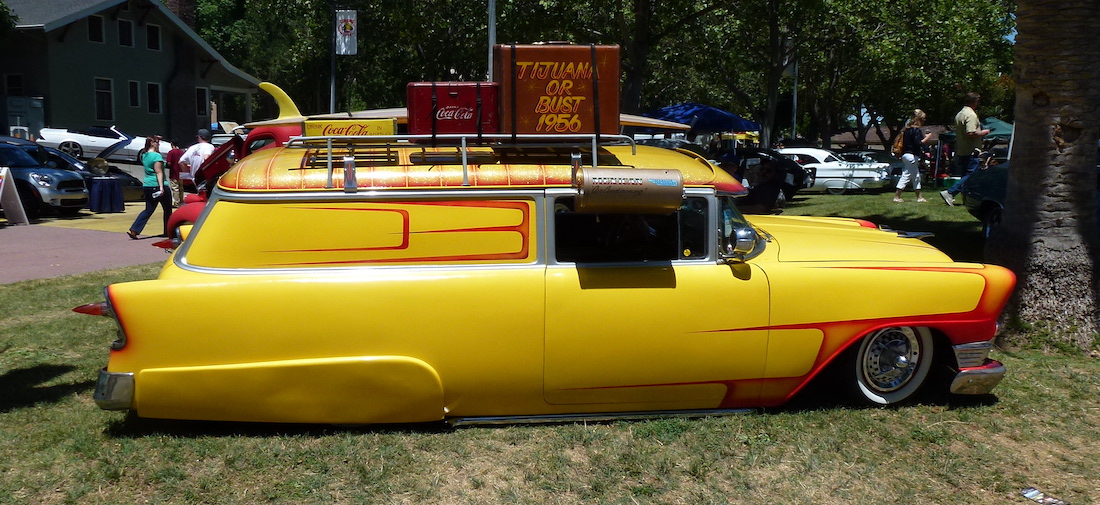
Research, some text and some images by ChatGPT 5.2. Photos by Mike Gulett.


Mike,
Great article. I never your knowledge, authority, and expertise. However, this is one area I do have a quibble. When I lived in Santa Fe, NM I saw many lowrider – it’s still a huge culture and aspect there, especially among the Hispanic communities. Espanola, NM has always been the birthplace of lowrider that I’ve heard about. I agree that the epicenter now is firmly in Southern California – and there are still a huge number of them in Arizona, New Mexico, and Texas – but Espanola was where they started and expanded from.
Knowing the Hispanic community, though, I’m sure there were similar influences and artistic vectors and a lot of shared knowledge and ideas. Even today, the West Coast has a big influence on New Mexico…
Thanks for sharing.
Incredible illustrations.
Mike,
This is another case of the promise and greatness of America, where our polyglot of subcultures creates something that not only explodes across America, but also across the world. Like Josh above says, besides California, there are huge low-rider communities in Arizona, New Mexico, and Texas. There is also a newer huge low-rider community in Oklahoma, and now even in France and the Scandinavian countries, and let’s not forget its offshoot from the Southern African-American culture, “Donk Car Culture”, popular in Georgia and Florida.
Glenn in Brooklyn, NY
So true! A fantastic amalgam of many cultures – best when the best elements of each are connected and combined.