by Mike Gulett –
A Bold Vision in a Bold Era…
In the innovation and excess of the American automobile industry of the late 1920s and 1930s, few car company names are remembered as well as Cord (even though the company was not around for very long). Backed by the ambitious Errett Lobban Cord, Cord automobiles were more than cars; they were rolling declarations that the future could be better engineered and styled for the brave.
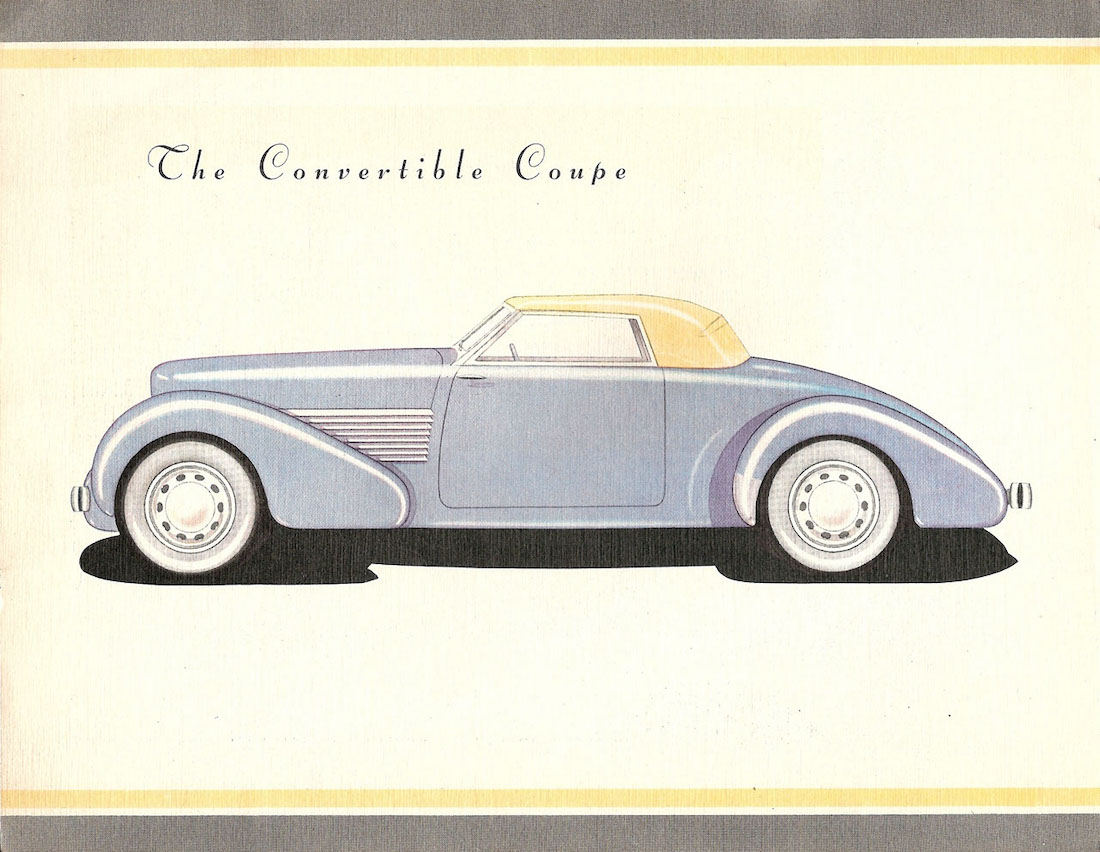
1936 Cord
Cord headed the business empire that included Auburn and Duesenberg, all under the umbrella of the Auburn Automobile Company. While Duesenberg represented ultimate luxury and Auburn delivered performance at a more reasonable price, Cord was the technology and style leader—the brand that pushed the boundaries.
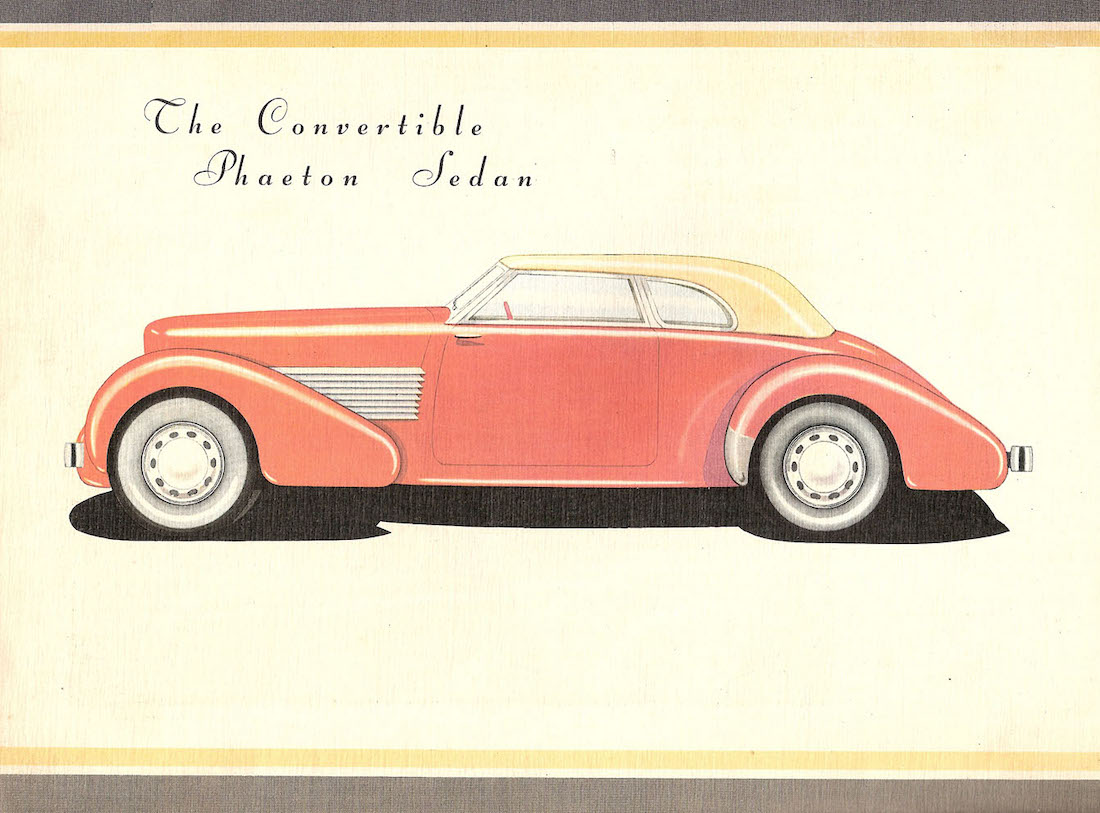
1936 Cord
America’s First Front-Wheel-Drive Production Car – The Cord L-29
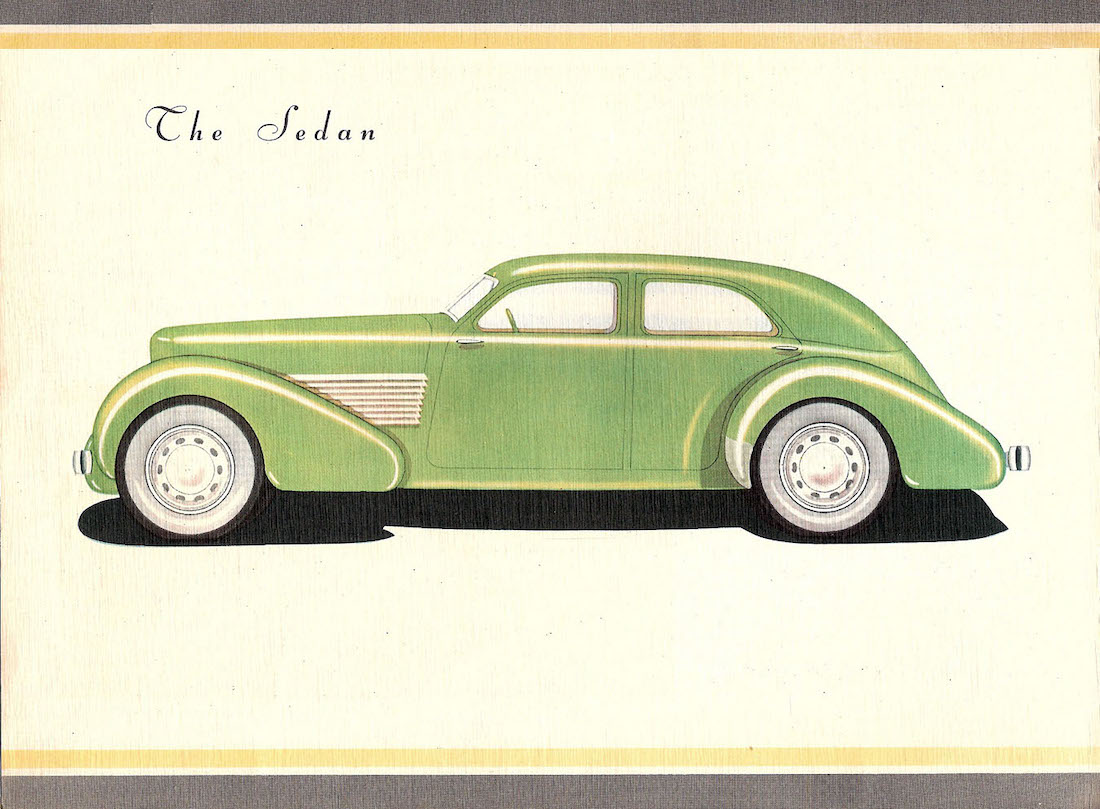
1936 Cord
The L-29’s engineering proved complex, and its performance—hindered by too much weight and low power—did not quite match its appearance. Worse still, its launch coincided with the start of the Great Depression, which was bad news for the luxury automobile market.
Despite its shortcomings, the L-29 set the tone: Cord would not follow trends—it would be a leader.
The Cord 810/812: Art Deco on Wheels
Designed by the talented Gordon Buehrig, the 810 was introduced at the 1935 New York Auto Show and amazed audiences. Its “coffin nose” grille replaced the traditional upright radiator, using horizontal louvers that flowed seamlessly into the body. Even more amazing were its hidden headlights—operated by hand cranks—making the Cord one of the first production cars to feature hide away head lights.
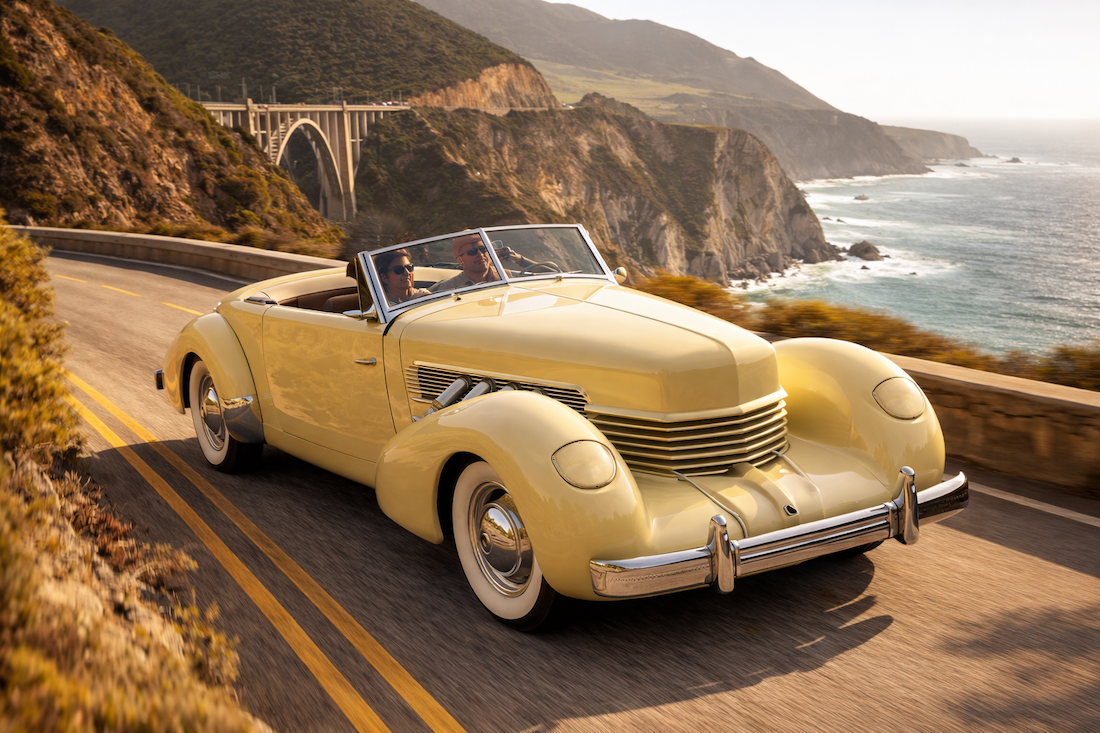
The car’s design language was pure Art Deco: streamlined, modern, and elegant. Inside, the dashboard resembled an aircraft cockpit, reflecting our fascination with aviation.
Mechanically, the 810/812 continued with Cord’s front-wheel-drive layout and introduced other innovations like a semi-automatic gearbox with an electrically pre-selected transmission. The supercharged 812 models, identifiable by their so cool, dramatic external exhaust pipes, delivered performance to match the looks.
Early cars suffered from new technology issues, and the advanced transmission system could be troublesome. Production delays and quality concerns damaged what should have been a triumphant moment.
A Lasting Legacy
Cord production ended in 1937, a victim of financial difficulties within the Auburn-Cord-Duesenberg empire and the on going impact of the Great Depression. In less than a decade, the brand had gone from daring upstart to an automotive legend.
And legend is justified for Cord.
Cord has endured not because of their commercial success, but because of the vision. They anticipated trends that would become mainstream decades later: front-wheel drive, aerodynamic styling, integrated design, and driver-focused interiors.
More importantly, they captured something rare in the automotive world—a willingness to take risks. In an industry often defined by small, incremental change, Cord took a big step forward, even when the market was not ready.
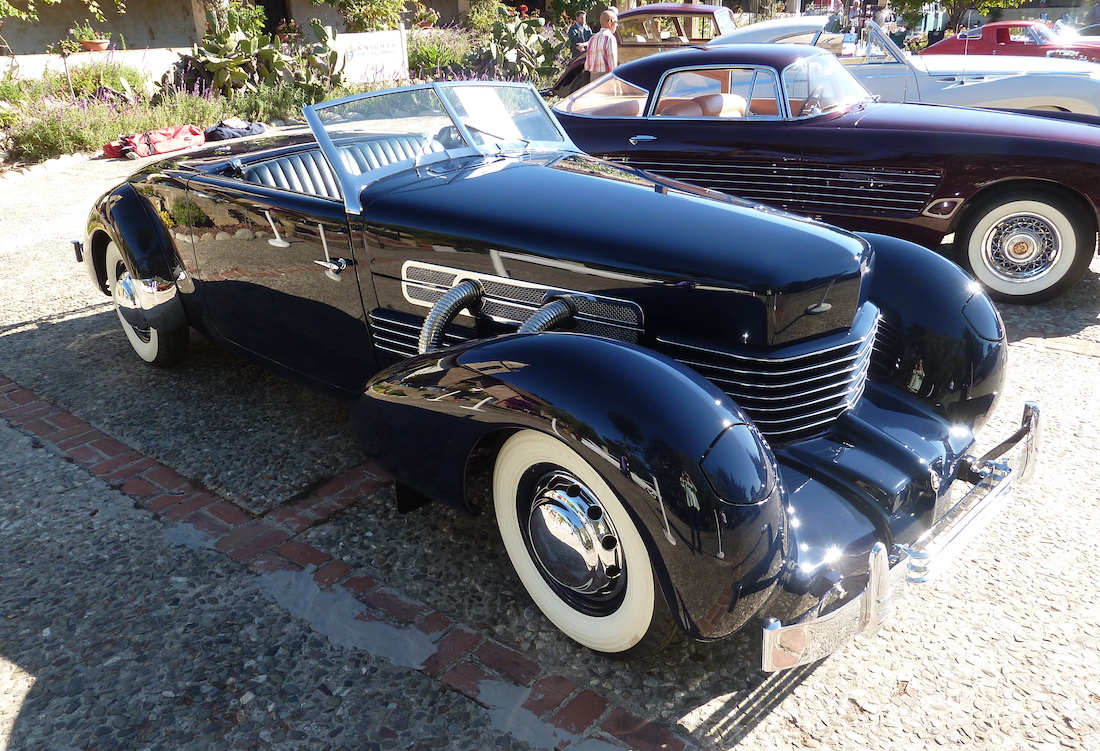
Photo by Mike Gulett at the 2015 Carmel Mission Classic
Today, the Cord 810 and 812 are regarded as among the most beautiful American cars ever built, appearing in museums and concours events. Their influence can be seen in everything from postwar European sports cars to more modern cars.
A Perspective
There is something very attractive about Cord—not just the cars themselves, but what they represent. They remind me of a time when ambition could override caution, when a car company just might gamble everything on an idea simply because it was new and exciting.
Every time I see a Cord at any event I must stop, stare and take photos. They are so beautiful.
In today’s world of algorithms, regulations, software and risk mitigation, Cord cars feel so romantic.
These were cars built not just to sell, but to inspire us all.
Cord did not last as a company—but it did last as a creator of very memorable cars.
Let us know what you think in the Comments.

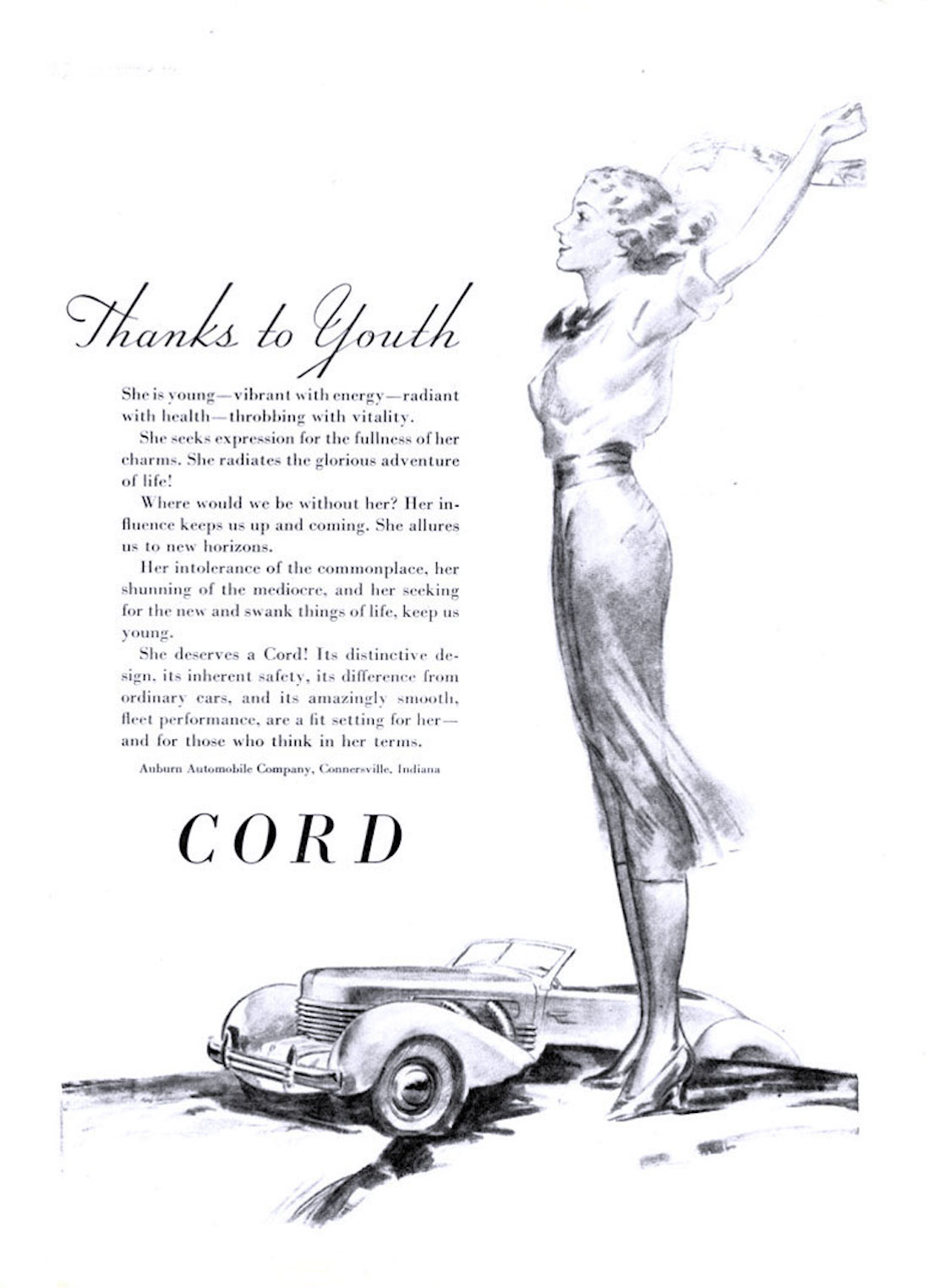
Research, some text and some images by ChatGPT 5.2. Some images from Cord brochures and advertisements.


Most everything ahead of its time had issues to be resolved. Cord was no different. In time everything EL envisioned eventually becoming reality. If you sit inside a Beverly sedan, close your eyes and you will understand.
Innovation plus stunning presentation – such a pity it couldn’t survive its era.
During one of the west coast Franklin club tours in the 70’s we were joined by an owner that also had the 5/8 scale fiberglass 810 replica. I think it was powered by a Corvair motor. It was actually pretty impressive as a replicar but still well shy of the real thing.
Mike,
This is an interesting article that appeared on the “Old Car Weekly” Facebook site about five days ago highlighting the latest exhibit at the Auburn Cord Duesenberg Museum:
https://www.facebook.com/share/p/1GwrkR9him/
I am sure that you heard the old story that Deusenberg automobiles were so shockingly impressive in so many respects, that the phrase, “That’s a duesey?” entered the American lexicon because of them.
Glenn in Brooklyn, NY
Michael,
Loved reading your piece, “The Allure of Cord Automobiles”. I very much appreciate the romanticism you have injected.
I happen to own one of the s/c 812 “Sportsman” Cords aka Convertible Coupe. Some more “ahead-of-its-time” innovations to add to those you presented. Cord was (I believe) the fist production car to use the unitized body construction (yes, there was a front stub frame). Not only were the headlamps hidden, the tail lamps were flush with the body, something (I believe) not previously seen on production cars. Even while it’s corporate brethren still had clam-shell hoods, Cord hoods were back-hinged as a single unit, as are all modern cars today. Mechanically, it even had positive-crankcase ventilation (PCV) at a time when air-pollution was not in the public consciousness.
Great read Michael. Thank you.
Minor points for of correction for Mike & Glenn above:
Mike, the Cord replicas you are referring to were built by Glenn Pray of the ACD Co., which he relocated from Auburn, IN to Broken Arrow, OK. They were not 5/8th scale but 8/10th (neatly the same moniker as the original model 810 Cord). Also, they were not made of fiberglass, but rather “Royalite” which was a new synthetic material recently developed by US Royal. Quite advanced for the time.
Glenn, the term, It’s a “Duesy”, indeed comes from Duesenberg, however, dictionaries, authors, poets, song writers, et. al. can never seem to agree on it’s spelling; “Duesy” or “Duesie” (my favorite) or “Doozy” [Webster’s favorite]. So, who better to settle this debate than the man who first coined the expression, Fred Duesenberg. The expression would have predated a May 22,1902, ad published by Fred in the Rockford [Iowa] Register for his farm implement company, wherein he used the term, “Dusey”. So, there you go, we’re all wrong!
John,
Thank you for this very interesting information.
Michael,
Also, thank you for re-publishing the “Thanks To Youth” Cord ad. I have always enjoyed studying the ads for the three sister marques: the entry level Auburn; the more costly Cord; and the supremely expensive Duesenberg. When you look at ads for the lower price Auburn, the car occupies most of the paper and ink with the copyright talking just about the car; sort of the same formula of ad used industry-wide. When you look ads for the pricier Cord, like you have shown above, the car is minimalized with just a small image of the Cord and no description. Then if you look at Model-J Duesenberg ads (typically only found in magazines of the elite (e.g. Colliers, SEP, et. al.) there you see no imagery or description of the car at all. Rather 100% of the ad describes who drives a Duesenberg and describes their lifestyle. Regardless how sophisticated the ads, it didn’t save the trio from bankruptcy. When you look at all the gorgeous full color ads Cadillac, Packard, Marmon and the others were running, were the simple b&w ads Auburn Automobile Co. used to promote the Cord and Duesenberg pure genius? Was it a blunder for Cord ads to not stress its FWD and supercharging; or for Duesenberg to not stress it’s d.o.h.c. supercharged engines and Indy-winning heritage? I dearly love these avant-garde ads and have always wondered what the conversation in the AAC corporate Board Room must have been when some ad exec pitched the idea.
She Drives a Duesenberg