by Mike Gulett –
Many, or most, of the established car makers have significantly backed off of their transition from gas powered cars to all electric cars. This includes Porsche, Honda, Ford, GM, Stellantis and the VW group. Many have written down billions of dollars in costs associated with their EV endeavors. Some governments including the UK and California got way ahead of the real market with their mandates for EV sales instead of gas powered cars.
Pure EV makers like Lucid and Rivian don’t have a choice because they do not have a gas powered car business to fall back on, so they are sticking with their EV business model. Except for Tesla, which wants to get into the robot business instead of EV cars. The Chinese are making big moves in the EV business with hundreds of makers and BYD taking over the market leader position from Tesla. This could explain why Tesla canceled the Model S and wants to focus on robots.
Not long ago, it seemed inevitable that the internal combustion engine would be swept aside quickly. Governments set deadlines, automakers made bold promises, and companies like Tesla became symbols of a new automotive era. The narrative was simple: electric vehicles (EVs) were cleaner, faster, and destined to take over.
And yet, here we are. The revolution hasn’t exactly failed—but it has slowed, stumbled, and fizzled—costing many car manufacturers a lot of money.
What happened?
The Early Surge
The first phase of the EV transition was driven by early adopters (think Tesla cars in California). Cars like the Tesla Model S proved that electric cars could be desirable and fun, not just environmentally friendly. Governments piled on incentives, and nearly every major manufacturer—from General Motors to Volkswagen—announced ambitious EV plans. Toyota was an exception they decided that hybrids were more important to them than electric cars.
But they all learned that scaling a technology transition across an entire global industry is far more difficult than launching one compelling new product.
The Infrastructure Problem
For many car buyers, the biggest barrier to EV conversion is simple — charging.
Unlike gasoline, which benefits from a century of infrastructure buildout, EV charging networks are still uneven. Urban areas do reasonably well, but vast regions—especially in the American interior—remain “charging deserts.” And if a car buyer lives in an apartment or condo where they do not have access to charging then the charging network is all they have to power up.
Even where chargers exist, use ability can be inconsistent. Broken stations, slow charging speeds, and confusing payment systems hurt confidence. While Tesla’s Supercharger network set a gold standard, competitors have struggled to match its consistency.
For a buyer considering a road trip down the Pacific Coast Highway—or across Europe—the question lingers: Will I make it to my destination without the help of a tow truck?
Cost
EVs were supposed to become cheaper than gasoline cars. In theory, they still might one day. But today, the upfront cost remains high.
Battery production—dependent on materials like lithium, cobalt, and nickel—has proven volatile and expensive. While models like the Chevrolet Bolt EV briefly approached affordability, many newer EVs skew toward premium market prices.
For the average buyer, the economic case for EVs is no longer obvious.
Range Anxiety
Despite technological improvements, range anxiety hasn’t disappeared.
Modern EVs can travel 250–400 miles on a charge, which sounds like it should be sufficient. But real-world variables—cold weather, driving speed, towing—can reduce that range significantly.
Policy Whiplash
Government policy has been both a driver and a destabilizer of the EV market.
Aggressive mandates—such as those in California, the UK and the European Union—pushed automakers to accelerate EV development even when the automakers felt hurried beyond what some of them thought prudent.
Now that it is clear that the EV mandates cannot be met many manufacturers are suffering the financial consequences.
Reality Check
Recently many automakers began quietly revising their timelines. Porsche had originally canceled their top seller, the gas powered Mecan SUV, but has now scheduled a replacement gas powered SUV to take its place and pushed out or cancelled plans for other EV models.
Other companies like Ford and General Motors slowed EV investments, delayed new models, or pivoted back toward hybrids. Profit margins on EVs proved thinner than expected, and demand, while growing, was not keeping pace with original plans.
Transitioning to EVs requires rethinking supply chains, manufacturing processes, factories, dealer networks, servicing and customer expectations—all at once. This is something that governments do not understand.
Car Buyer Psychology
Perhaps the most underestimated factor is human behavior. Car buyers are generally conservative; they value familiarity, reliability, and convenience.
For many, EVs still can feel like a compromise—whether due to charging, range, or resale value uncertainty.
There’s also a cultural element. The sound, feel, and essence of gasoline cars—especially for enthusiasts—are deeply ingrained. The transition to silent, software-driven vehicles that are essentially computers on wheels represents not just a technology shift, but an emotional one as well.
The Road Ahead
The initial hype—fueled by optimism and environmental urgency—has given way to reality. If EVs are to succeed then there must be a gradual evolution.
Hybrids are coming back (Toyota was right). Infrastructure is slowly improving. Battery technology continues to move forward. Companies like the Chinese company BYD are demonstrating that cost breakthroughs are possible and maybe charging time breakthroughs are as well.
Instead of an abrupt transition, we are seeing a long transition time where gasoline, hybrid, and electric vehicles will coexist. The car manufacturer winners will likely not be those who rushed ahead the fastest, but those who best adapted to new technology, economics and human behavior.
Revolutions make for good headlines but in the car business, progress has always been incremental, uneven, and shaped as much by car buyers as by engineers.
And I suspect that this time will be no different.
Let us know what you think in the Comments.
Research, some text and images by ChatGPT 5.2.


Fizzled? In Europe, EV registrations outnumber piston car registrations, according to Automotive News.
Here in California, gas is now $5.50 a gallon and $7 and $8 a gallon for diesel. Look for a renewed interest for
ev’s as gas prices climb. California is regulating refineries so much a few have closed already… more to come.
I know many piston cro magnons, and they are incapable of waiting for an ev to charge. No patience. My cousin
plugs in his Tesla to 220 volts in his garage, and goes to sleep. Yeah, not everyone can do that. Also, new battery
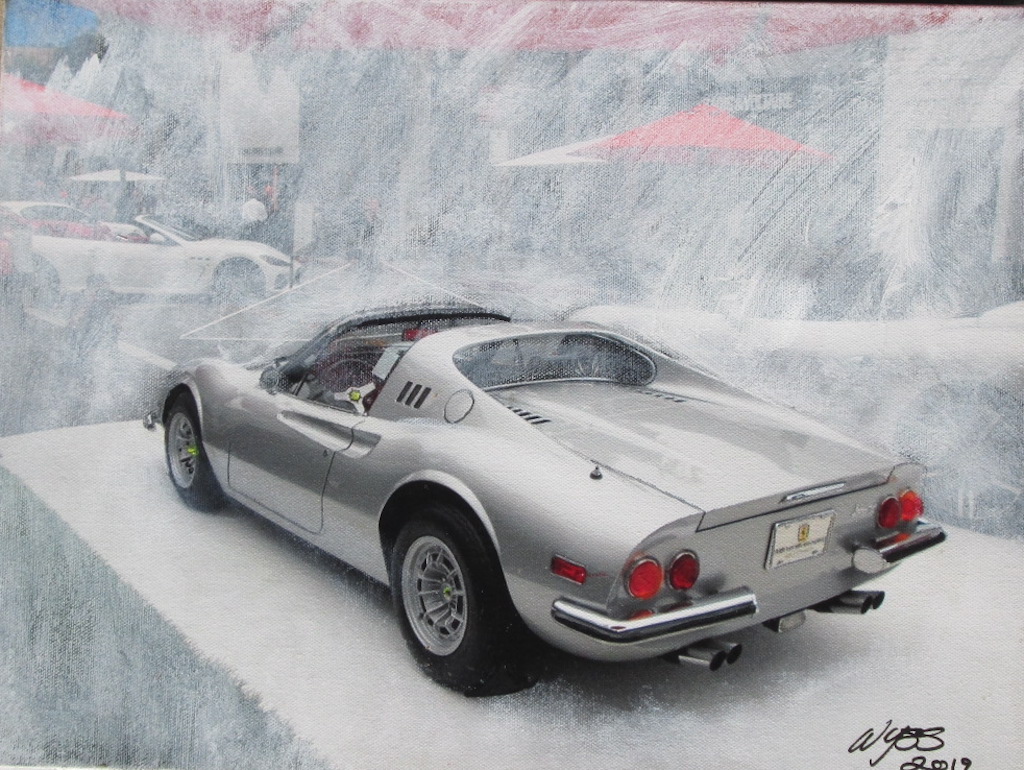
materials and construction, will change charge time in the near future. My Tesla is 10.5 years old, and not been much trouble at all. I have the original motor and battery pack. Even the lead 12 volt battery lasted 9 years. There are no rubber belts in my Model S for running accessories, or a “Timing Belt” … I sold my Ferrari recently after a $10,000 + engine out service to replace the timing belts…well, add fuel tanks clean out, new fuel pumps, new tires, 12 V battery, and clutch, the bill at Newport Beach Ferrari was $80,000. Car was not body damaged at all, and car has only 42,000 miles… no wonder Jay Leno wont own a Ferrari, and loves his Tesla. He told me when I met him at an automotive book store was: “the Tesla changes everything we know about cars” Do not say EV’s have Fizzled…… only a minor stumble…. they are better than MOST folks know….they just need to learn more about
them………
An honest and well written assessment from an EV owner. Many EVs are outstanding vehicles like your Lucid however a costly investment that is experiencing massive depreciation with so many EVs coming off lease.
I share Brian’s; and Jay Leno’s thoughts on Ferrari ownership (having never owned one). I live in rural Maryland which is probably more typical than California. Best not comment on California. Hopefully this recent spike in fuel prices is temporary. Though it is hard to admit I have many friend who baught EVs and now have buyer remorse though they are good cars.
EV’s are the wave of the future from my perspective, however I learned long ago there are no unrealistic goals , just unrealistic timelines. As a current ICE driver and collector I am surrounded by family members and friends with Teslas in the Mid-Michigan area. Nice cars, I may own one someday or perhaps one of the EV Cadillacs, if they continue to build them. Yes charging is a concern in our area, surrounded by ICE car plants, but I’m sure that will improve. My first purchase of an EV looks to be a hybrid Truck as hauling a car trailer to shows would severely limit the range with a straight Ford Lightning. As for the V8 growl that so many of my ICE fan friends crave, that seems to resonate mostly with the “big truck” or “tuner” crowds in our region, as evidenced by the kids who try to drag race down our residential streets. As for me I hope the big three get their EV plans off the ground before we give up another niche to the Chinese. And as for the V8 growl, my family is fortunate enough to have a couple collector V8s in the garage to satisfy our auditory cravings. Provided that I can still find gas to run them in in the future.
I’m happy with my classics. No disposable plastic crap for me.
This is such an interesting topic. So hard to debate or even discuss. So many variables. Pure EV, plug in hybrid, hybrid, etc…
Also, comparisons to Europe are not really relevant since the United States is such a different beast. Speaking of the United States.. it is so big and varies so much in geography and demographics and culture much of EV success or failure depends on where you are talking about. In California they sell. in my area they don’t. As a new vehicle dealer in Pennsylvania last year we sold over 450 ICE vehicles. We sold 9 Evs. Again, thats pure BEV or battery EV. Hybrid…. different story, they sold, but full EV they just do not sell here. NYC… the DC area, they sold more.
Advanced sustainable fuel could be a game changer as well. Time will tell.
Porsche update from Motor 1 today:
“It’s been four years since Porsche projected EVs would account for more than 80 percent of its sales by the end of the decade. Although it’s only 2026, that target has already been abandoned, as electric cars aren’t gaining traction at the rate estimated in early 2022. Last year, vehicles without combustion engines accounted for 22.2 percent of total shipments.
Even with an electric Cayenne now out, the original 80-percent objective feels like grasping at straws. Porsche is no longer pursuing such lofty EV goals, instead committing long-term to combustion engines. Plans for a new combustion-engine crossover have already been announced as a replacement for the first-generation Macan.”
Read the rest here:
https://www.motor1.com/news/791767/porsche-gas-engines-far-next-decade/?utm_source=insider.motor1.com&utm_medium=newsletter&utm_campaign=meet-hyundai-s-wild-boulder-concept&_bhlid=1ec5081e04454a554441a684b0dfa3d4c50c763d
Everything positive you ICE fans want to say about disliking EVs goes out the window depending on
whether we take that island intact in Iran with all the gear for dispensing oil. If we take it
and they bomb the hell out of it, gas in the US will go up to $10-12 a gallon and you can
love your ICE car as much as you want but if it costs 2 to 3 times what it cost before to fuel it
you might slide toward EV.
Mike,
If you get “Cars” magazine from England like I do, you’ll see that EVs have a significant market share there. At this point, I’d say that 50% of their new car reviews are of new EVs hitting the market, and the automakers from China are already in that market.
My step-son had his new IC BMW leased, and that car spent more time at the dealer than on the road, so after his lease term, he went with a Tesla, and can’t be happier. He says he spends $80 per month on electricity for his Tesla instead of $80 per week on gas with that BMW, and his Tesla never needs service. Most EV owners I meet and talk to say they love their EVs, and could never go back to what they consider a primitive IC vehicle.
As you say, the market acceptance for EVs was overhyped, and automakers are holding the bag for its consequences. Jaguar originally made a commitment to a total EV line, choked, and now they look like that they are going out of business. Ford’s losses in the last year are mostly the result of its original EV commitment.
As you say, the market will eventually decide what technology will prevail Everything comes full circle: until the invention of the self-starter, electric vehicles were incredibly popular. You could start them with a key and starter button, instead of taking your life in your hands with a hand-crank.
Glenn in Brooklyn, NY