by Mike Gulett –
There was a time when if you wanted to let others know that you had ‘made it’, you did not drive an SUV, you drove an elegant sedan, a beautiful coupe, or maybe a grand touring car with plenty of performance and elegance. These cars weren’t just our transportation, they were statements and they represented years of hard work, ambition, and accomplishment. They reflected our style and personality.
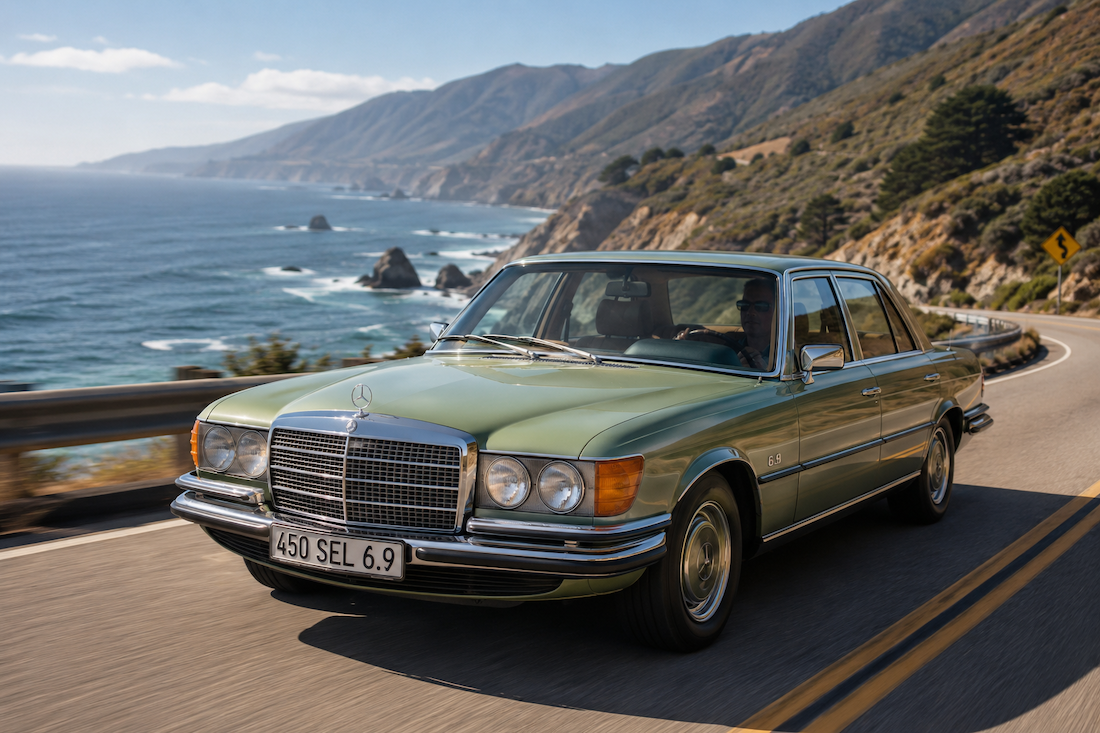
Drive through just about any nice neighborhood in America during the 1970s, 1980s, or even the early 1990s, and you would see cars that demonstrated confidence without shouting. A Mercedes-Benz parked in the driveway, a Jaguar resting beneath a carport, or a BMW coupe sitting in front. These cars meant that the owner had arrived.
Today, the symbols have changed somewhat.
Luxury SUVs dominate today. They are comfortable, advanced, and very practical as well. But as capable as they are, some lack the sense of occasion like opening the long door of a personal luxury coupe or sitting in the driver’s seat of a handcrafted sports sedan or GT.
Somewhere along the way, practicality overtook aspiration and in some ways our tastes.
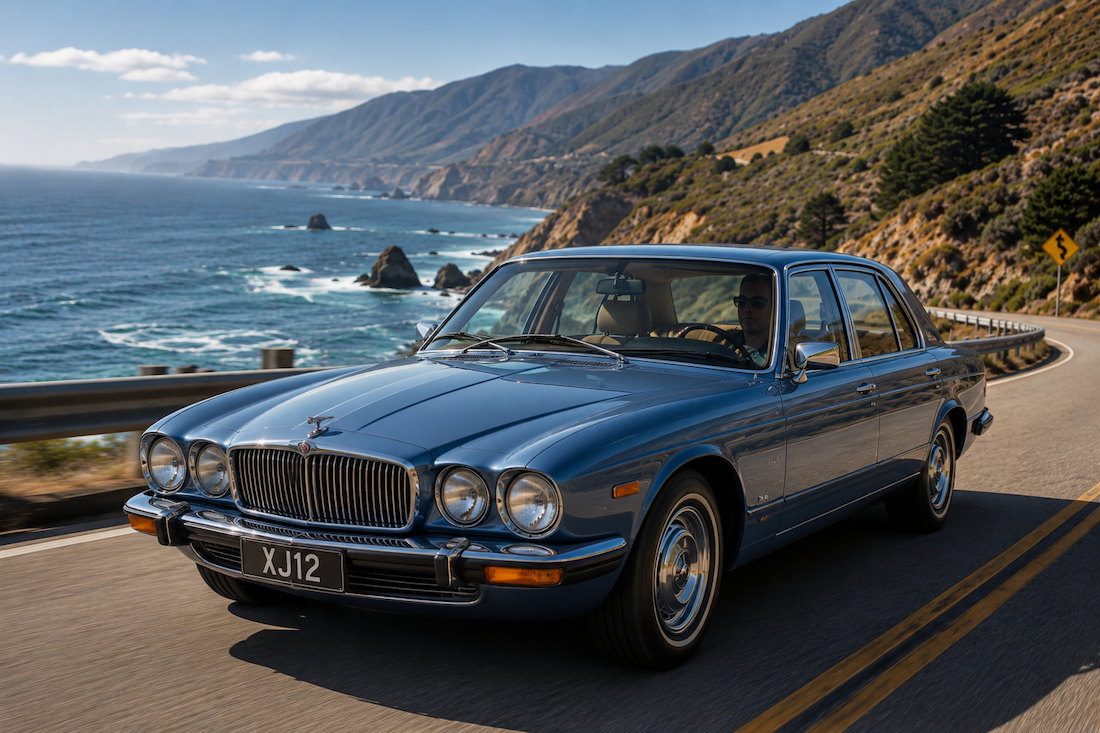
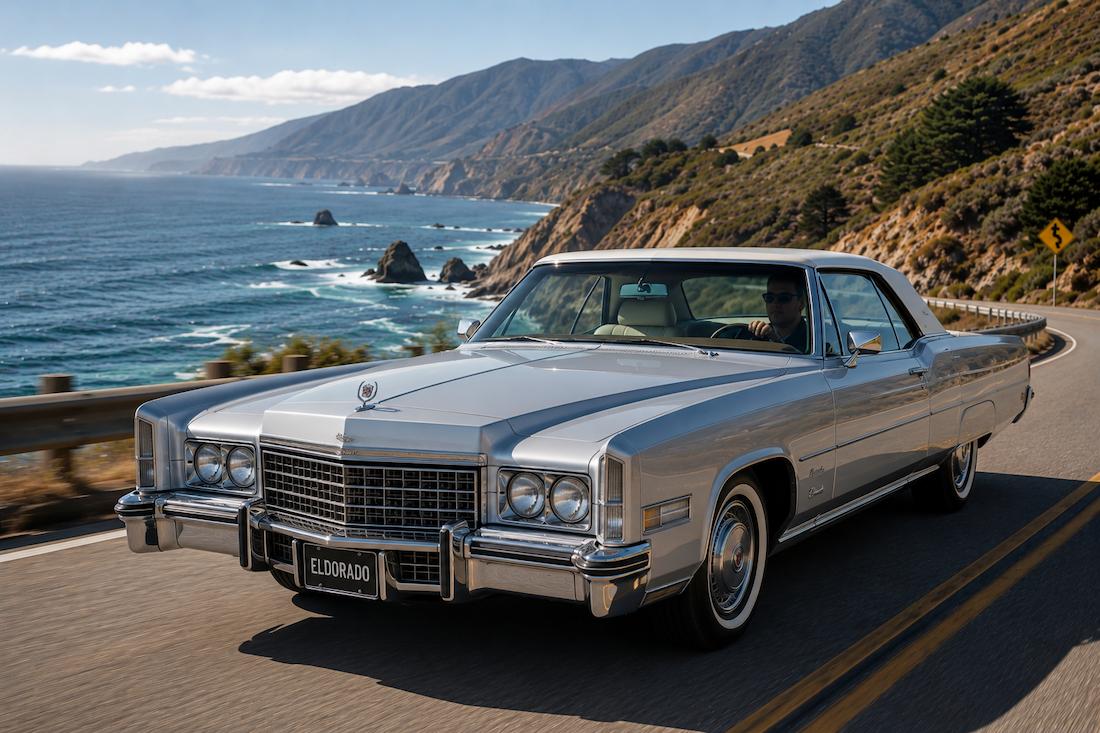
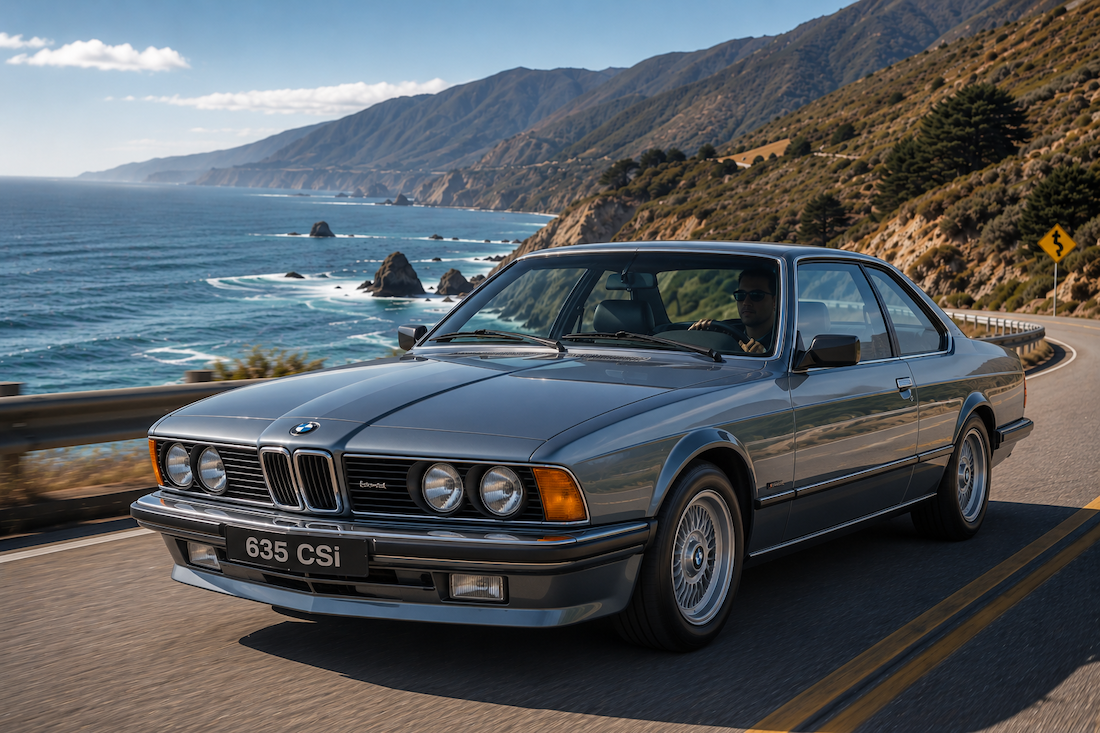
The classic luxury sedan demanded no explanation; the long hood, elegant styling, and perfect proportions spoke for themselves. The Mercedes-Benz 450SEL 6.9, Jaguar XJ12, BMW 635CSi, Cadillac Eldorado, and Lincoln Continental (among others) represented the pinnacle of style and elegance.
Even people who weren’t automotive aficionados recognized them right away.
These cars represented a different philosophy of luxury. Designers emphasized proportion and shapes rather than just size. Interiors contained real wood, leather, chrome, and carefully crafted instrumentation. Every switch had weight and felt good to the touch. Every door closed with perfect precision. The experience felt intentional and we loved it.
Now luxury vehicles often have giant touchscreens, automated driving aids, and many electronic conveniences. They are terrific demonstrations of engineering, but many have very similar shapes. Aerodynamics, safety regulations, and owner preferences have pushed car manufacturers toward designs that focus on interior volume rather than elegance.
And now, many modern luxury SUVs blend together, or they all look alike.
The old luxury cars did not look alike at all. We could identify a Jaguar from blocks away by its graceful roofline. A BMW’s Hofmeister kink was unmistakable. Mercedes-Benz communicated style and elegance through understated designs rather than aggressive bodywork. Even Cadillac’s luxury coupes had an unmistakable American character.
They all had presence and we wanted that.
Many car lovers who once dreamed about driving one of these cars when they were younger are finally able to fulfill that ambition. Compared to many modern vehicles, these classics feel mechanical, engaging, and analog. They require the driver to be involved rather than only to supervise the drive.
While car collectors go after high-profile exotics and muscle cars, elegant luxury sedans and grand touring coupes often are under the radar and remain affordable today. For owners who maintain them properly, they offer tremendous value and a satisfying ownership experience. They also demonstrate individuality for the owner.
Roads today are filled with crossovers and SUVs that are different primarily in grille shape and lighting styles. The luxury cars from the past reflected distinct national identities. German cars emphasized engineering excellence, British cars were graceful and comfortable, American luxury cars had generous proportions (they were large) and delivered effortless cruising, Italian grand tourers blended beauty with performance and sounds. Each had its own personality and style.
SUVs didn’t become so popular by accident; families wanted versatility. Drivers liked the higher seating positions. Improved fuel economy and modern chassis engineering made large SUVs easier to drive than before. Car manufacturers followed customer demand, and car buyers went for the convenience. There is nothing really wrong with this but something was lost in this transition.
The automobile was once more than just a practical tool for transportation. It was an expression of our personal taste, style and maybe our ambition. Choosing between a Jaguar, Mercedes-Benz, BMW, Cadillac, or Aston Martin was not simply selecting transportation, it was choosing an identity for the owner. It either reflected who we were or who we wanted to be. Car collectors understand this.
We admire these cars because they represent a time when style, craftsmanship, beauty and engineering each carried great importance. Sometimes success wore polished chrome, rode on elegant alloy wheels, and quietly glided down the boulevard rather than climbed a mountain.
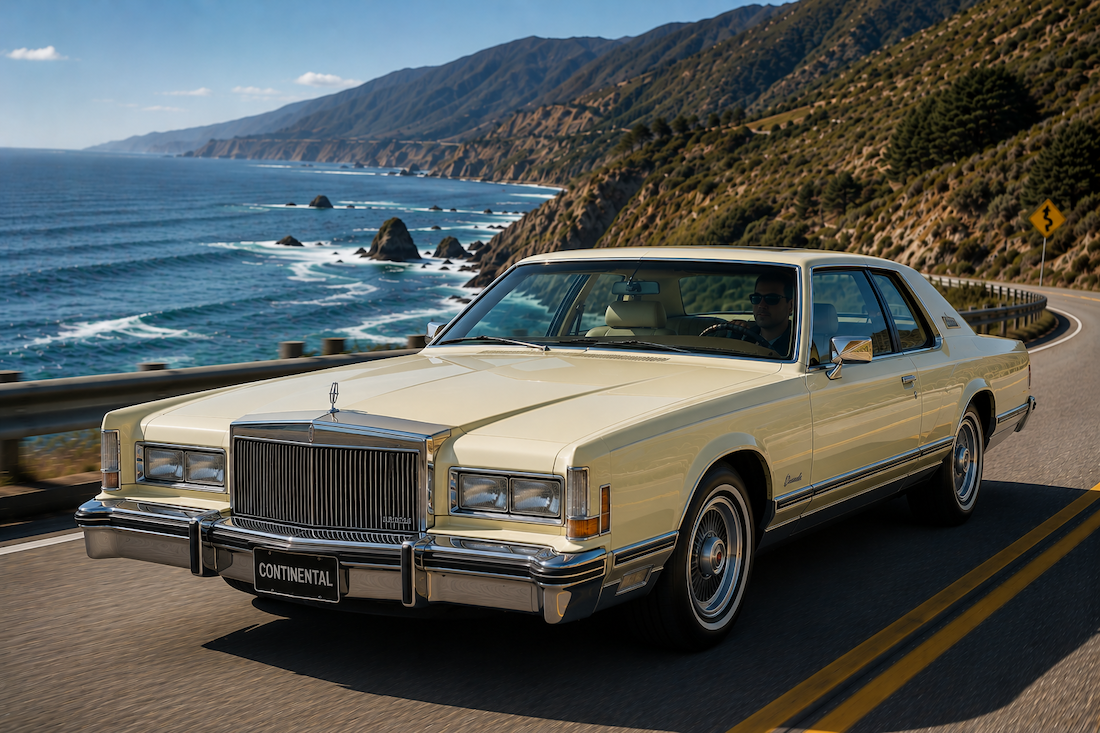
Maybe that is why these cars continue to capture our imagination after so many years. They remind us that while technology and tastes may change, true automotive elegance never goes out of style.
Let us know what you think in the Comments.
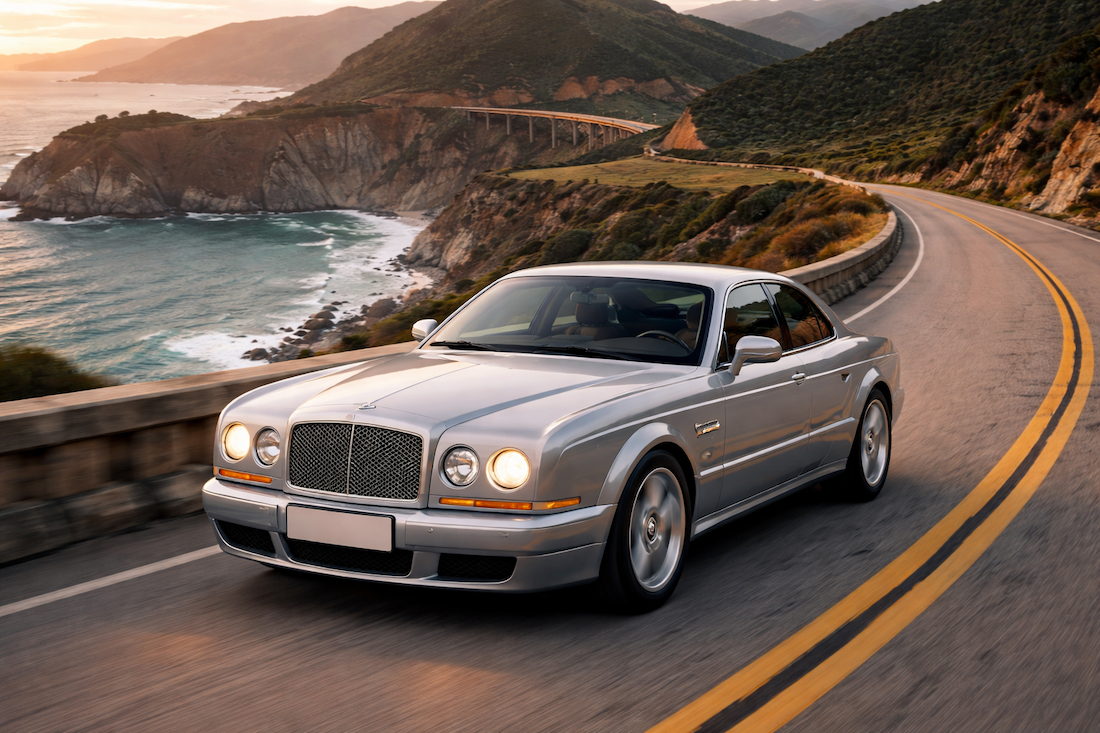
Research, some text and images by ChatGPT Plus.


MIKE,
Another elegantly written composition about those days when design expression in relation to the market were clearly understood and presented to the public in the form of automobiles. I think I would include in that list the 1992 Cadillac Seville and Eldorado. As that era evolved the proof of what you are speaking of is that the Eldorado was built for 11 years, the longest GM five passenger production car in its history.
However, what was happening was that the car, the automobile as we know it, was continuing to evolve. And in some ways actually went back in time in terms of the packaging to the 30s and 40s. Designers now have to present those cars with modern design themes to meet market desire.
One thing is for sure, any car that’s there now is there because there are enough people who want them. And any car that is gone is gone because there were enough people that did not want them. The area you write about was a wonderful one and designers had been winding up for that since Harley Earl invented the professional of automotive design in the 1920s.
Now we are in a different time, and a different place. Designers are seeking to simplify and identify brands. But it is very difficult because there are so many of them, all being sold, everywhere. That wasn’t the case in the 50s 60s and 70s. Very few German Italian or English Cars were here in America. Enough so we could use them as a reference, but not really in very high volume. America got a Headstart in automobile manufacturing in the 30s and 40s, and certainly after World War II they all had to share their secrets. After the war, they started off at a very high level as they knew everything there was to know about the science and engineering of an automobile of those times. We were ahead of the rest of the world because of the war. But we helped the Europeans by giving them tax breaks that allowed them to sell here at a profit. That’s what we were doing as a country, trying to lift Europe and the other countries up economically. It worked. But finally, it was too much, we bore the brunt of all that charity and it had to change.
In the 60s, when fuel economy became unbelievably expensive, the Japanese hired more lobbyists in Washington than the rest of the world combined, and the result was that bfuel efficiency became extremely important. They were ready, they already had it because of their market. We did not. Consequently it changed the industry forever. It is true that there is a lot of look alike in the SUVs of today as designers fight for identity, trying to make their products stand out. But the designers are the only ones who care, everything else is driving the cars to look the same. The manufacturing processes moving toward the lowest cost and constantly improving. That movement is the same as it was in the 30s in the 40s. Thencars looked very much alike for many reasons, but manufacturing capability was a big one. As it is today. Aerodynamics was unknown, they thought they knew what it was, but they only had a vague clue. Now it’s understood completely in fact wind tunnel testing for race cars is almost nonexistent because software can bring them so close to perfection that it isn’t worth the money.
Anyway, thanks for another interesting article, well explained. The car, transportation, is getting further and further away from those days when an MG felt like absolute perfection as you were so close to the reality of transportation with tight steering and quick brakes and handling. All that is gone and going away at a rapid rate as even autonomous cars are considered for daily transportation, for people that won’t even drive anymore. And yet, in my experience, one of our greatest and blessed freedoms is to own a car and at our discretion, go anywhere, any time.
As my late friend Gros once remarked “…SUV’s, formerly known as Jeeps…”
As for today’s cars, few which are left, they all look like Toyotas.
Kudos to Dick Ruzzin. Yes, we helped the Europeans and Japanese sell their cars here via extremely low tariffs. But today we need to let our industry compete on a level playing field. And, frankly, some of the stuff coming out of Europe (Germany in particular) is no longer of the caliber it once was (I know this from a service point of view).
I pity those who see personal transport as ONLY a way to get from A to B. The automobile, according to Ferry Porsche, has given mankind more freedom than any other invention, to go when and where as they pleased.
Hail to the automobile!
Excellent article Mike. For those of us who are on the older side, we can appreciate the era of car design and engineering that we grew up with. But as mentioned, the car companies, in listening to the public, jumped on the SUV bandwagon and more or less, abandoned the automobile. A sad thing in my opinion and I imagine for many of us. Ford abandoned the automobile, except for the Mustang, and GM axed so many divisions that had been around for many decades, and also, now mostly just produce SUV’s. I used to admire the Buick line of cars and thought the styling was very nice and contemporary, but Buick now only makes SUV’s. I show my AC Cobra Mk. IV at a number of cars and coffee events I go to. I never tire of looking at my Cobra and many of the older cars that show up, from vintage Aston Martins, Enzo era Ferraris, BMW 3.0CS Coupes, Porsches, Iso Grifo’s, C2 and early C3 Corvettes and other older cars. Most of the newer designs do nothing for me, and while many are smitten by McLarens, Lamborghinis, etc., they are not of much interest, and I gravitate to the older cars which have character and come from a time when automotive design was an art.
Mike,
Great article on the end of an era.
“Drive through just about any nice neighborhood in America during the 1970s, 1980s, or even the early 1990s, and you would see cars that demonstrated confidence without shouting. A Mercedes-Benz parked in the driveway, a Jaguar resting beneath a carport, or a BMW coupe sitting in front. These cars meant that the owner had arrived.”
Where I grew up on Long Island, New York, besides the prestige MB’s, Cadillacs, and Lincolns, it seemed that there were a helluva a lot of Buick Electra 225s and Mercury Marquis’ floating around. Back in the ’60s, ’70s, and even in the early ’80s, BMW’s and Audi’s were still considered niche brands that weren’t that popular where I lived yet. I remember walking by a parked BMW Bavaria and having no idea what it was. As for the Buick Electra 225s, they were huge, and for some reason, the owners would have these huge behemoths loaded with every option, including the bizarre “Buick Road Wheels”, that looked like something more well-suited for a Riviera or Skylark.
Thanks for another great article!!!
Glenn in Brooklyn, NY