A good share of the electrical gremlins on a British classic car trace back to tired bullet connectors: a headlight that flickers over bumps, a horn that quits, a dynamo that stops charging.
Often the cause is an old crimp gone loose. Renewing the brass bullets properly is not hard once you have the right method and a tool that matches their shape.

Why the brass bullet is worth keeping
The brass Lucas bullet is the connector the factory crimped onto a British classic’s loom, and it’s worth putting back. It slides into a rubber or plastic snap sleeve, so you can pull one wire, test it, and push it home again without cutting anything. On a car you’ll be under for years, that matters. It also looks right under the bonnet, which counts if you keep the car period-correct. It’s tempting to fit modern insulated spade terminals when a bullet gives trouble, but swap them in and you lose the snap sleeves along with the period look.
Why an insulated-terminal crimper mangles brass bullets
A brass Lucas bullet crimps soundly in a die that matches its round shape; an insulated-terminal crimper’s flat jaws crush it oval.
An insulated-terminal crimper is shaped for the spade and ring terminals on a modern car, its jaws closing a flat or heart-shaped profile onto a plastic collar. Close one on a bare brass bullet and the flat faces bear on two sides of the round barrel: the brass goes oval, the wire seats loose, and the first firm tug pulls it straight back out. A bullet needs the opposite, a round die with a receptor hole that holds the barrel as it squeezes, so the brass closes evenly around the strands.
 The right tool for crimping Lucas bullet connectors is the Maun crimping tool for bullet terminals (model 5713-200): it is built around exactly that round die and receptor hole, designed to fit the 4.7 mm Lucas bullet and cable up to 2 mm². Its handles multiply your hand force eight times, so one firm squeeze is enough to close the brass. It does that one job only, so keep your ordinary crimper for the spade and ring terminals.

How to crimp a Lucas bullet, step by step
- Match the bullet to the cable first: the common Lucas bullet is 4.7 mm and suits cable up to 2 mm², about AWG 14. Then strip the wire: enough bare copper to fill the bullet’s barrel and no more, so no loose strands sit outside the brass.
- Seat the bullet in the crimper’s receptor hole.
- Feed the stripped wire fully home, until the copper bottoms out inside the bullet.
- Close the crimper firmly in one squeeze: one clean bite, not a series of nibbles that walk the brass out of round.
- Tug-test the joint: pull hard on the wire and the bullet in opposite directions. If it moves, cut it off and crimp a fresh bullet.
Solder or crimp a Lucas bullet?
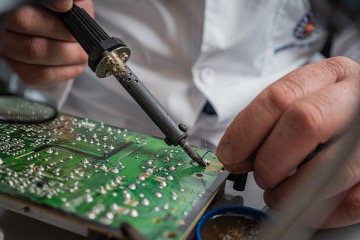
Crimp, if you have a die that fits the bullet. A proper crimp closes the brass gas-tight around the copper and leaves the wire flexible right at the bullet, so it bends with the loom. Solder wicks up into the strands above the barrel and sets hard, and that solid section is where the wire fractures after enough miles of vibration. That said, plenty of soldered bullets, done carefully with the solder kept low in the barrel, have kept classics running for decades.
The order of work for a weekend
Work one circuit at a time so no two wires ever get transposed: sidelights, then headlights, then the charging line from the dynamo. Pull the old bullets from their snap sleeves, and while each sleeve is open, wipe the brass mating faces clean so the new bullets seat bright metal to bright metal. Crimp and tug-test each new bullet before you push it home, then move to the next circuit. When the last bullet is crimped, run a continuity check end to end before you wrap the loom, not after, when a bullet you missed hides under fresh tape. Then wrap the loom and refit it.



Speak Your Mind