by Mike Gulett –
I loved the Porsche 928 when it was introduced and I always thought I would have one someday. That day has not arrived, yet I am still fascinated by the 928 and who knows what will happen in the future.
The Porsche 928 was originally created to replace the 911—and that is precisely why it remains one of the most fascinating and misunderstood automobiles ever produced.
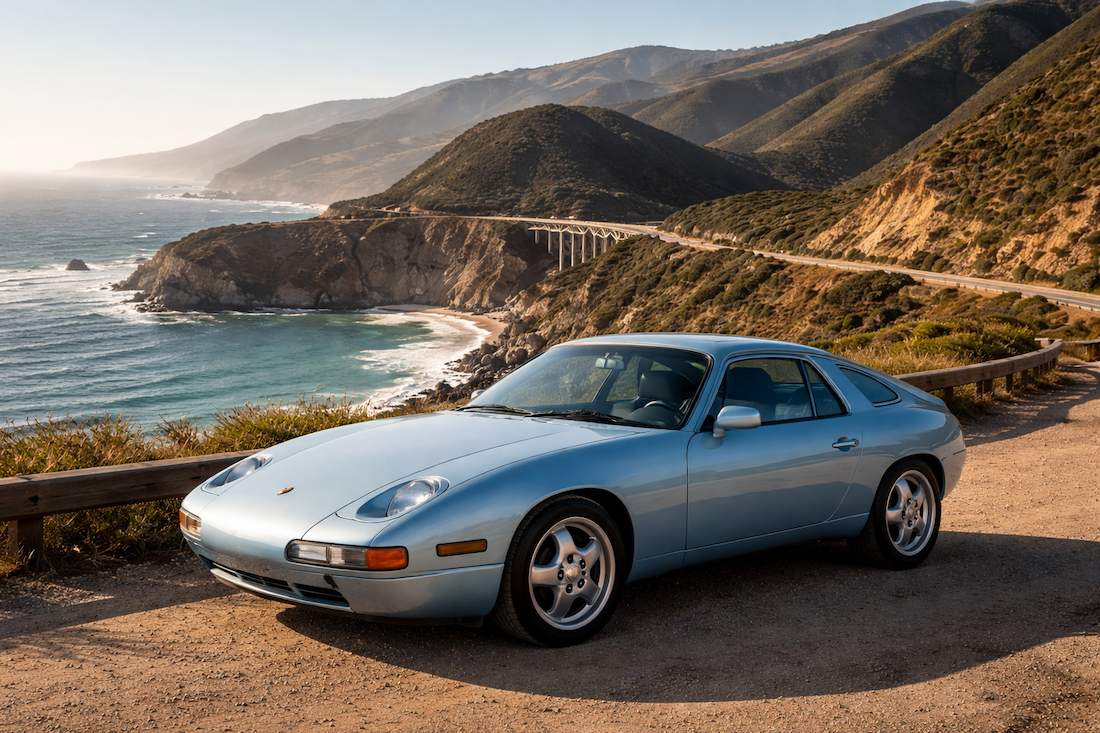
Introduced in 1977, the 928 was not designed as a companion to the 911. It was created as the 911 successor. At the time, this seemed not only logical but inevitable. Safety regulations were tightening, emissions standards were getting tougher, and the global fuel crises of the 1970s had cast doubt on the future of high-performance sports cars. Porsche’s rear-engine icon, brilliant though it was, appeared increasingly vulnerable to a changing world.
A Clean-Sheet Porsche
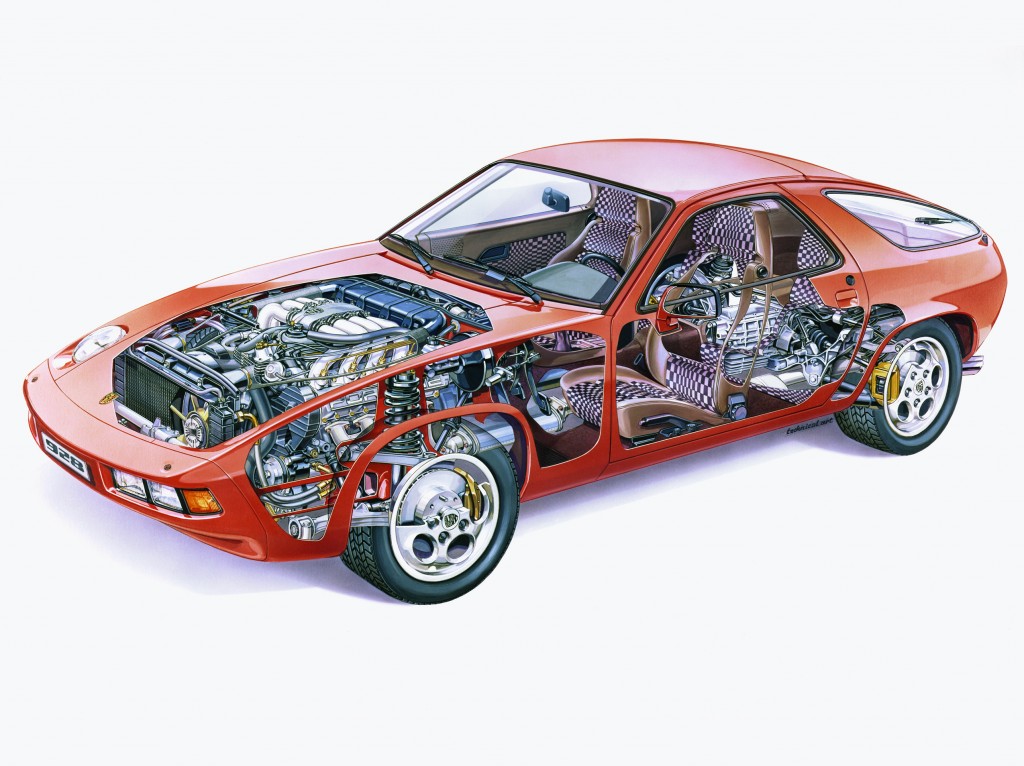
Unlike the continued incremental evolution of the 911, the 928 was a clean-sheet design, arguably the cleanest in Porsche history. Everything about the car suggested a deliberate break from the past. The engine moved to the front, where the water-cooled all-aluminum V8 promised effortless torque and long-distance refinement. The transmission moved to the rear, creating a transaxle layout that delivered near-perfect weight distribution. This was not a compromise; it was Porsche’s solution.

Porsche engineers even rethought suspension geometry, introducing the Weissach rear axle—a passive rear-steering system designed to stabilize the car during hard deceleration. It was an elegant, invisible innovation, the kind Porsche favored, not flashy, but effective.
Even the body reflected this philosophy. Fully galvanized steel panels resisted rust, while aluminum doors, hood, and fenders reduced weight. In an era when corrosion was still a reality, the 928 felt engineered for permanence.
Forward Looking Design
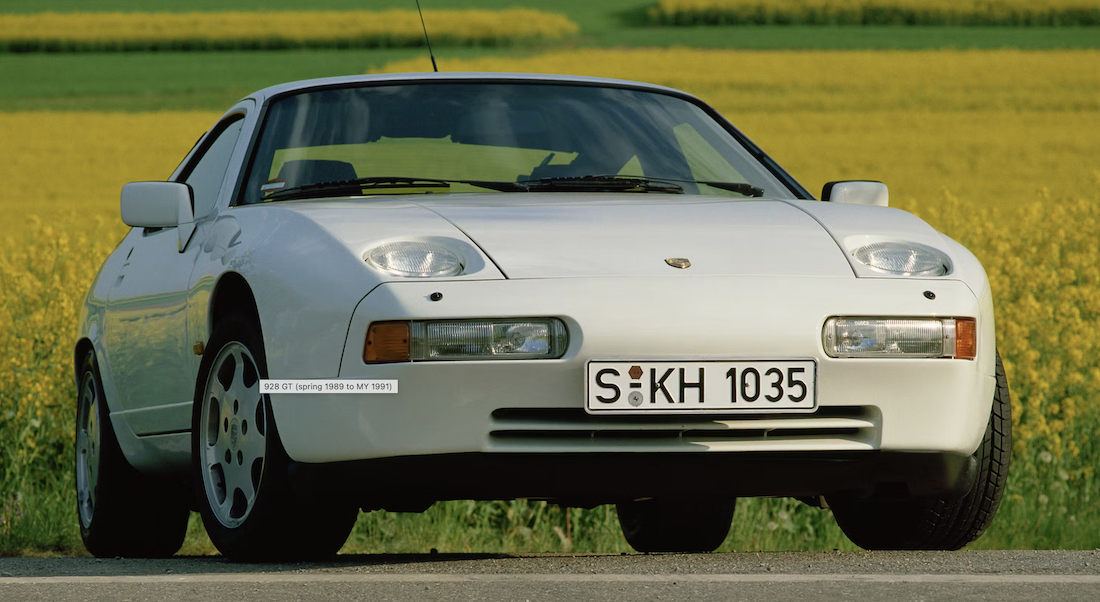
Visually, the 928 didn’t resemble any other Porsche. Gone were upright fenders and round headlamps. In their place was a smooth, organic shape that looked more like a high-speed concept car than a production model. Integrated bumpers met emerging safety standards without sacrificing elegance, while pop-up headlights preserved a low, aerodynamic nose and looked really cool.
Inside, the 928 was a true grand tourer. The dashboard moved with the steering column, the seats were bolstered yet comfortable, and visibility was excellent. This was a Porsche designed to cross continents at speed, not just carve mountain roads.
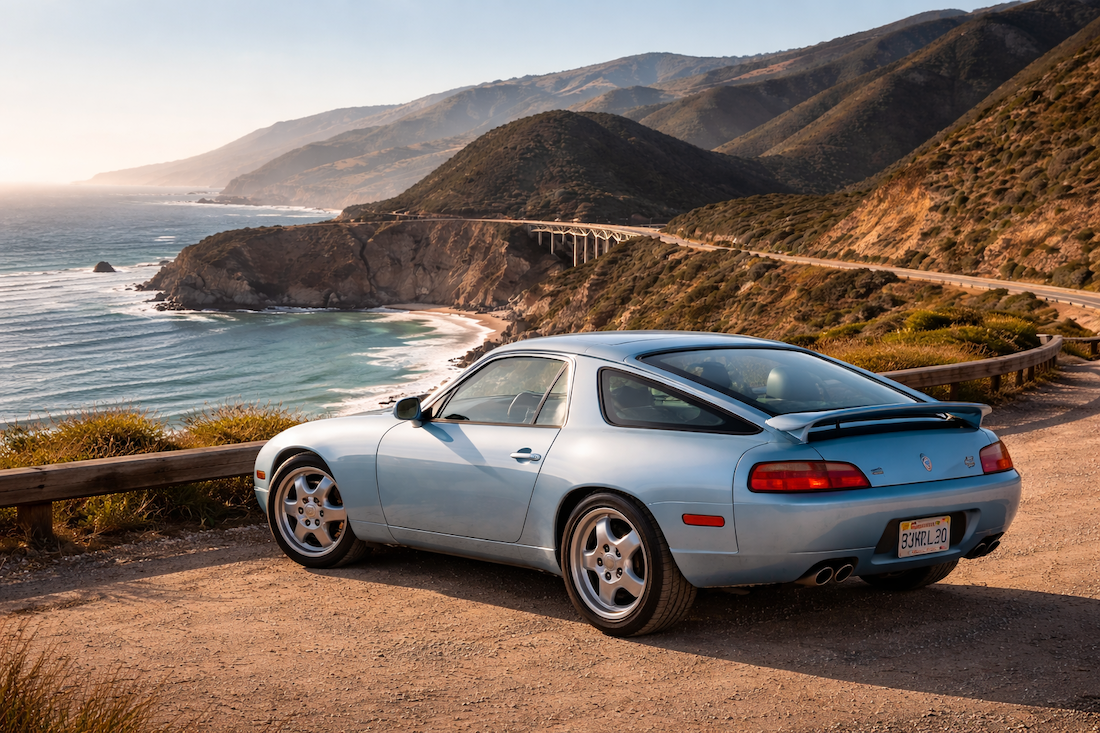
When the automotive press evaluated the car on its own terms, the response was overwhelming. In 1978, the 928 became the first, and still the only, sports car to win European Car of the Year.
No Apology Evolution
Over the next 18 years, Porsche refined the 928 constantly. Power increased, aerodynamics improved, and luxury because more luxurious. The early 4.5-liter V8 gave way to larger and more sophisticated engines, culminating in the 5.4-liter V8 of the 928 GTS. With wide rear flares, larger brakes, and up to 345 horsepower, the GTS was less a challenger to the 911 than a break from the past.
The 928 GT split the difference, offering a more driver-focused character for those who still wanted engagement alongside refinement. By the early 1990s, the 928 was faster, more stable at high speed, and more luxurious than most contemporary sports cars—Porsche or otherwise.
And yet, it never achieved its original mission. And maybe the mission was impossible to begin with.
The Car That Couldn’t Replace the 911
Despite its brilliance, the 928 failed to replace the 911 for one simple reason: customer emotion. Porsche buyers loved the 911 not because it was perfect, but because it was unique. Its rear-engine layout, its quirks, its lineage—all mattered more than logic.
Ironically, the 911 survived in part because the 928 existed. While the V8 grand tourer absorbed Porsche’s forward-looking ambitions, the 911 was allowed to evolve slowly, retaining its character while benefiting from continuous refinement. The two cars did not compete so much as survive together.
Production ended in 1995 after roughly 61,000 units—a modest number, but one that underscores how specialized the 928 truly was.
The 928 Matters Today
Today, the Porsche 928 feels prophetic. Its blend of performance, comfort, and everyday usability foreshadowed modern grand touring Porsches like the Panamera. Its engineering-first philosophy mirrors Porsche’s later success in expanding beyond the 911 without diluting the brand.
Collectors have begun to recognize this. Clean, well-maintained examples—especially late-model GTS cars—are increasingly sought after. More importantly, enthusiasts now appreciate the 928 for what it always was: not a failed 911 replacement, but a brilliant alternative that was misunderstood for years.
A Unique Porsche
The Porsche 928 stands as one of the rare cars that dared to challenge its own creator’s mythology. It asked a difficult question: what if Porsche could be something else?
The answer was not rejection, but expansion. The 928 did not redefine Porsche—but it widened Porsche’s horizon. And in doing so, it earned a lasting place in automotive history.
Let us know what you think in the Comments.

Research, some text and some images by ChatGPT 5.1. Some images compliments of Porsche.


Hi Mike
In 1978 I did the unthinkable. I bought a first year model. Yep…a 928. It was a fun car to drive when it was not in the warranty bay of my local Porsche dealer. After the warranty ended, I would take it back to the dealer for much need repairs. The cost of repairs was, in a word, horrendous.
I sold the car to an acquaintance who drove it periodically….when it was not in the shop.
Ouch!
Maybe I should be glad I did not get one.
Mike,
The experts in the used car market always say that 928s have the most probable potential of becoming money pits. That’s why as collectibles their values have remained relatively low and flat.
Reading this article, I came to the conclusion that I am highly Porsche ignorant. I guess the 924 introduced for model year 1976 was the entry level car, the replacement for the 914, while the 928 was the high-end replacement for the 911. Living through this era, I remember how the automotive press fawned over these two new Porsches, while the buying public was pretty much indifferent to them. My mother’s boss had a brand-new Porsche 924, dark metallic blue, that he loved, though.
Like everything European or Japanese from that era, I was not impressed with the styling of either the 924 and 928, but, now I realize they were ahead of their time, and I was a fool. Also, like the current Panamera, they probably kept Porsche afloat, as the market for two-seat sports cars was and remains limited, while the 924 and 928 were more useful with their hatchbacks, and they well represented the wedge shapes popular at that time.
In order for the sports car companies to survive, they had to branch off into SUVs and four doors. As far as the 911, I guess some variant of it will be around long after I am gone, as Porsche loyalists will not allow it to go into the sunset.
Glenn in Brooklyn, NY
I sw a cut convertible and it was quite attractive. I wonder how many some aftermarket outfits made? I think with the coupe, the maintennce.and parts prices will hurt its image as a collector’s prize. Maybe only the cut cars will fetch big miney at auctions….
I was not a big fan of the 928 initially but they have grown on me over the years. I’ve seen prices go from almost giving them away to some sky high prices on BaT for some early 928’s, especially in some rare and attractive colors and with the Pasha cloth interiors. I also like the early phone dial wheels. Also the end or run and most developed of the 928’s can also bring some strong prices. I’ve watched a few of the BaT auctions and can see, based on the comments, how loved these cars are. Not seen much about reliability but imagine they are not cheap to fix
Onew of the curious things about the 928 is, if you considered the design of the rear half
as a proposed front half of a new car, it has the same look as many ’50s design concepts with the blunt
front end. I don’t know what rear end design would go with it but it;’s worth considering if they want to revive it..