by Wallace Wyss –
I would say it’s close if you are not warned in advance. In a You Tube Video by Intelli-Car posted Dec. 10, 2025 they tell the story step by step of the first production American engine mid-engine V8 sports car from DeTomaso in Italy.
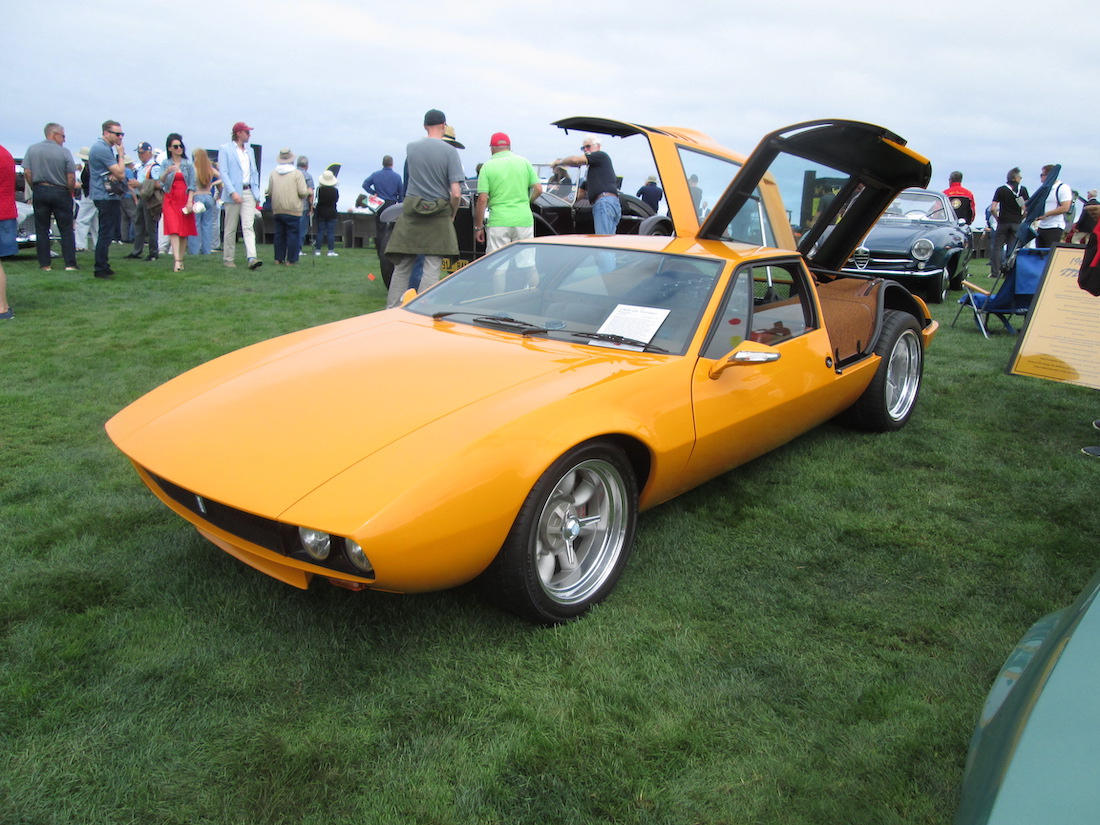
DeTomaso Mangusta – Wallace Wyss
The title is “The Most DANGEROUS Sports Car Ever Made!
They said and I quote “In 1967, a gorgeous Italian sports car appeared that looked like pure automotive perfection. The De Tomaso Mangusta stood just 43 inches tall with butterfly wing engine covers and razor-sharp styling that turned heads everywhere it went. But this beautiful machine hid a terrifying secret that would claim lives and leave professional racing drivers spinning out of control. “
WYSS COMMENT: At the time it didn’t have a record of many drivers killed.
I continue the quote: “This is the story of the most dangerous sports car ever built, and it all started with revenge. Alejandro de Tomaso fled Argentina in 1955 after being caught up in political trouble. He arrived in Italy with almost nothing except his racing skills and massive ambition. He settled in Modena, the heart of Italian supercar country, and eventually started his own car company. But before the Mangusta, de Tomaso got involved in a partnership that went horribly wrong. Carroll Shelby, the legendary builder of the Cobra sports car, teamed up with de Tomaso to build a new racing prototype.
WYSS COMMENT: This was the 70P, a mid-engined spine framed open two seater racer using a design by Pete Brock who also did the Daytona coupe.
Intelli-Car continues: “Then Shelby suddenly abandoned the project, leaving de Tomaso furious and humiliated. The Argentine decided to get revenge in the most elegant way possible. He would build a car specifically designed to kill the Cobra. The name “Mangusta” means mongoose in Italian. Mongooses are the only animals that can hunt and kill cobras because they’re immune to snake venom. Everyone in the car world instantly understood the message. De Tomaso hired a 27-year-old design genius named Giorgetto Giugiaro to create something spectacular.
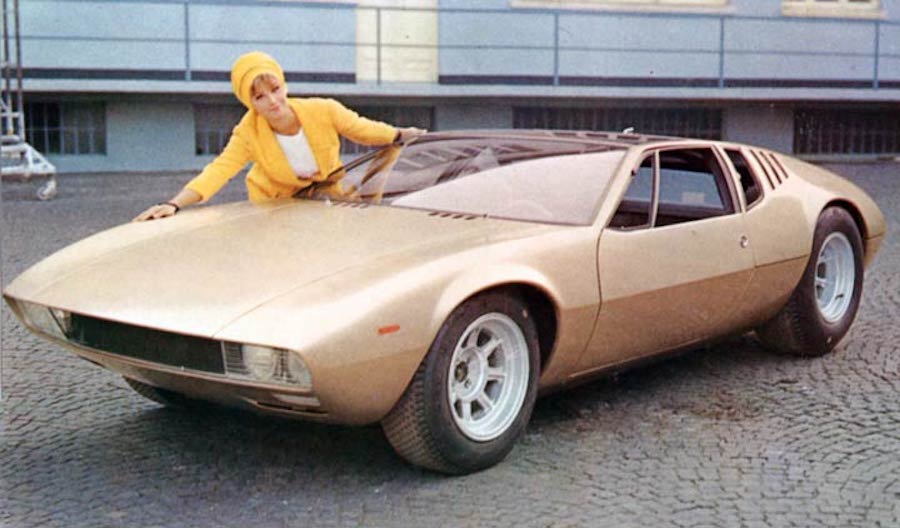
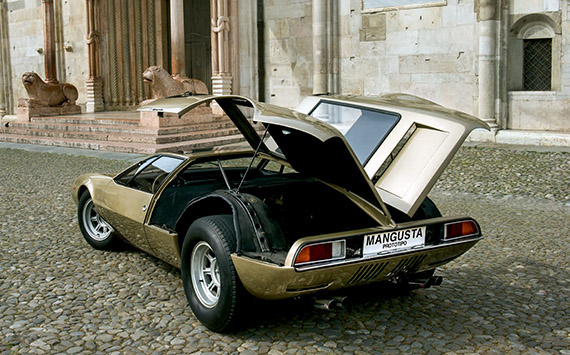
De Tomaso Mangusta Prototype
Intelli-Car continues; “What Giugiaro delivered was absolutely breathtaking. The Mangusta featured dramatic gullwing engine covers, sharp angular lines, and styling that looked like the future. It was a rolling work of art. But underneath that stunning body lived a nightmare. Between 62% and 68% of the car’s weight sat over the rear wheels, creating handling so unpredictable it could spin out without warning. The steering was painfully slow, making it nearly impossible to catch a slide once it started. Professional test drivers compared it to the infamous Chevrolet Corvair, one of the most dangerous cars ever sold in America. Owners reported spinning out fifteen times in a single day. One racing champion spun 360 degrees while driving in a straight line. At least one owner died in a crash. The Mangusta demanded absolute respect and severely punished anyone who failed to give it. Only 401 were ever built before production ended in 1971.”
When the video quotes the late Paul Van Vaulkenburgh, who reported a test of a Mangusta in Sports Car Graphic. In the test, he had photos showing him spinning out while steady state (steady speed) cornering around a circle. Ironically the editors only got away with trashing a new car’s reputation because the DeTomaso did not buy ads, therefore you weren’t going to lose a sponsor.
Later, when Ford backed a US model of the DeTomaso Pantera (different chassis, different engine) the car magazines pussy-footed their way around the car’s flaws (such as blowing fuses) I know because I worked for Motor Trend a sister magazine to SPG at the time.
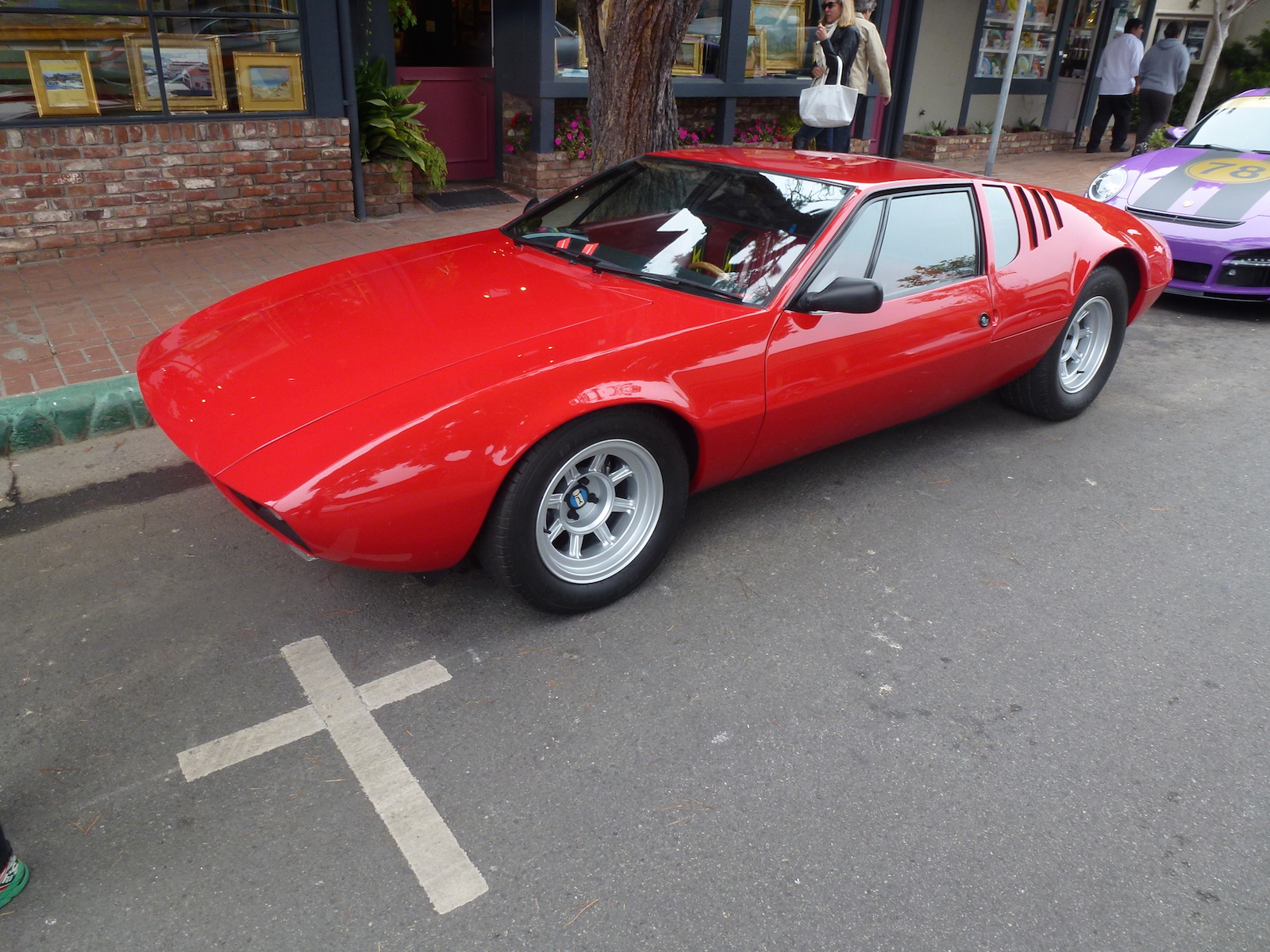
De Tomaso Mangusta – Mike Gulett
Intelli-Car was right that DeTomaso, a somewhat unsavory (even if well dressed) wheeler-dealer, was in a hurry to get the car out and in production, because he had a customer, Ford Motor Co. So it probably could have had more development if he wasn’t in such a hurry.
Ironically, the Ford crew that went to Italy to see how the Mangusta was built rejected it because it required way too much hand work and Ford wanted an assembly line, cars coming off the line with regularity not being hand built. So Ford ordered the Pantera even though there was not a prototype to test to see if it had the same handling problem. It didn’t—it had a unitized chassis, not a central spine frame like the Vallelunga and Mangusta.
So there we have it, a video you can access with a fine selection of pictures (including one of yours truly) but I think their video trashes the car too much–otherwise there would be many obits in car magazines of another driver killed by the evil Mangusta. There have been more killed in Cobras, especially big block Cobras. (Shelby himself told me “a big block Cobra will kill you in a minute.”)
The video presenters quote Dick Ruzzin, a former GM designer, who as first in line to buy the one-off Chevrolet powered Mangusta after GM banished it when it couldn’t accommodate the girth of Bill Mitchell, VP in charge of design.
Somewhere along the way, Ruzzin had the rear suspension worked on by GM engineers and they came up with a fix that DeTomaso could have used but by that time, the Mangusta was being phased out for the Pantera, already ordered by Ford (who imported at least 6,000). I would advise Mangusta owners to find out what the Ruzzin fix was and to order it done to their car.
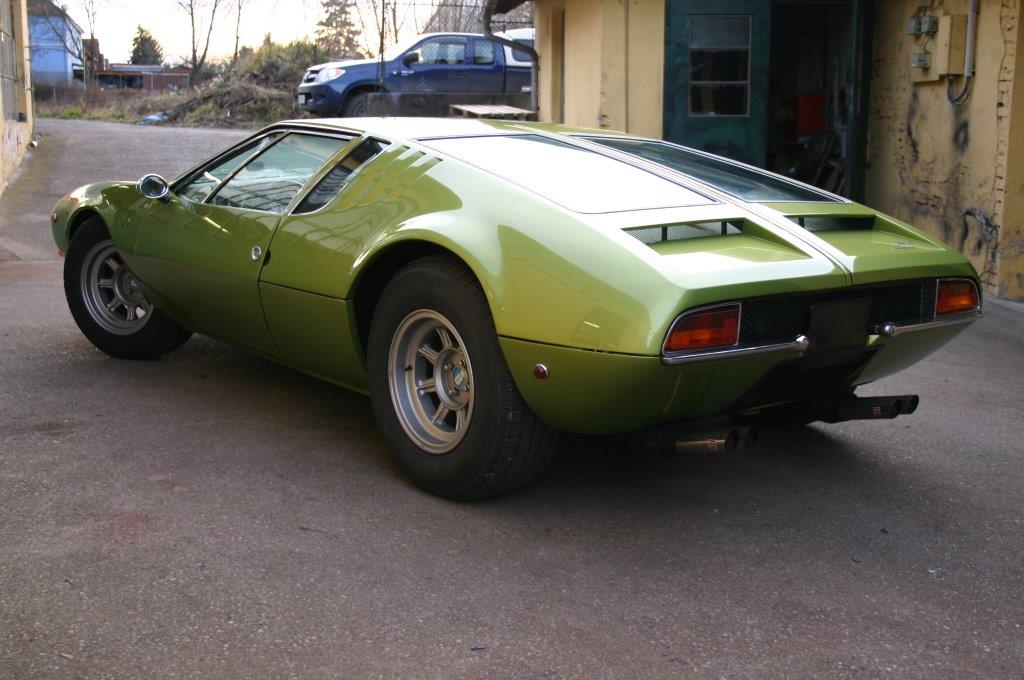
De Tomaso Mangusta – Herbert Putz
Of cars designed in that era by Giugiaro, the Iso Grifo, made by another small Italian firm using American-made V8s (Chevys first, then Ford) is much more respected handling wise, though it was not capable of cornering like a mid engined car.
Even more ironic, Chevy had the tooling to make an alloy block small block Chevy, which would have removed at least 100 lbs. from the Mangusta but Ford would never have ordered that engine, even if it reduced the rearward weight bias.
I congratulate the producers of the video for corralling lots of rare pictures (did you have to show me with gray hair?) but find the headline a bit mis-leading, typical of YouTube.
One obvious question, since they show one racing, is if it was so dangerous, why did anyone race it? The Panteras of course, had a factory race car version (the GT/4) and had some success on the track.
I plan to peruse some of the producers’ other videos to see how deep they dive into the problem of other sports cars. But I’d change the headline, it’s too “YouTube-ish” with a sensational headline to act as “click bait.”
Let us know what you think in the Comments.
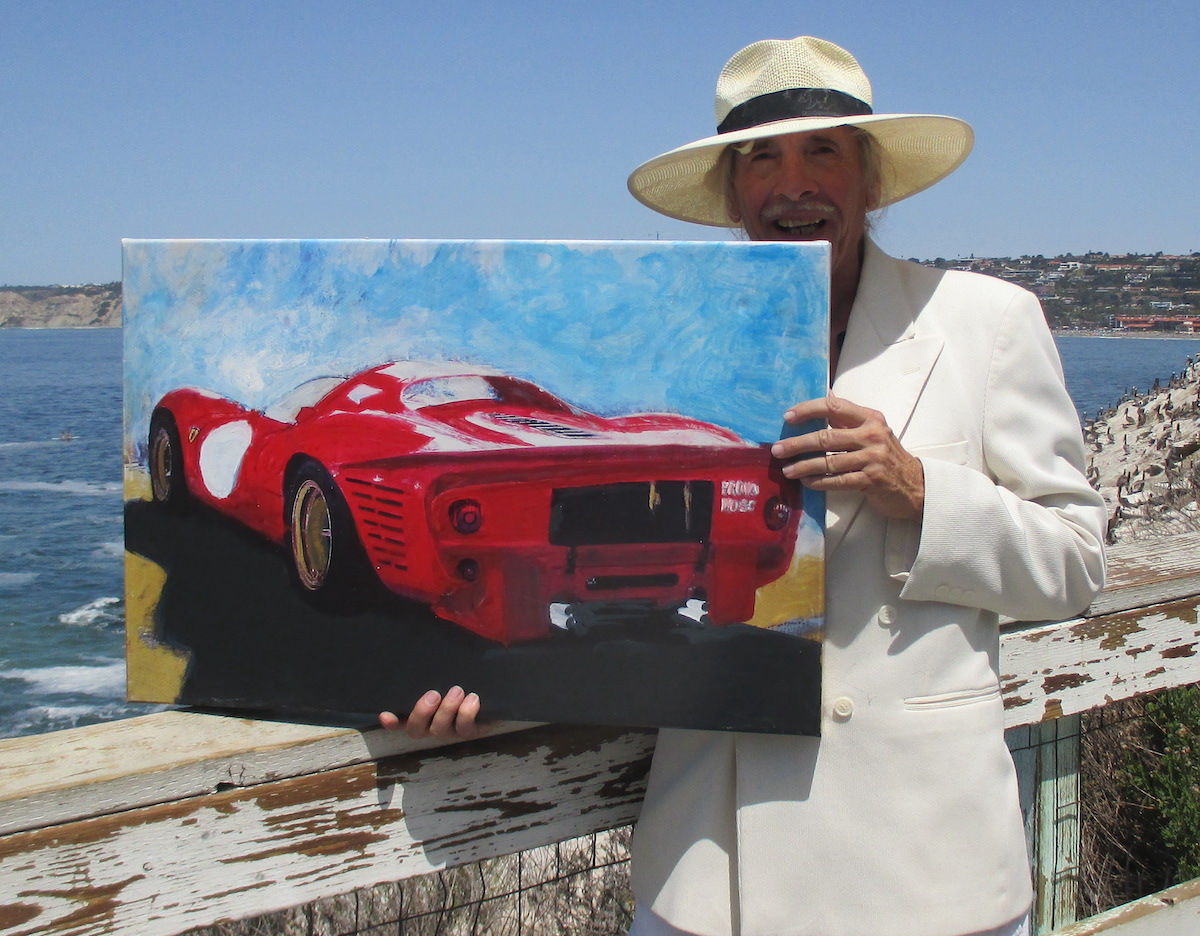
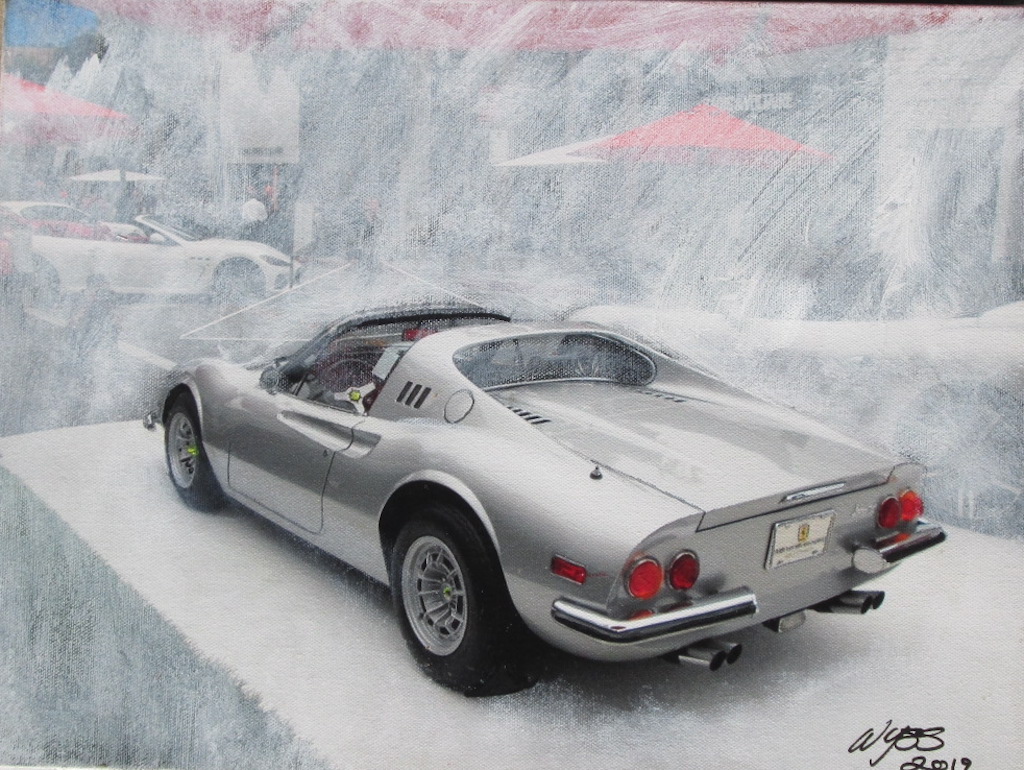
THE AUTHOR: Wallace Wyss authored three books on DeTomaso. Presently he is an exotic car portrait artist.
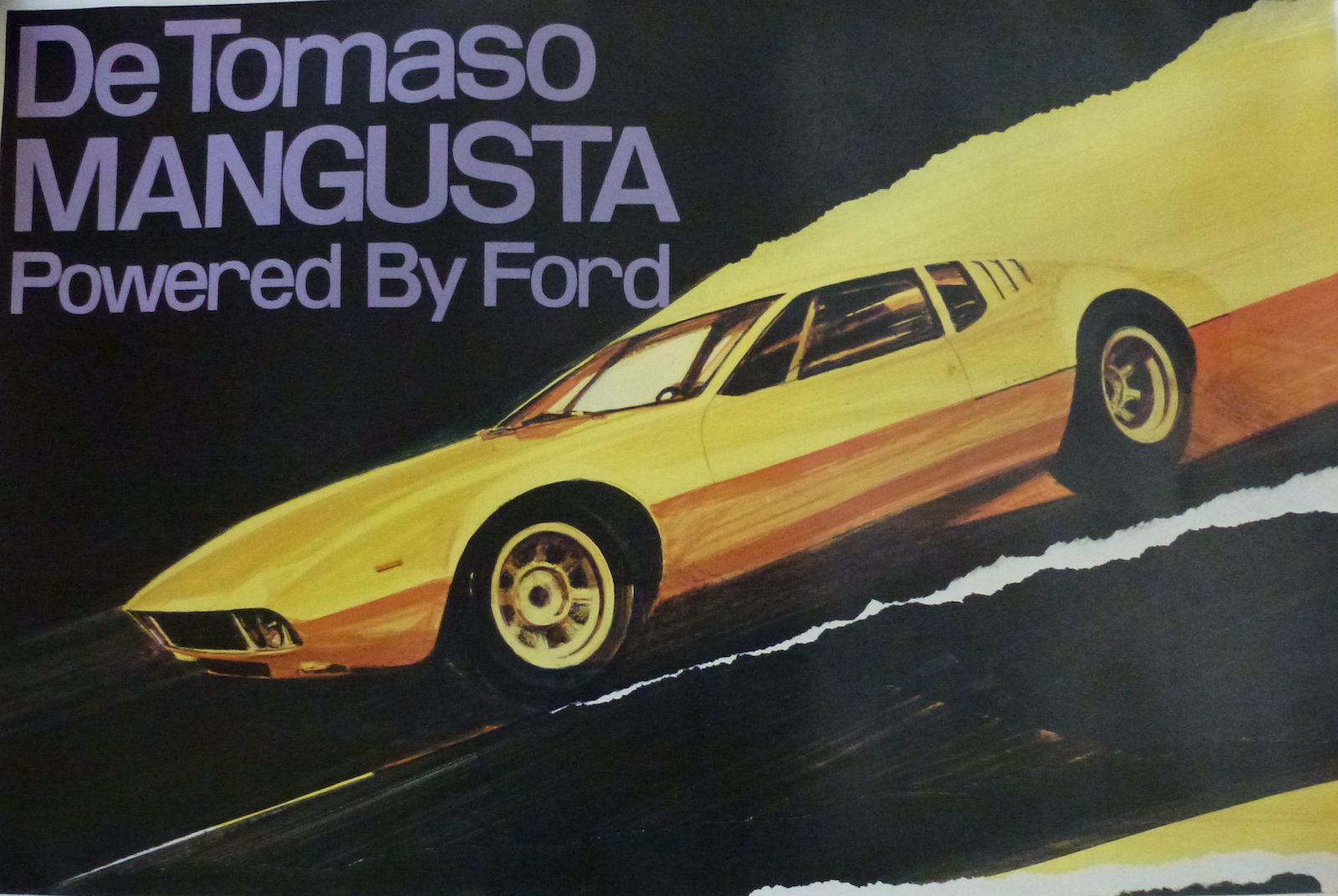
De Tomaso Mangusta and Ford Poster – Mike Gulett


ww is doing you a disservice. So many false statements, this is not history
He continues demeaning things and people, due to his lack of understanding. He is in-experienced and does not understand the subject. He has no experience in chassis design and engineering, he has pulled together a lot of statements that, to someone who doesn’t have real knowledge of the subject, seem like some kind of logical story, with a reasonable conclusion. I don’t think he did that on purpose, I think he’s just anxious to create a message.
Let me explain.
The red Mangusta in the picture above, by the way, is mine. Take a close look at it, notice it hasn’t been bumped, flipped over or damaged in any way due to rollovers, spin outs, or other self-induced driver actions. It has over 68,000 miles on it, most of them before I decided to make some adjustments to the chassis. In all that time, none of the events that happened, according to ww, happened to me, in my Mangusta while driving it.
ww did not give you any technical information to support the statements that he collected from different places, magazines, books, etc. Nor, did he talk face-to-face with any experts. That is clear in what I see written in the article. Let me give you some facts by someone who has owned a Mangusta for 57 years. He took for granted that you would trust what he has written as fact.
It is well known, except by ww, that when De Tomaso introduced the Mangusta to the press, that he was totally inexperienced in managing a very serious event of that kind. Critical, is that every single car that the press would drive would be absolutely perfect, in every possible way and well prepared by his chassis engineers and road testers. That did not happen and the results of those early tests would live forever in the history of the Mangusta, passed on by one ignorant press person to another until it finally got to ww, agjusted and manipulated to the writers satisfaction along the way.
Car manufacturers who launch new vehicles through automotive the press on a regular basis would never let that happen. De Tomaso, being a very small and inexperienced manufacturer did not know the significance of those early tests. He would learn a hard lesson.
Consequently, the early cars chassis were not set up correctly. That is, the wheel alignment front and rear and their relationship were not properly developed and configured. The Mangusta’s proportional weight is exactly the same as the Lamborghini Muira and the new Corvette C8. That is a foundational engineering principle that is shared by all three cars.
The chassis flaw in the Mangusta is one that is easily avoided by proper maintenance of the upper rear bridge outboard bushings. Those are on each side of the subframe that is wrapped around the engine and bolted to the monocoqe body at the firewall. The trans-axle hangs from that bridge. For some reason that was not discovered by the very experienced engineers who conducted the road tests mentioned above. I think it was a Car and Driver test and is a fatal undiscovered point that undermines the credibility of all the tests.
The major commodity difference between the Mangusta rear suspension and the racing Ford GT is the upper link attachment to the rear hub carrier. The two rear suspensions are architecturaly the same, although executed in different ways. Of course the Ford GT had thousands of miles of testing and racing, that is what De Tomaso did not have.
Be wary of what you read, as we can see today, in all forms of written material, pod casts and Internet statements, twisted facts. Resulting in conclusions that don’t match the reality, as known by people who really have experience with, in this case, a car.
That is what I find here.
In everyday life, we all know that we have to be careful of statements made by people who do not have the background knowledge of the subject discussed. That is the first question you should ask yourself when considering statements by any expert automotive historian.” Or claimed so.
My rule of thumb is to seek authenticity.
Dick Ruzzin
Dick Ruzzin teaches us a timely lesson.
Well said Mr. Ruzzin.
Thanks for explaining your fix to make it a safer car. As far as not talking to experts, how about DeTomaso, Giugiaro,and the Ford crew that rejected importing the Pantera as well as the Qvale family who did import it to America? With your strict rules no aito historian would be able to write anything unless he or she had been there during the car’s development.That would mean no car history could be written on a marque dead and gone but I. was there before the Pantera so got to see why it was built and why it faded in America while still produced for the rest of the world.
And while we are being strict constructionist, if your car has won awards for originality did the judges ever ask why the rear 3/4 windows don’t have chrome framing?I agree it looks better without them. Maybe there is documentation proving it was a speciale like the one
Amory Haskell Jr. (of the family that bankrolled the car’ production, DeTomaso’s in-laws) drove which had many small differences from the production cars. When the factory builds a car with variations from the priduction run, that’s an exception allowed by concours judges when it can be documented, though in Detroit that was much more rare than in Italy. (For instance when I visited Bill Mitchell at his house he would show me gold plated trim on his Cadillac because he ordered it, though no civilian buyer could) Your splendid car is certainly a “one off” car because of the customer’s choice of engine, but I never heard Bill Mitchell, who ordered it, requested that rear 3/4 window chrome trim deletion. A minor point in a great resoration.Too bad the original prototype Mangusta body shown avove withthe female model is now out and about in a running version but on a different chassis with a different interior–if left original it could have been the most valuable Mangusta,
There is a very detailed story about how Ruzzin bought the car (in a competitive bidding with other GM designers) on
https://www.deansgarage.com/the-story-behind-dick-ruzzins-chevy-powered-mangusta/
In my opinion, the Mangusta is probably one of the most beautiful cars ever made. Just striking. There are others of course that I love but have always lusted after one. I saw one for sale many years ago in Dublin, CA at a collector car dealer. It was red but the beautiful Campy wheels were not on the car. $65,000 was the price. Wish I had the money at the time! I don’t know all of the ins and outs of the handling issues, but I understand from Mr. Ruzzin’s comments that these can be dealt with. Also, a friend has owned multiple Panteras and knows the ins and outs of those and the Mangusta and there are fixes. I remember as a teenager, my dad met with an investment advisor at our house. He pulled up in a Mangusta, which for a car crazy kid was like seeing a flying saucer in the flesh! He let me sit in it. An indelible memory to this day.
ww, it’s good that you take the time to talk to experts. I suggest that you read my book. BELLA MANGUSTA,, the Italian Art and Design of the De Tomaso Mangusta. It is still sold on the Internet and actually in company with my new book, DESIGNING DREAMS,, essays on the inside story of General Motors, Harley Earl in America’s golden automotive age.There you’ll find some interesting facts that were cross checked, and then presented. Luciano da Ambrogio was working at Ghia when the Mangusta was designed. He told me the following story that is recorded in the book. Giugiaro was freelancing, getting ready to go out and start his own company. Lacking work, he took a flyer and designed a car at home on his kitchen table. It was the Mangusta. He took it into Ghia and they were so impressed that they built a full size hard model. Four months later De Tomaso and his brother-in-law bought Ghia, and De Tomaso then connected the Mangusta design model with his racing chassis that he had developed with CARROL Shelby. It had become instantly obsolete when CHEVROLET introduced it’s big Block engine that would then be used in every race car in class. De Tomaso’s chassis was designed for the small Block Chevrolet and Ford engine. Shelby immediately requested that De Tomaso develop a small block engine with the same power and torque as the big block. It turned out De Tomaso was not able to do that, and that was the cause of the fallout between the two. There are very likely other components that to the story that are not recorded.
That story is in my book.
Another fact that ww has not noted is that the original Mangusta prototype, was a different size than the production car. It was longer and wider than the production Mangusta.
It was redrawn by Giugiaro, and put into production after the car toured the track in Monte Carlo during the Grand Prix, with a special passenger, Princess Grace. There de Tomaso received tremendous accolades for the car. After that, Giugiaro made the drawing of the production car that included the race oriented instrument panel and interior design. All that in my book. I have a brown line copy of that drawing, with Giugiaro’s signature on it.
So far as the history that I pay attention to shows, there is no car that is perfect, and cannot be improved slightly by a little knowledgeable and calculated attention. After the fact. Much has been said about the Mangusta and it’s handling, but as stated in my original comment, De Tomaso was inexperienced in launching a vehicle and because of that,he started a sad story that has lived forever, promoted by inexperienced journalist who are too lazy to find out the facts.. ww has just copied that. There are many wonderful automotive historians that have written hundreds of articles about cars.
One great example is KARL Ludwigson. KARL is an automotive historian who is admired because of his integrity and honesty.
You can spin many cars, actually any car under the right conditions. Driving a mid engine car is very different than a rear wheel drive car. Spinning a car without understanding, the conditions can be embarrassing. However, if the car has the kind of beauty and drama enclosed in the Mangusta, then it would be forgiven. Which is what you did. It is likely that most any car that spins out, is caused by an inept driver. And although the Mangosta has its flaws, it has now for many years given great pleasure to many people.
Congratulations, you had 50,000 miles in a wonderful car. I’ve had more than that and look forward to having more, in spite of what ww says.
ww is at a real disadvantage here. He has only seen Mangustas, I have lived with one for over 50 years and experienced all of its mechanical flaws and improvements available that occurred years after it was built. It is an absolute delight, not only to look at, but also to drive.
As I will say to people once in a while, who are Car enthusiast, and who have a genuine desire to understand why cars look the way they do and what kind of skill that it takes for cars of all kinds to be created and built.
It is a lot easier to pick a beautiful shirt out of a group, then it is to create a beautiful shirt. I will let you judge ww, his credibility and his analytical skills, as expressed by an “automotive historian”, as seen in this article. As ww says earlier in this discussion, “why if it’s so dangerous, does anyone race it?
I owner one of automotives Real Beauties and did spin it. I later learned to drive responsibility and put 50,000 miles on it with no further mishaps.
Before you do lecture on journalists being” too lazy to find out the facts” Dick I suggest making a roster of names of people you are including mention of..Here’s the correct spelling on two of them when you start your list
Carroll Shelby
Karl Ludvigsen
You probably have books by both in your library.
As far as the production Mangusta being a diffrent size than the prototype the prototype body is now on a production chassis so we’re talking inches. The high front 3/4 view on the story lead- in is of that car on its present chassis. I expect that to be one of the most valuable Mangustas, along with the Spyder
I found ref. to the magazine article that started the controversy by slamming the Mangusta’s quirky handling but hesitate to contradict the learned owner who “thinks it was Car and Driver,. ” And, warning, I am quoting an AI written source–not a real human, this quote labeled “AI Overview” found by writing “sports car graphic mangusta test” into Google search.So this history source has never driven a car or ever talked to a single person since it’s essentially a robot researcher (something we will all have to get used to). I quote:
“AI Overview
The Sports Car Graphic test of the De Tomaso Mangusta in the late 1960s famously exposed the car’s severe and unpredictable handling problems. The magazine’s test drivers found the car dangerously unstable due to a poor weight distribution (62-68% over the rear wheels) and an insufficiently stiff chassis.
Key Findings of the Sports Car Graphic Test
Unpredictable Handling: The primary issue was the car’s sudden transition from understeer to violent oversteer during steady-state cornering, making it nearly impossible for even skilled drivers to correct. The magazine published photos showing their test driver spinning out while in a constant-speed cornering circle.
Chassis Weakness: The Mangusta used a steel backbone chassis originally designed for a much less powerful car (the De Tomaso Vallelunga). It lacked the necessary torsional stiffness for the heavier, more powerful Ford V8 engine, causing the chassis to flex under cornering stress.
Slow Steering: The steering rack, sourced from Renault, was too slow, which exacerbated the handling issues and made catching a slide extremely difficult.
Dangerous Reputation: The test contributed to the car’s reputation as beautiful but treacherous, with professional drivers comparing its handling to the infamous Chevrolet Corvair. Reports circulated of owners spinning out frequently; at least one owner died in a crash.
The magazine’s staff, led by editor and former GM engineer Paul Van Valkenburg, dedicated time to try and resolve the handling issues themselves, reportedly with more success than the factory’s own efforts. The issues highlighted in the Sports Car Graphic test were later addressed in the De Tomaso Pantera, which featured a more robust unibody design.
The Mangusta was featured on the cover of the April 1968 and possibly other issues of the magazine. “
I’ve owned 2 Mangustas, presently owning one. I met with Gary Hall whose wife drove one as her daily driver in California. Gary suggested changing shock/ spring rates, switching to radial tires from bias ply, changing suspension fittings and alignment specs as Mr Ruzzin suggested and voila !… the car was transformed. I did numerous high speed laps at Pocono and Watkins Glen with no problem. Its true, if you’ve never driven a rear weight biased car, you need to learn and respect how it handles.. just like Porsche 911 owners lament. The most dangerous car I had and WAS scared of was a Griffith 200 with a 289ci Ford with 400 HP. THAT car’s ultra short wheelbase caused a frightening drive!
I do not understand how a GM chassis engineer like Paul could miss the fact that the transaxle should have been mounted with soft mounts rather than hard mounts. And that the bridge should have had solid mounting or bushings in very good shape.
That mistake on his part, made the entire test invalid. Comparing it to the Corvair, another ww example, a car whose quality of handling was judged by a jury? Why don’t you talk about the VW beetle?
In his defense, since he is no longer with us, Paul went further than most magazine writers of the time doing tests that non-ex-automaker engineers didn’t know about or appreciate. I tested cars back then and to tell the truth, just hitting the brakes at 60 mph, the big Detroit cars would go sideways. But advertising ruled editorial and we weren’t allowed to write about the sorry state of braking and handling. Paul only exposed the Mangusta because Qvale wsn’t buying big ads. But I don’t think it’s a magazine editor’s job to re-design the flaws. Their job to is to identify the flaws. They don’t have the budget to design, engineer and produce the parts that would fix the product’s major flaws.
AI, that was where are you got the information? Is that the new technique for historic writers ww?
Thank you for bringing the subject up, what you have here is real world people who have driven the car at high speed for many miles, successfully. I don’t hear about any spin outs. I do hear the same thing that I learned, tires, shocks and suspension settings.
A good lesson ww, let’s hope that you learned it.
Historic writers will no doubt consult AI. AI will put writers, entertainers, musicians, actors out of work soon. Even car designers, Even aart Center College is offering an AI course . I quite their listing describing it
7th Term Review
.00000
AI for Automotive Design
3.00000
This course immerses students in the use of generative AI tools for automotive design, focusing on hands-on experimentation and innovation. Students will explore text-based LLMs for concept development, text-to-image workflows for mood boards and rapid ideation, and sketch-to-image techniques for refining designs. Additional topics include image-to-3D processes, image inputs and blending for unique form inspiration/influence, image to video, and ethics of LLM usage. Emphasizing experimentation and ethics, the course equips students to evaluate tools and integrate AI into their design practices, pushing the boundaries of automotive creativity.
Course number: TRAN-392
Prerequisite: n/a
————————————————————————————————-
I will miss the days when we could talk to the humn designers that did a design by hand. Who will sign an AI-generated drawing? The machine.?
Call me Old Skool
Well, gee, this was such a great way to spend the Holidays watching two so called adult “professionals” duke it out for fame, glory and the ridiculous, childish, I’m right and you suck.
Thanks to all involved. I don’t care and you should be ashamed.
OK I am ashamed. But I’m glad that AI came up because soon AI will be doing everything and I’ll miss the day when we had human champions creating things.
While we are discussing Mangustas, this one came up on Bring A Trailer. It is in need of some TLC and has plenty of patina, but still incredible.
https://bringatrailer.com/listing/1969-detomaso-mangusta-5/
Just found a rare photo of a 1969 test drive writer of a Mangusta. He wrote the primary horrible handling article that mislead people for 55 years.
No wonder he had a hard time in the curves! Mason did say that heel and toe driving was difficult.