by Mike Gulett –
It was suggested by my friend and regular reader, Cindy Meitle of Car PR USA, that I should have included Gene Winfield in my recent article about custom car creators. I agreed that would have been a good idea, so here is an article just about Gene Winfield.
In the list of American custom car designers, Gene Winfield stands out—not for flash or shock value, but for craftsmanship, generosity, and quiet innovation. Where others may have chased trophies or television fame, Winfield chased perfection with a hammer, a torch, and the eye of an artist. His influence runs deep, shaping not only what custom cars look like, but how the custom car culture works.
Early Life
Born in 1927, Gene Winfield came of age during the formative years of hot rodding. Like many early builders, he learned by doing—cutting, welding, and shaping metal in an era before instruction manuals or specialty tools. His early cars reflected the postwar California aesthetic: low, clean, and purposeful. And of course they looked good.
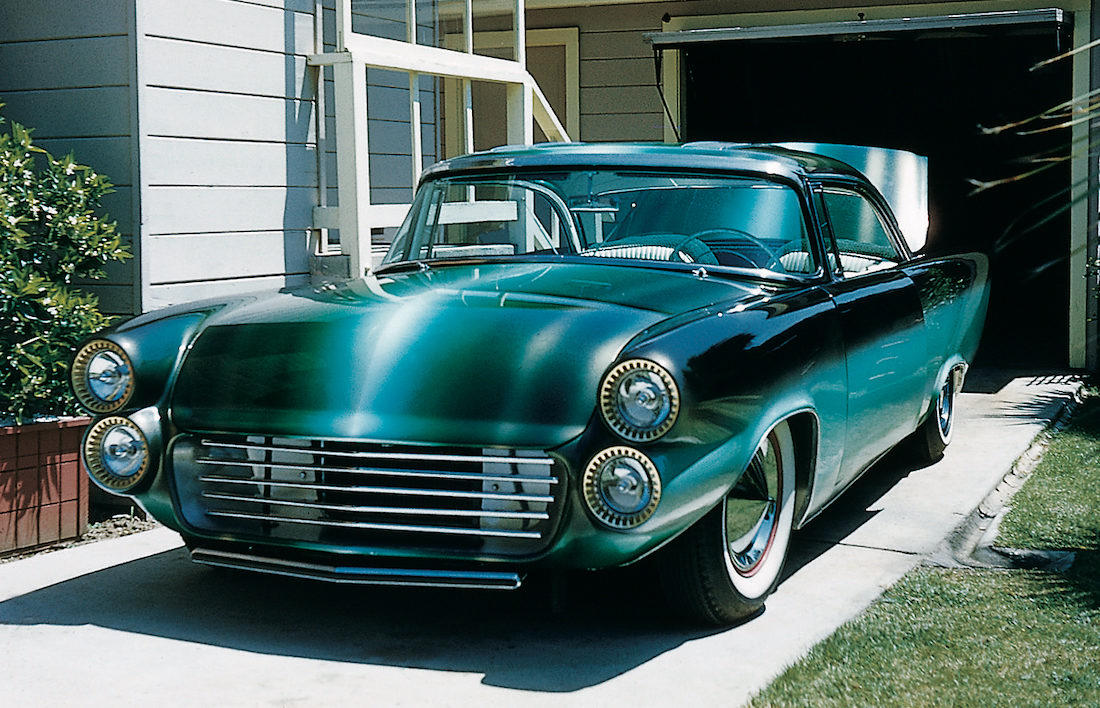
Jade Idol
But even then, Winfield’s work showed a difference. His cars weren’t simply modified—they were re-imagined. He understood proportion instinctively, knowing when to stop cutting and when to let a body line just breathe. This restraint would become his signature.
Subtlety Over Spectacle
While the 1960s custom scene exploded with wild show cars, Winfield pursued a different path. His customs emphasized:
-
Flowing body lines
-
Hand-formed metal panels
-
Perfect stance
-
Paint as a key part of the sculpture
His most recognizable innovation was the fade paint job, now known as the Winfield fade. Long before modern spray booths and digital color matching, Winfield hand-blended multiple shades into seamless transitions. The effect was elegant, organic, and timeless, so influential that it became standard practice across hot rods, customs, and even motorcycles.
Jade Idol (1956)
The Jade Idol was radical without being cartoonish. Featuring reshaped panels, sculpted fins, and a cohesive design language, it proved that custom cars could be futuristic and tasteful. The car remains a masterclass in balance.
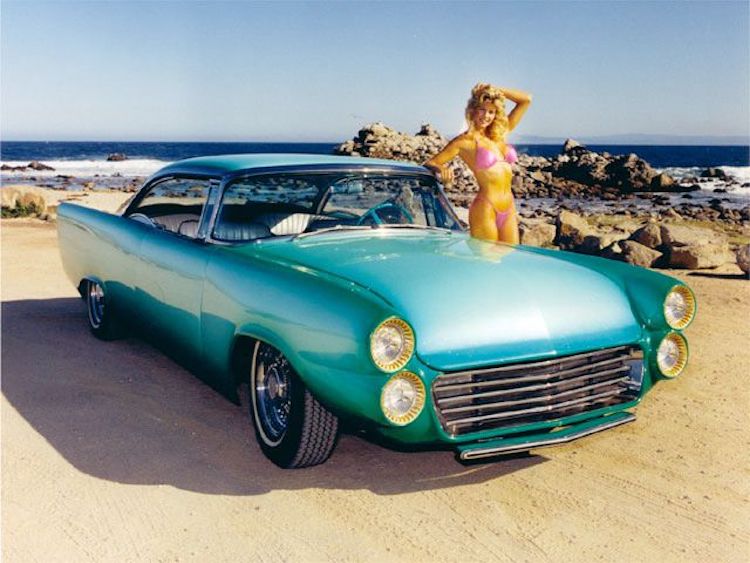
Jade Idol
Reactor (1964)
Perhaps Winfield’s most famous creation, the Reactor looked like it came from another planet. Low, wide, and purposeful, it appeared in television shows (Star Trek for one) and films, embedding itself into American pop culture. Yet beneath the spectacle was impeccable craftsmanship—every surface intentional, every modification justified.
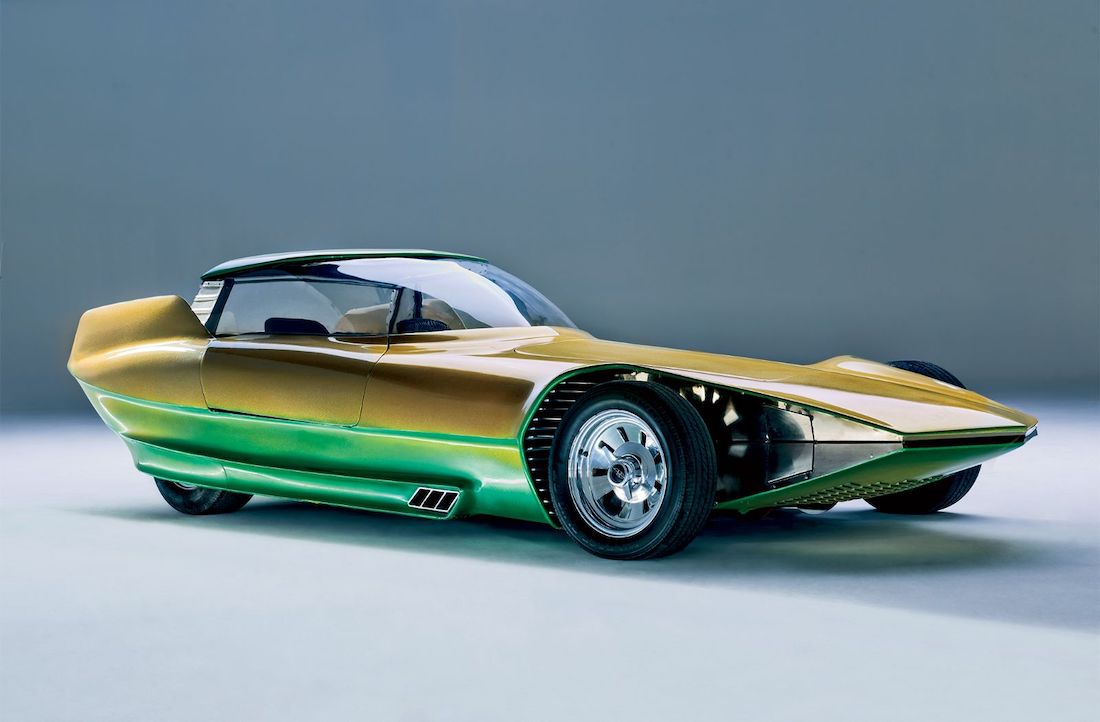
Reactor
Teacher
Unlike many builders who guarded their secrets, Winfield became one of custom car culture’s greatest teachers. For decades, he traveled the country teaching metal shaping techniques—often for free—showing younger builders how to shrink, stretch, and form steel by hand.
This generosity cemented his importance in addition to his own great creations. Many of today’s top craftsmen trace their skills directly back to a Winfield workshop or demonstration.
Hollywood and the Future That Never Was
Winfield’s skills found a natural home in Hollywood. His ability to fabricate believable “future cars” made him indispensable to film studios. From science fiction to television, his work helped define what America imagined the future would look like—sleek, mechanical, and handmade.
These cars weren’t props; they were fully realized machines, grounded in real engineering and craftsmanship.
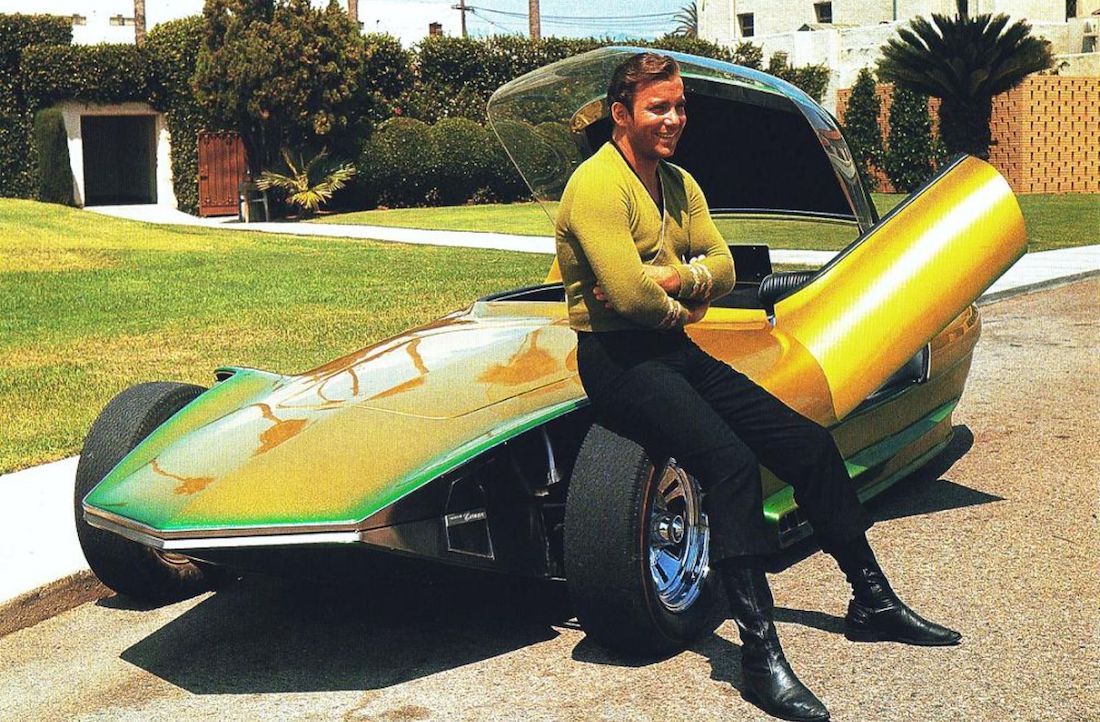
William Shatner of Star Trek and the Reactor
Why Gene Winfield Matters
Gene Winfield represents the best of American custom car culture:
-
Craftsmanship over ego
-
Innovation without excess
-
Teaching as a part of his legacy
In an era increasingly dominated by bolt-on parts and computer design, Winfield reminds us that true customization begins with hands-on skill. His cars feel alive because they were shaped by human judgment, not software.
Custom cars are part of America’s folk art, and Gene Winfield is one of its greatest craftsmen. His work proves that beauty doesn’t need to be loud—it can whisper through perfect proportions and subtle detail.
Let us know what you think in the Comments.
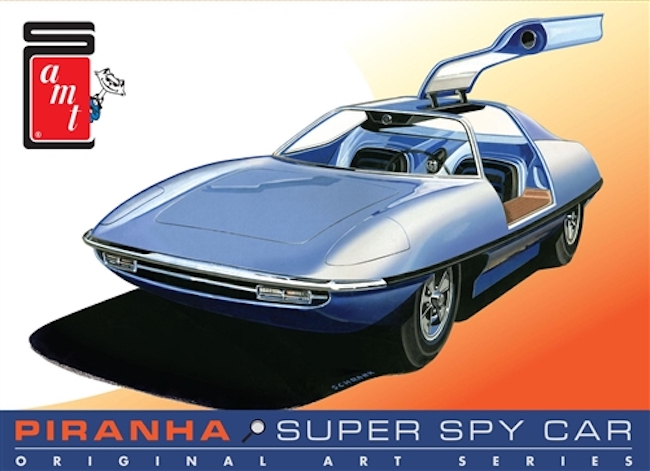
Piranha Kit Car By AMT Model – Modified by Gene Winfield
Check out the Piranha kit car Sports Car on page 165 in the book, “The Legendary Custom Cars and Hot Rods of Gene Winfield” by David Grant. AMT, the model car kit company from Troy Michigan set up a Speed and Custom Division in Phoenix, Arizona in 1966.
AMT hired Gene Winfield to manage part of the Speed and Custom Division, and later he became the General Manager. After much wrangling to find a suitable car for the television show, The Man From U.N.C.L.E., it was decided to use the Piranha Sports Car with its Cycolac body.
Cycolac is the same material used to make the plastic body of the old rotary telephones. More details on the history of the Piranha are in my book, plus a photo of the Piranha Drag Car powered by a Chrysler 392 Hemi that was campaigned by AMT.
David Grant
Research and some text by ChatGPT 5.2. Images compliments of Gene Winfield.


As a reminder Gene also built the full size Shuttle Craft for Star Trek as well… from those who knew him, he was apparently a very nice gentleman… and certainly hard working.
Here is a photo of the Star Trek Galileo shuttle craft designed and built by Gene Winfield.
Mike,
A wonderful article about my friend Gene Winfield. I had the privilege of meeting him in 1973, when I was about 15 years old. Through persistence, I was hired by a custom car shop where Gene was employed. It was awesome working alongside him and other craftsmen, customizing new Cadillacs and turning them into Station Wagons and Pickup Trucks. I stand as a witness to the great things you said in your article about Gene and I am grateful, that I was able to author his biography.
All the best,
David Grant