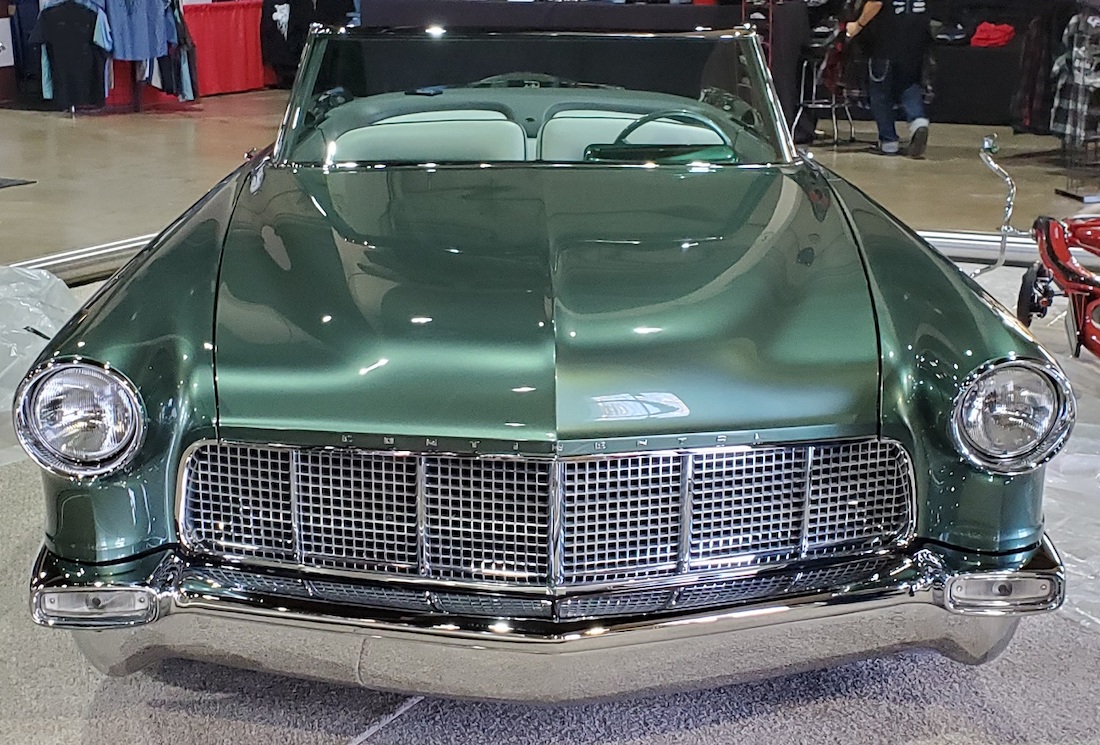
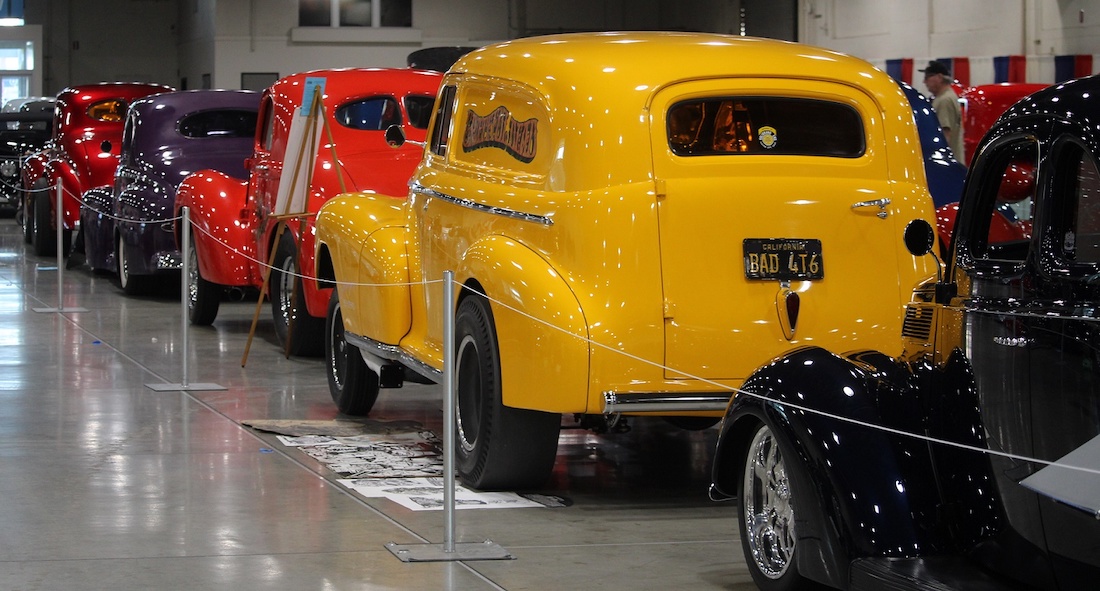
We visited the Grand National Roadster Show in Pomona, California…
by Wallace Wyss and Richard Bartholomew –
It is hard to believe it now but, in only six years, a few American car enthusiasts will be driving cars 100 years old. Now it may take some effort to pry away these cars from them, called “hot rods” but dammit, the cars have lasted to this day.
Mostly they came about in the late 1940s when the GIs came home from WWII. I know they were cheap; I was offered a Model A Ford for $50 in the ‘60s but of course it would have taken a lot of work to make it a hot rod.
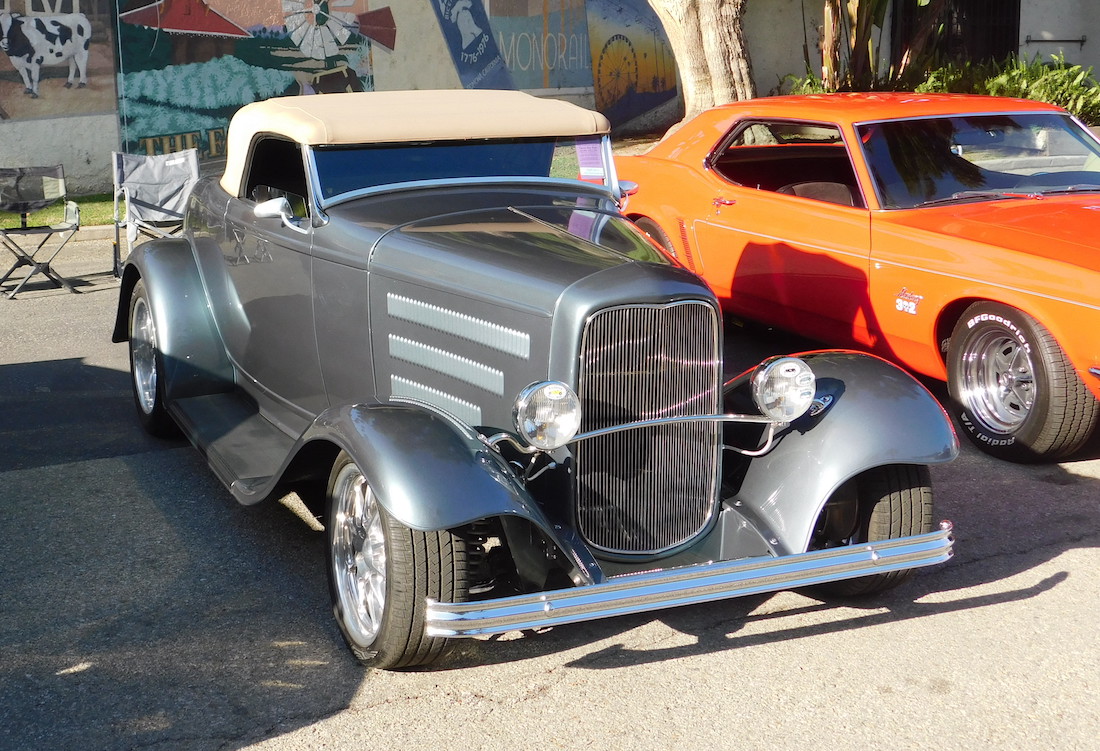
Basically, and ideally, the best donor car to be the basis of a hot rod was a 1932 Ford. These were originally powered by a four cylinder and later a flathead V8, both modest engines not meant for speed.
But these young men back from the war couldn’t resist “hopping up” the car and adding non-stock intake manifolds, and non-stock carburetors Soon they were even adding high performance heads, and custom exhausts, some simply as “straight pipes” that jutted out the side of the engine compartment. Forget about mufflers.
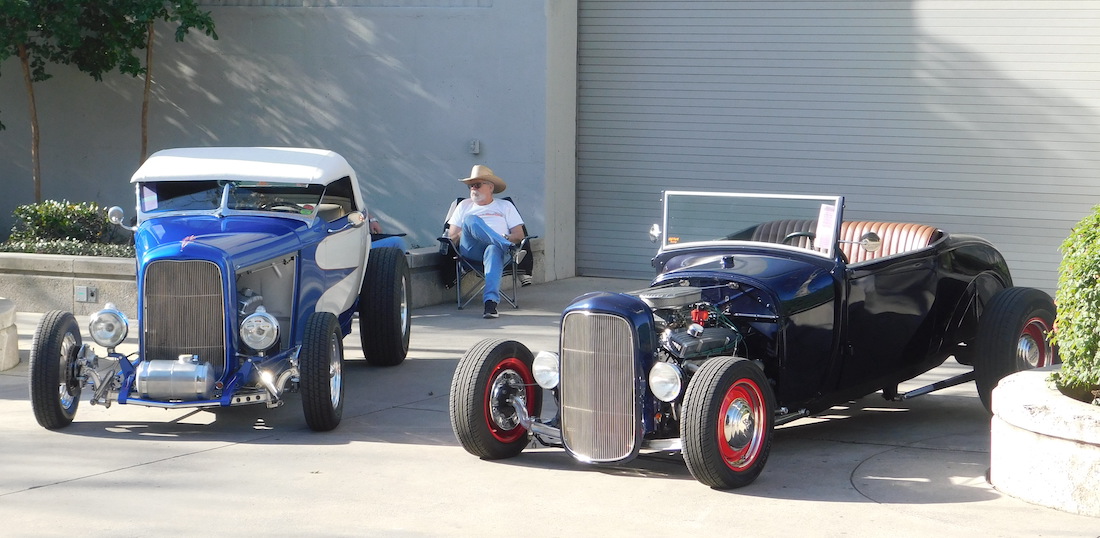
The young rodders also threw away the fenders, benefitting from a law that said cars that weighed under 1600 lbs. didn’t need fenders. And they ran most of the time without a lift-off top, or convertible top. There were actually two types of open versions from the factory in the ’32 body style, one with a skimpy frame and one with a more substantial roof. And then there was the coupe.
Americans liked to not only “chop the top” by cutting the windscreen down and cutting a few inches out of the metal coupe’s or roadster’s rooftops height but sometimes they would do away with the stock windscreen in an open car and run a plastic racing windscreen. This was years before “safety glass” so they could get away with removing the stock windscreen.
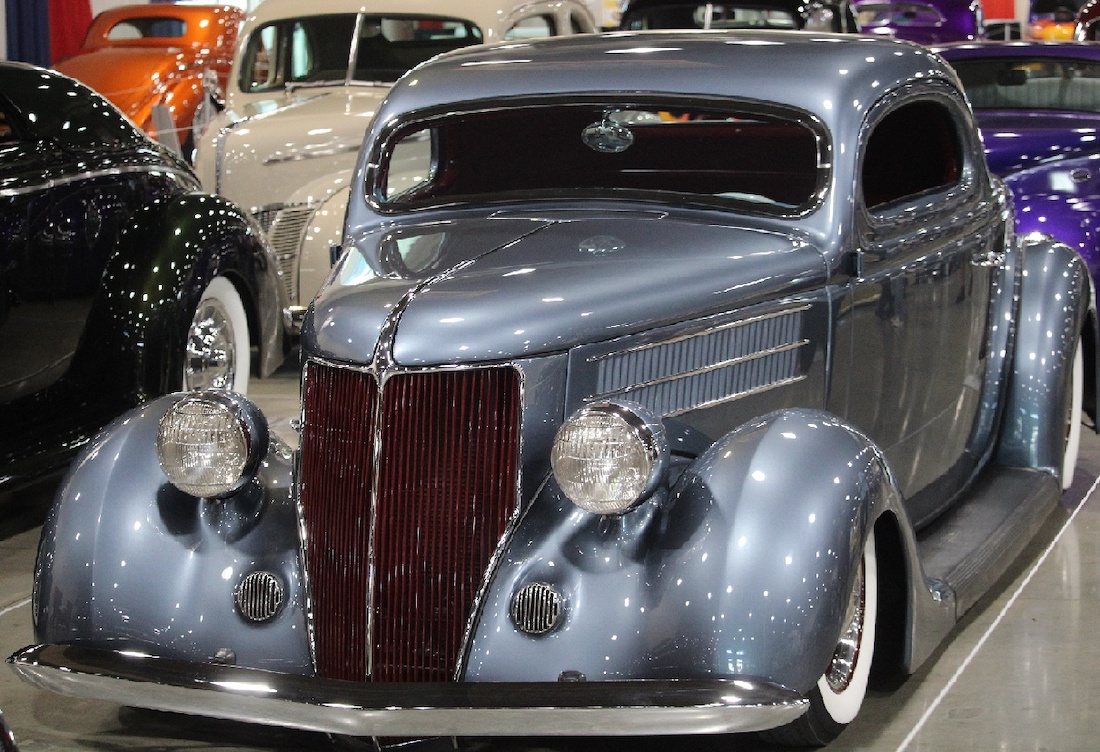
The ’32 “high boy” roadster is by far the most popular but the ’33, ’34, ’36 Fords are popular as well. Sometimes parts from the later cars would be retrofitted to the ’32 roadsters.
Normally the hot rod was a two seater, but If the owner of the original car had ordered the rear seat revealed by lifting up the flush deck trunk lid, that adds a lot to the factor for today’s families using hot rods.
POSTWAR V8s MADE THE SCENE
The availability of the modern postwar V8 from the Detroit automakers around ’55 changed hot rodding. Soon rodders began fitting 327 cu. in. Chevrolet V8s because Chevy modified parts were more common. A favorite mod was to add a new manifold carrying two, four or even six carburetors.
And then came the “blowers” the nickname for superchargers. It became fashionable to have the supercharger sticking through a hole in the top of the engine cover.
The usual wheel layout was skinny wheels and tires in front and huge, while taller and wider wheels and tires were in the back.
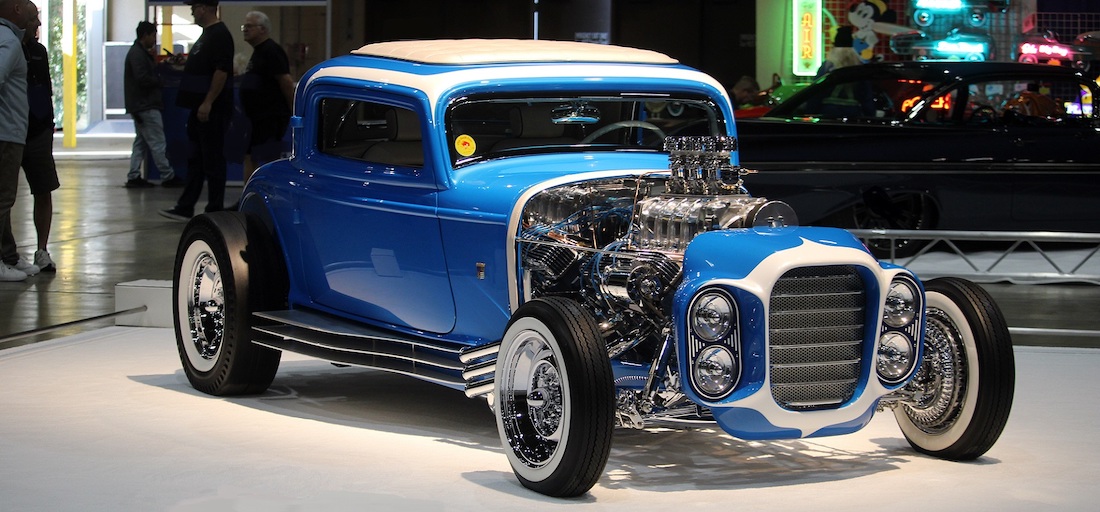
Often the rear tires were drag slicks–smooth tires–but a cop would give you a ticket if you ran those on the street, which were admittedly squirrely in wet conditions.
A big inside change to the interior was lots of gauges, as many as possible, and lots of toggle switches, an idea that came from aircraft. Many modified the shift lever, topping it with something unique (often a miniature skull or a billiard ball).
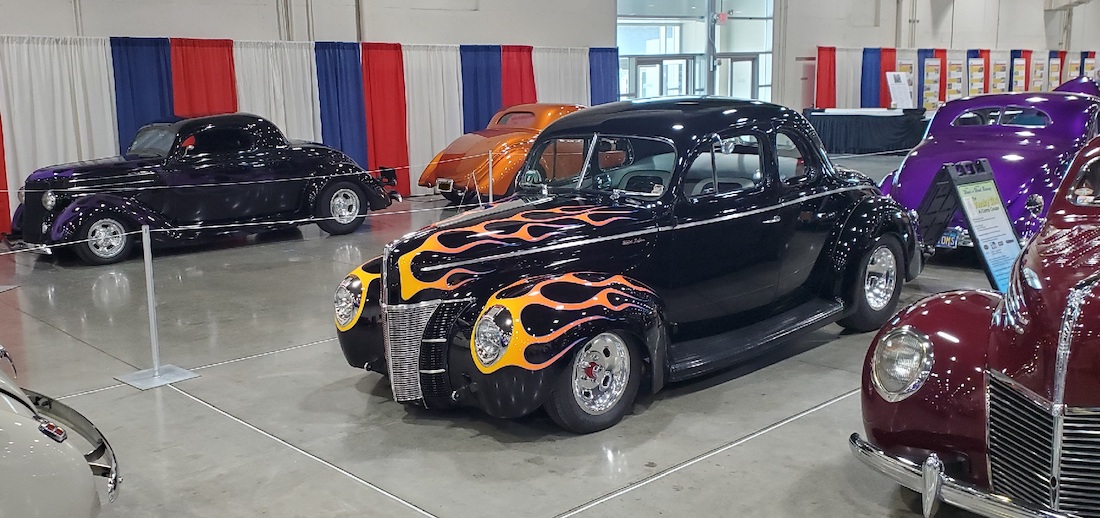
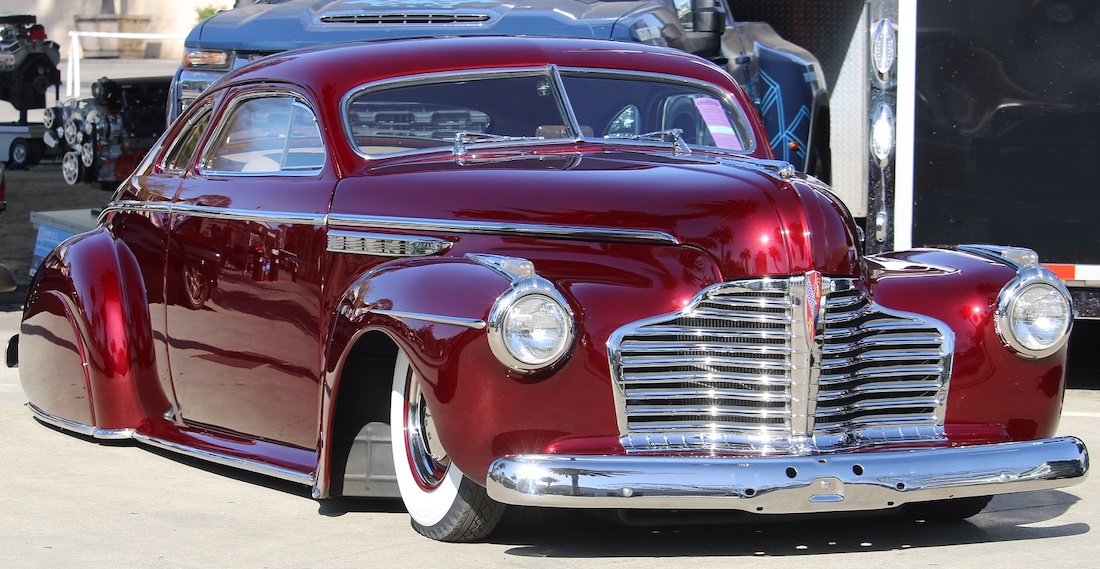
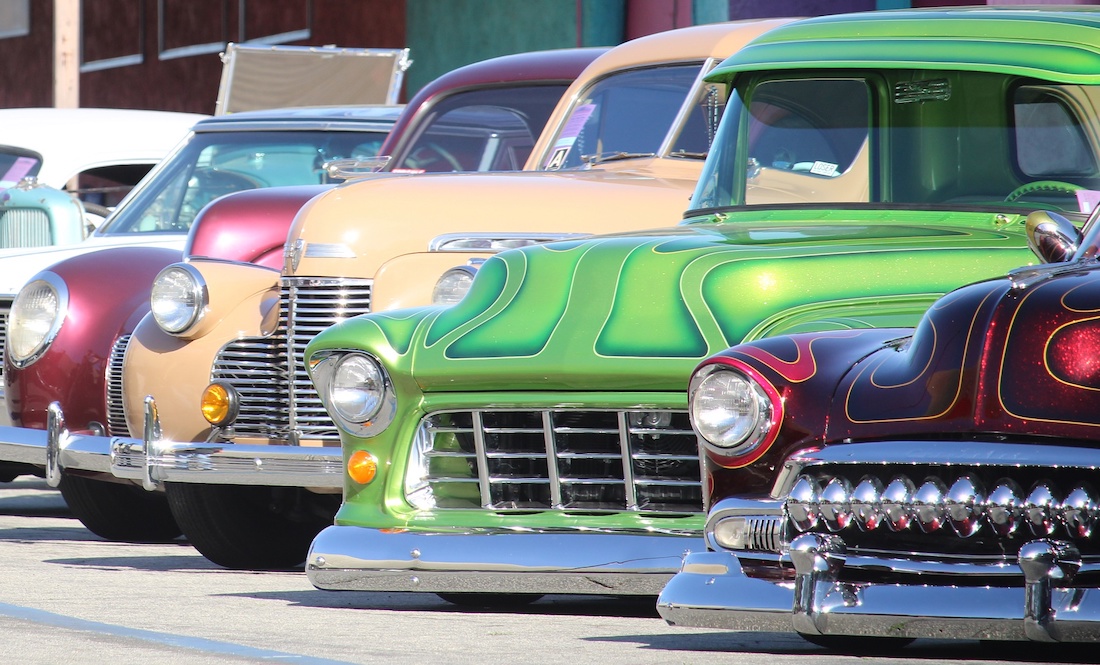
Paint wise, a guy’s first hot rod was usually primer coated with a “rattle can” spray but gradually the influence of customizers like Dean Jeffries, and Bill Cushenberry, led to metallic paint jobs, some even employing real fish scales to get a “pearlescent” look.
There were many hot rod movies made in the ’50s, usually with forgettable movie stars. Here’s just a few titles:
The Big Wheels (1949)
Danger on Wheels (1940)
The Devil on Wheels (1947)
High gear (1933)
Hot Rod Girl (1956)
In Hot Pursuit (1977)
Speed to Spare (1948)
T-Bird Gang (1959)
The Wild Ride (1960)
The plots were monotonously similar—usually starting with a “good guy” and “good girl” who then run into the girl’s old boyfriend, who is of course jealous and it ends in a drag race that usually saw the bad guy’s car crash. Ironically some of the cars that survived those movies still exist and are stars at car shows.
REPLICAS INTRUDING
Nobody knows how many original hot rods even exist, the issue is confused by the appearance of newly made replica chassis and bodywork so you could build a new one out of replica parts. You can actually build a 1932 styled hot rod today. I don’t have a clue how you would license it, but where there’s a will there’s a way.
As far as speed, being much lighter than regular cars without the fenders, (and spare tires) the ‘50s rods could cruise at 100 mph with the right engine. Off the line, at each traffic light, there were a lot of informal speed contests, which alarmed the public so much that eventually led to the growth of drag racing specific racecourses, so the kids would have a safe place to show off.
A BIG THREE DETROIT AUTOMAKER TRIES TO BRING BACK THE HOT ROD
Ironically, in recent times an American automaker, Chrysler, made a modern hot rod–the Prowler– which looked the part of a traditional ‘50s two seater hot rod but, due to a small V6 engine, couldn’t perform like most of the V8 powered hotrods you see at car shows.
So they captured the essence of the genre in the Prowler, but they actually built a car that almost completely missed the point of being faster than the production model. It wasn’t a “hot rod” but a “lukewarm rod.” Still the hot rod persists, and it will be an interesting standoff between hot rodders and ecology buffs as to which States will still allow them to be licensed for the road when ’32 Ford hot rod owners still want to take to the open road in 2032.
Let us know what you think in the Comments.
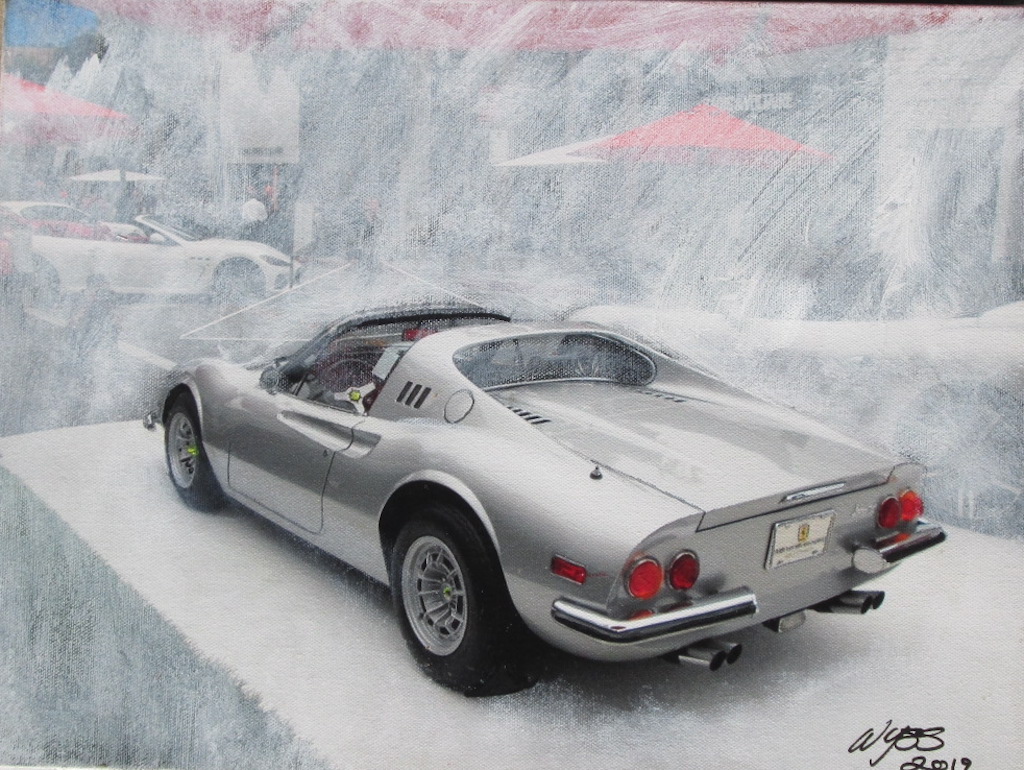
THE AUTHORS: Richard Bartholomew is a fine artist working with computer modified images (visit his Facebook page here) and Wallace Wyss is a fine artist working with traditional paint and brushes. For sample art work images write mendoart7@gmail.com


The first movie mentioned, “The Big Wheels” 1949, was actually The Big Wheel” 1949 and did not really have to do with Hot Rods or Custom Cars. It was the story of a young guy whose father had been an Indy 500 racer and died in a crash.
The rest of the movie tells of the struggle of the son to get to the Indy 500 and win. The son. by the way was played by Mickey Rooney and the film also featured Thomas Mitchell and Spring Byington (this is, of course, 1949).
Still see it once in a while on Turner Classic Movies (TCM).
I should have noticed that as I saw the movie in ’53 or so. I think Mick’s portrayal was very realistic–any woman that falls for a racer oughta know that the track is everything to the guy. I left off the James Dean movie becase the car he was racing on the street was a Mercury but the game of “chicken” was common at the time. The loser the one who hits an obstacle while the winner of the impromptu race gets home free. I see that snerioin traffic all the time, where one driver will cut off another to gain the lead. The question is “when we are all in autonomous cars, will our cars fight for the lead?
And don’t forget the culture embodied in the “bibles” of my 13-yr old life: Hot Rod & Street Rod by Henry Gregor Felsen.
Wally brings up a few interesting scenarios. If you tell your smart car to “step on it, I’m going to miss my flight”, your car may instead call ahead to stop your flight from leaving, or book you a later flight. If you get in a robot taxi and tell it to “follow that car and don’t lose it.”, like they do in the movies, will your taxi report you to the police for stalking? Or say you were at the beach with your friends and there are multiple smart cars, will you and your friends be able to tell your cars to “race back to your house, loser has to purchase the beverages.”, will the cars even be able to really race? Cutting corners, blocking passing, will wealthy car owners be able to program their smart cars to never lose to any ‘lesser ‘ vehicle?
Richard: You bring up some worrisome subjects regarding robot cars. Will robots compete against each other? Wil they “rain on the parade”: of any owner who wants to bend the law to beat his friends to the set location? I think The State wil be intrudng a lot more–the robots will obey the State by adhering to speed limits transmitted cntinuously. And worse they will rat you out if you run a yellow light or anything else Those in pre-2027 cars might still hve some free will but soon thr State and the Mindful Robts will have those pesky humans under control…