by Mike Gulett –
The connection between Lance Reventlow and Carroll Shelby is one of the most fascinating stories in American motorsport history. Reventlow literally handed his workshop and people to Shelby who would then use them to build the Cobra and help define America’s racing identity in the 1960s and create a legacy for generations.
Below is a summary of this relationship and at the end I have two questions.
1. Reventlow Automobiles Inc.
In 1957 Lance Reventlow founded Reventlow Automobiles Inc. (RAI) in Venice, California, with a mission to build the Scarab, an all American-built racing car capable of defeating Ferrari, Maserati, and Aston Martin.
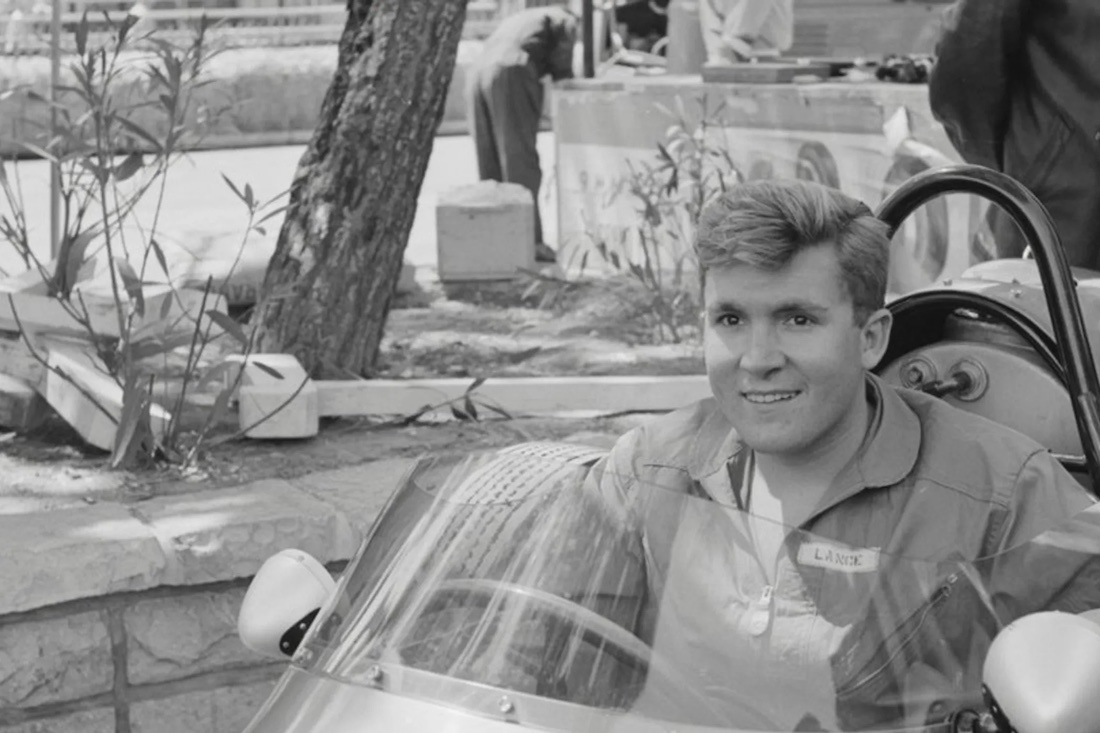
Lance Reventlow
RAI’s workshop was located in an ordinary industrial building near the beach—what would later become hallowed ground in racing history. Recruited by Reventlow were some of the most talented fabricators and engineers in Southern California’s active hot-rod and racing scene:
-
Phil Remington (chief fabricator/engineer)
-
Troutman & Barnes (Tom Barnes and Dick Troutman, chassis experts)
-
Chuck Daigh (driver and development engineer)
The shop became a crucible of innovation—hand-built aluminum bodies, tubular frames, and Chevy V8 engines all getting ready for racing.
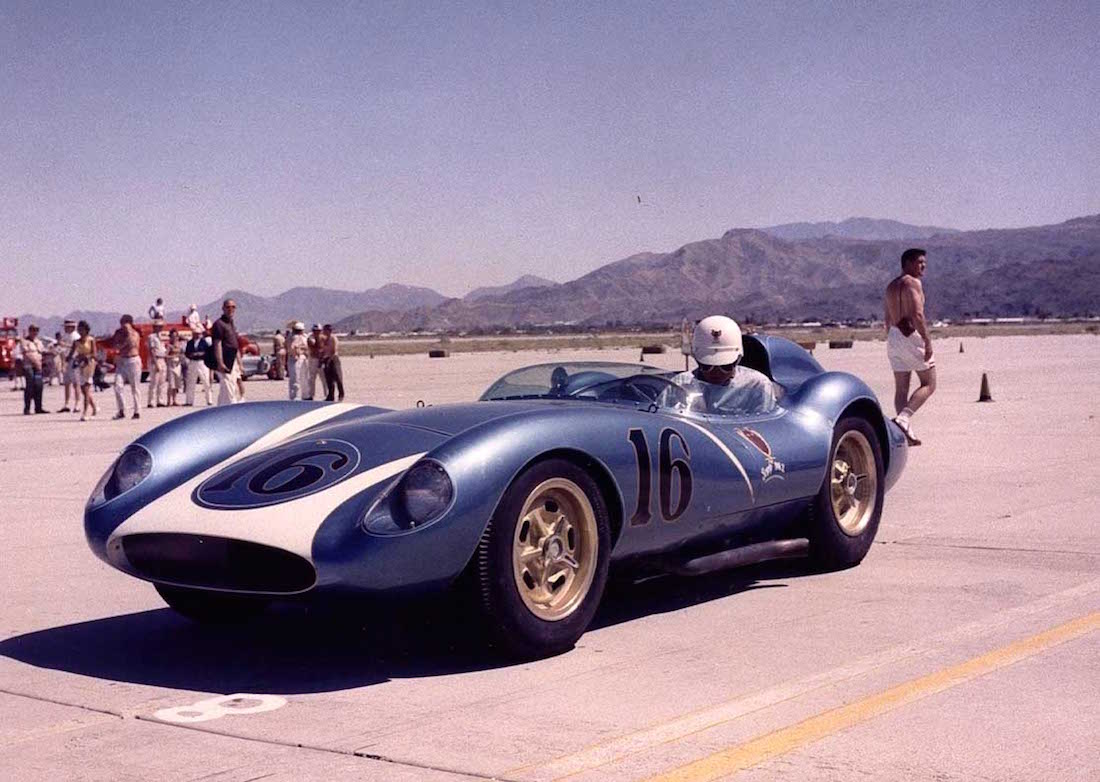
Lance Reventlow and the Scarab
2. Reventlow Paves the Way for Shelby
Between 1958–1960, the Scarab won many major U.S. sports-car races, defeating Ferrari and Maserati on American soil. It was, for a moment, the Cobra before the Cobra existed: a private effort proving that American engineering and expertise could compete internationally.
However, when Reventlow tried to move into Formula One with the 1960 Scarab F1, he chose a front-engine layout just as the rest of the world was switching to mid-engine designs (like Cooper and Lotus). The car was obsolete the moment it was completed.
By 1962, Reventlow’s interest in racing had waned. He was turning toward real estate and a quieter life in Aspen, Colorado. Rather than let the Venice facility sit idle, he decided to lease the building and sell off equipment to Carroll Shelby.
3. Carroll Shelby Steps In
Then, Carroll Shelby, a Texan race car driver who won the 24 Hours of Le Mans with co-driver Roy Salvadori in 1959 driving an Aston Martin, retired from race driving due to heart problems, was trying to realize his own vision – an Anglo-American sports car that combined a lightweight European chassis with American V8 power.
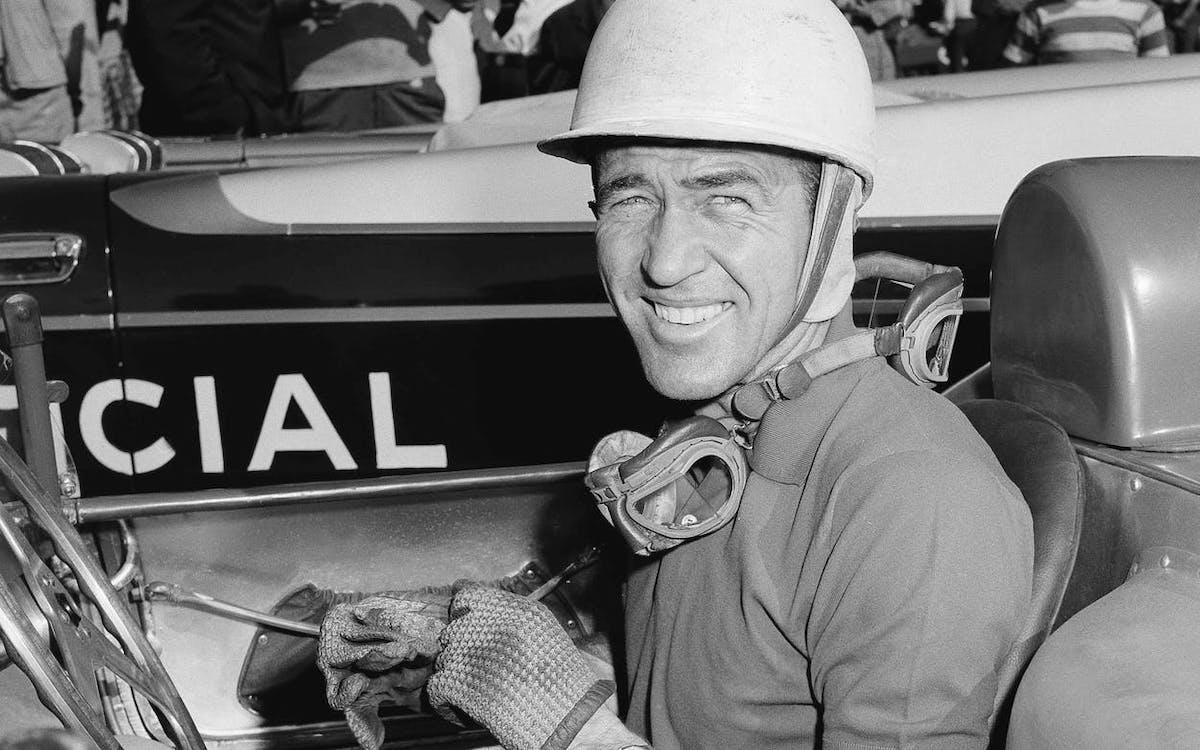
Carroll Shelby
When Shelby began setting up Shelby American in late 1961–early 1962, he wanted a ready-to-go facility with machine tools, lifts, and people who understood racing fabrication. Reventlow’s RAI workshop in Venice was perfect.
Phil Remington, Reventlow’s brilliant engineer, joined Shelby. So did other Scarab veterans. They brought with them the same craftsmanship, aerodynamic understanding, and hand-built precision that had defined the Scarab.
Thus, the DNA of Reventlow’s Scarab racing success flowed directly into Shelby’s Cobra. The first Cobra prototypes were built in the same shop where the Scarabs had been born.

AC Shelby Cobra 427
4. Two American Dreamers
Both men were American originals from opposite worlds:
| Lance Reventlow | Carroll Shelby |
|---|---|
| Born into immense wealth (Woolworth heir) | Self-made Texan farm boy |
| Aimed to prove an American could build a world-class race car | Aimed to prove an American could win with one |
| Refined, aristocratic, quiet | Boisterous, earthy, hustling |
| Built the Scarab | Built the Cobra |
Despite their contrasts, they were kindred spirits—both visionaries driven by pride in American engineering and independence from European tradition.
Reventlow’s Scarab proved it could be done; Shelby’s Cobra proved it could win races on a world stage.
5. Legacy
When enthusiasts talk about the “Venice lineage,” they trace a direct line:
Reventlow Automobiles (Scarab) → Shelby American (Cobra & GT350 Mustang) → America’s golden era of racing.
Without Reventlow’s investment and infrastructure, Shelby’s Cobra and GT350 Mustang projects would likely have taken much longer—or never reached the same scale and level of success.
Without Shelby, Reventlow’s engineering legacy might have been forgotten.
Together, they form a two-chapter saga:
-
Reventlow: the aristocrat who built America’s first world-class race car.
- Shelby: the Texan who made it a world-class winner.
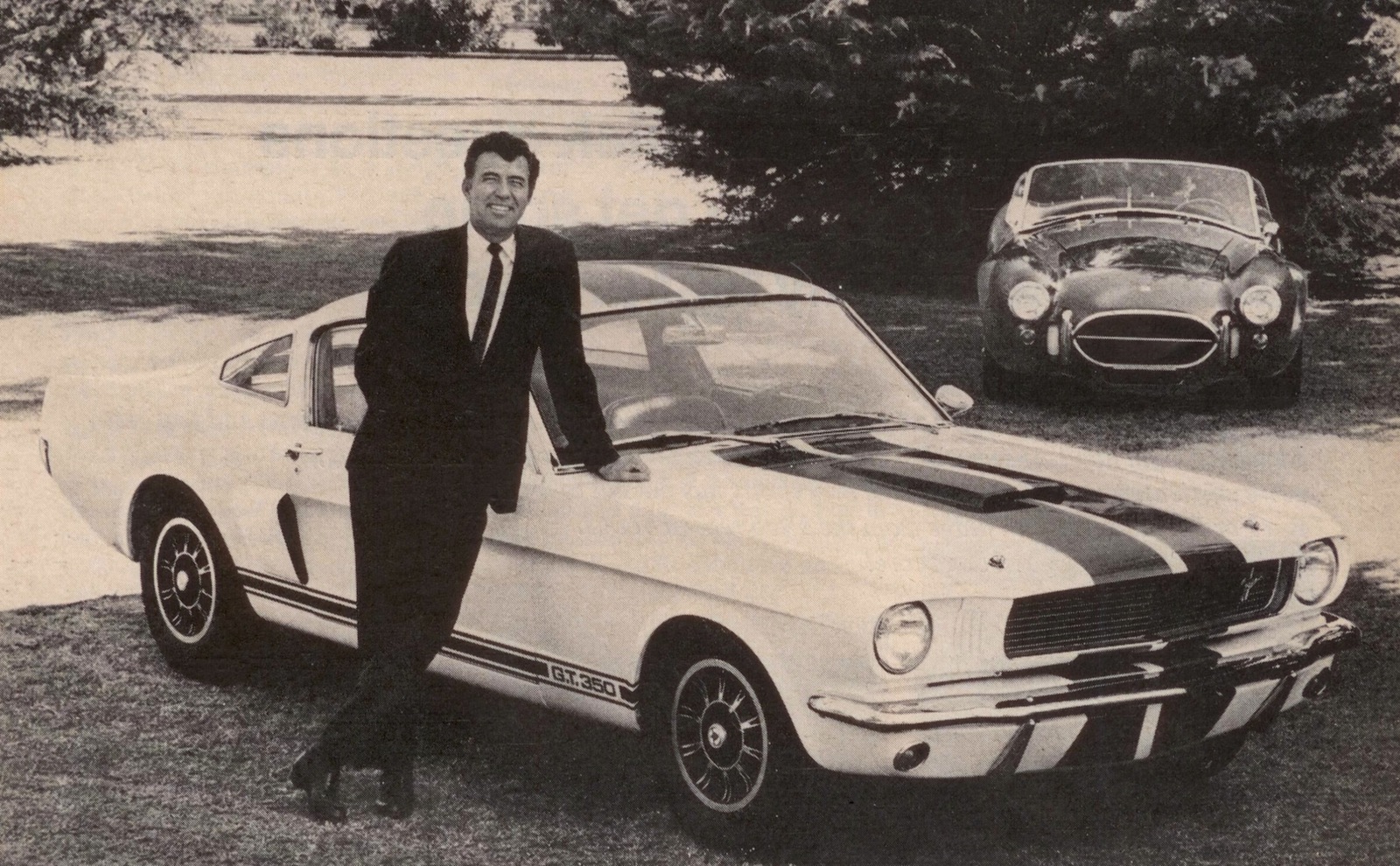
Carroll Shelby with a GT350 Mustang and a Cobra in 1966
6. My Questions
- Why did Reventlow not build street cars for sale to fund his racing like Enzo Ferrari (and later Shelby)? If he would have done this maybe he would hold a place in automotive history similar to Shelby.
- Why did Shelby not take the Scarab design as a starting point for the Cobra instead of the AC Ace? If he would have done so then his cars would have been all American and maybe he would have achieved more sooner.
Let us know what you think in the Comments.

Shelby Cobra and Reventlow Scarab

Research, some text and some images by ChatGPT 5.


Excellent summary which now (at least for this reader) puts these two pioneers in context. Thanks.
You stopped tpp soon. Phil Remmington then went on to work with Dan Gurney at AAR on a successful series of racing cars. He is the connecting link along with folks from the Southern Californioa hot rod culture, IMO Shelby was looking for physical space and had NO IDEA what was going to happen when the remaining folks from Scarab volunteered to work for him. Shelby jhad one ides, American engine ib a light weight Eurpean chassis. He thought he had accomplished that and in his mind just needed shop space to go forward. Unfortunately except for one book I’ve been able to find, no one has written much about Phil’s life from the salt lakes to AAR.
Two driven and talented men who changed the face of sports car racing in the USA, not only were the cars fast and fine handling but incredibly attractive as well.
I don’t know Lance;s family background but he didn’t become an aristocrat until hus mom married royalty and then he became Prince Reventlow, whch got him a lot of teasing in high school)
As a abiographer of Shelby I hafta admit his design was less original–he merely bought AC Ace cars from Thames-Ditton, fitted them with 260 Ford V8s and re-named them the A.C. Cobra.He was so anxious it be thought of as HIS car that he peeled the AC logo off the nose as they arrived and put in its place a Cobra logo. But later in his career,his firm developed unique designs like the Lone Star, so they were innovative on their own. I don’t know how Reventlow did the big boo-boo by going front engine.
Shel and Lance both married movie stars, Lance married Jill St. John and Shelby Jan Harrison Alison Garret (Ft, Bowie) Shelby later on married a second movie star. Shel had many wives, the number of which isn’t easy to nail down as some of the presiding ministers weren’t credentialed much to the chagrin of the “brides”
Reventlow’s father was a Danish Count and his first stepfather was a Prince and another stepfather was Hollywood royalty (Cary Grant).
Some comments about Lance Reventlow and his choice NOT to build road cars:
While researching my book, Apollo GT: The American Ferrari, one of the founders of International Motor Cars – Ned Davis (along with Milt Brown and Ron Plescia) – spent two days with me and shared his experiences of finding new financing when overdrafts started hitting IMC and the company ceased Apollo production.
Singer Pat Boone (an Apollo owner) and actor Dan Blocker (of TV’s Bonanza fame and an Apollo lover) were among the potential investors interviewed by Davis; in fact, Boone was just a signature away from financing the company before backing out on advice from his business manager. Davis told me that he also approached Lance Reventlow to invest. According to Ned, Reventlow gave him a peak at the Scarab Mk I he still owned and claimed that the IRS told him his racing car venture – which never produced any sort of profit – was now considered a hobby. So, Lance, while he was impressed with the Apollo and what the company had done to date, was fearful of getting involved with building a road car; he was already on the IRS radar. And his heart was no longer in fast automobiles.
He just walked away…
As many have discovered, building a competent road car in a competitive market is usually a sure way of going broke. Remember what Briggs Cunningham said when asked about financing his race and road car operation: “To make a small fortune in racing, one must start out with a big one!”
I think when his GP car , front engined, was woefully slow in practice at Monaco he realized that his relaxed approach to car building was not competitive and didn’t want a sports car to be obsolete before it reached production. Shelby wanted his car to be a racer from the world “go”