by Mike Gulett –
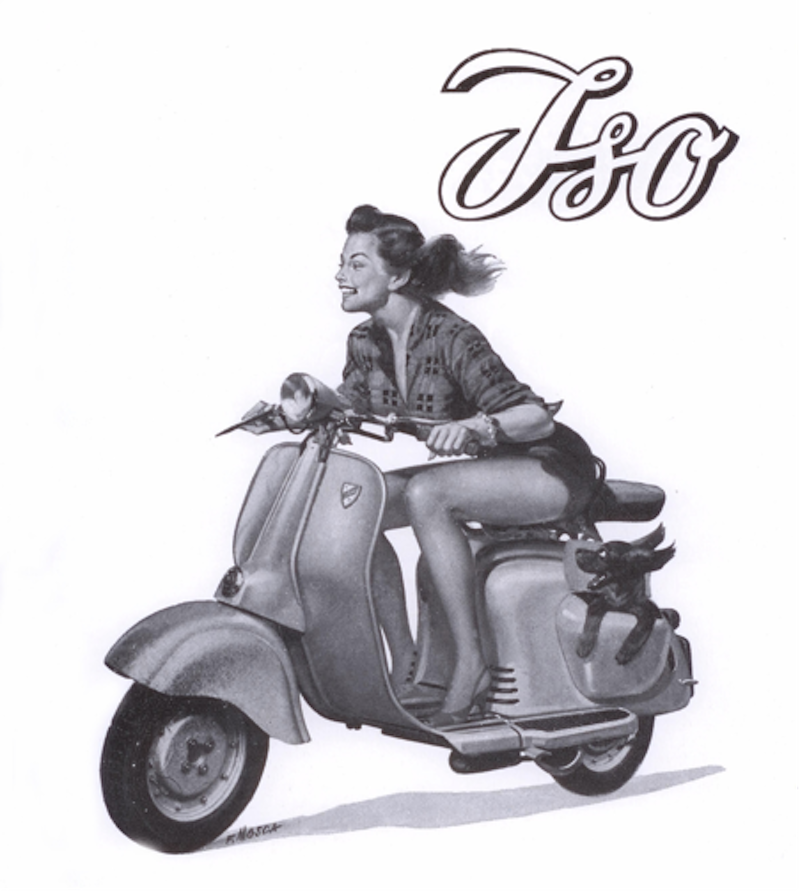
Renzo Rivolta (1908–1966) was an Italian industrialist and visionary whose creations left a large imprint on postwar WWII mobility and grand-touring automobile culture. After starting in domestic appliances with Iso Thermos, Rivolta pivoted to scooters, small motorcycles and small trucks in the late 1940s, producing vehicles that helped mobilize a nation rebuilding from war. But it was his instinct for timely, transformative ideas that set him apart.
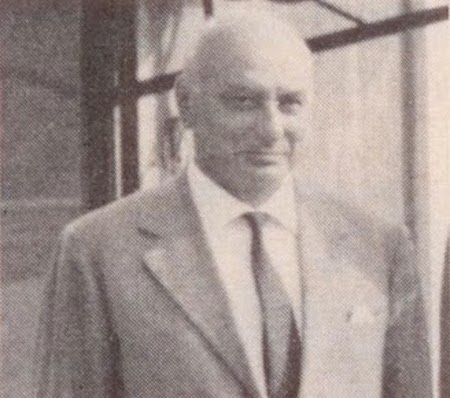
Renzo Rivolta
His first major automotive breakthrough came with the Iso Isetta (1953), a tiny city car (sometimes called a bubble car) designed around efficiency. Rivolta recognized the need for ultra economical transportation during the fuel-scarce, budget-tight years of Europe’s recovery. The Isetta became a symbol of accessible mobility—simple, charming, frugal, and cleverly engineered. Many remember the unique way people got in and out of the Isetta – the only door, on the front, swung away, taking the steering wheel with it, allowing the occupants to step right out onto the city sidewalk.
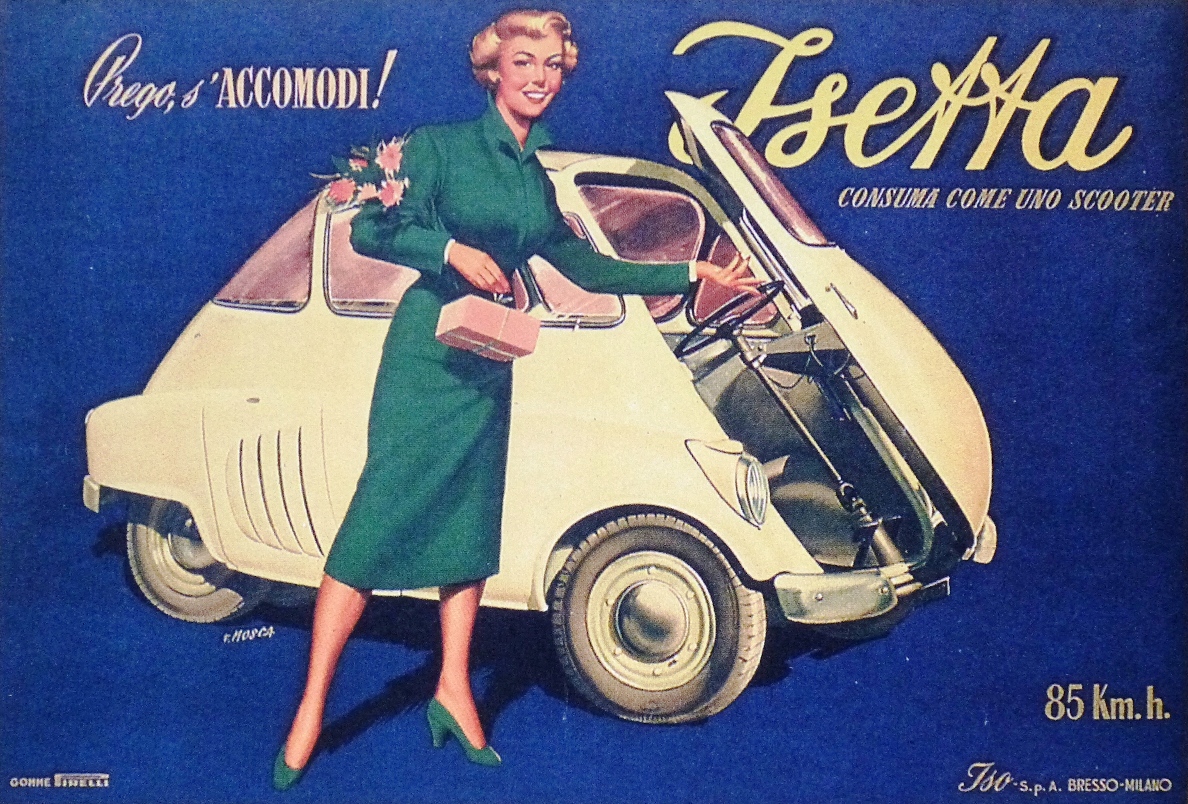
Its greatest impact arrived through licensing to BMW and other companies. BMW’s adoption of the Isetta not only saved the German marque from financial collapse but also provided the profits and momentum that eventually propelled BMW into a global automobile powerhouse. Few small cars in history have had such a large macro-economic effect.
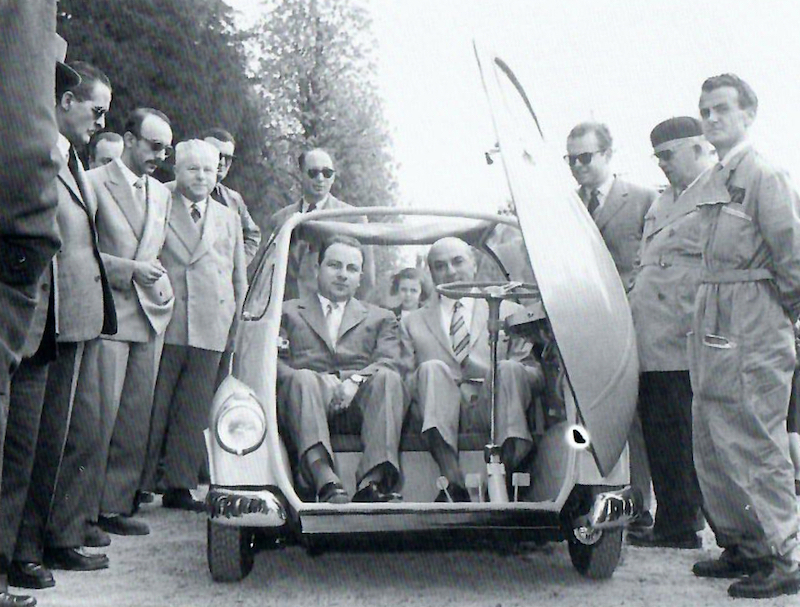
Ermenegildo Preti and Renzo Rivolta in an Iso Isetta – from Da Iso a ISORIVOLTA by Flavio Campetti (Giorgio Nada Editore, 2004).
Rivolta also had the great skill of surrounding himself with the best and brightest minds in the industry: Nuccio Bertone, Giorgetto Giugiaro, Marcello Gandini, Giotto Bizzarrini, Ermenegildo Preti (who conceived of the Isetta) and the excellent engineers of Iso.

Iso Rivolta GT
In the 1960s, Rivolta took a bold turn toward the opposite end of the automotive spectrum, creating the Iso Rivolta GT, Grifo, and later the Lele—cars that redefined the grand-touring formula. These vehicles married Italian styling finesse (with designs by Bertone and engineering assistance from Giotto Bizzarrini) to dependable American V8 engines. Rivolta’s approach solved a long-standing challenge in European performance cars: blending exotic aesthetics and performance with reliability and serviceability. The result was a new kind of GT—fast, comfortable, usable, and less temperamental than many Italian rivals. Iso even created (with engineering leadership by Giotto Bizzarrini) the Iso Grifo A3/C, which had success racing (won its class at the 24 Hours of Le Mans) and later was transferred to Bizzarrini and branded the Bizzarrini GT 5300 and GT America.
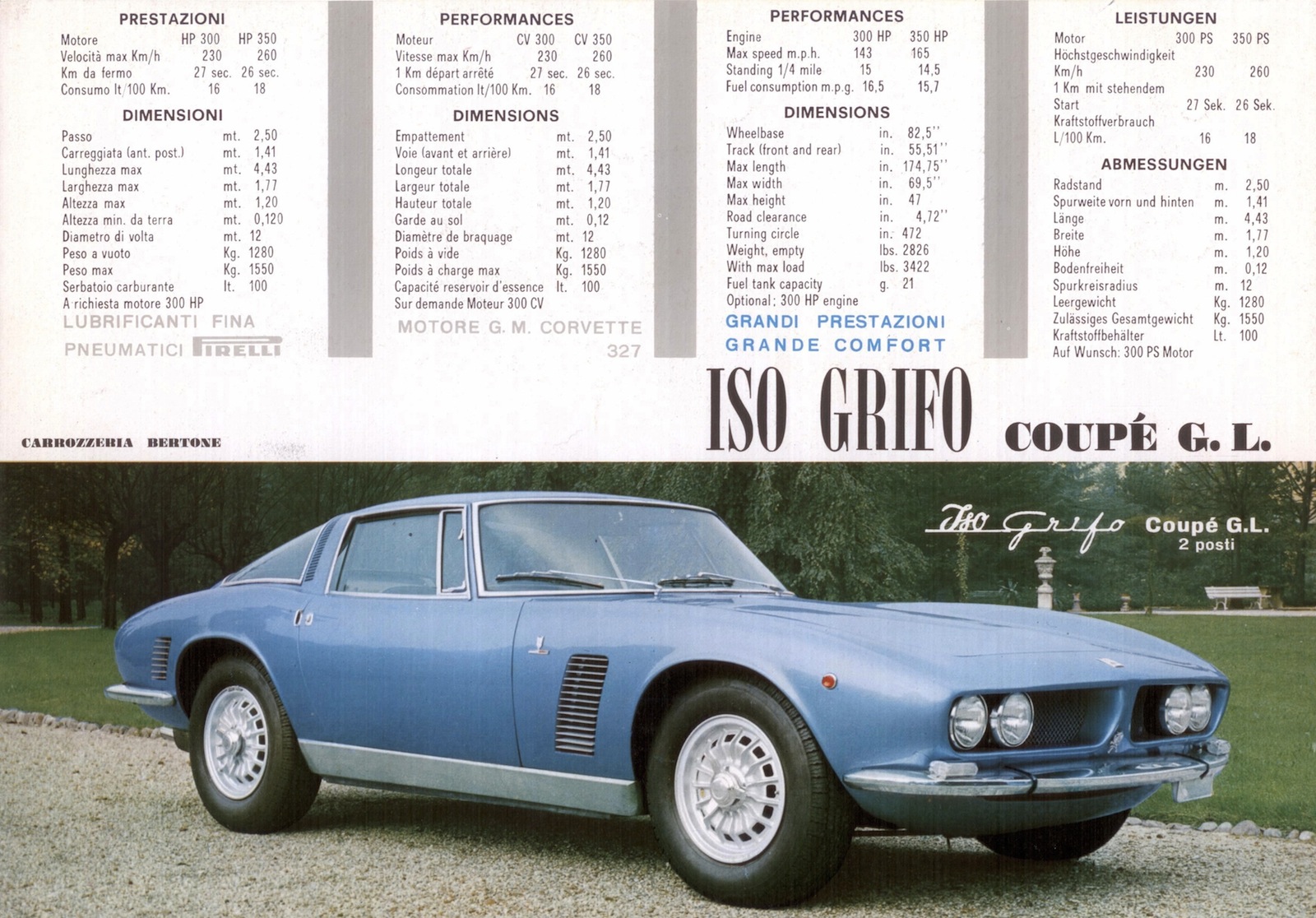
Iso Grifo GL
The Iso Grifo GL, in particular, became a benchmark of the era. With its low-slung profile, impeccable proportions, and immense performance, it demonstrated that Italy could rival or surpass the best from Ferrari or Maserati while offering everyday and reliable drivability. These cars influenced later boutique manufacturers—De Tomaso, Monteverdi, Jensen and even some contemporary builders—who adopted Rivolta’s transatlantic recipe of European chassis sophistication paired with American muscle.
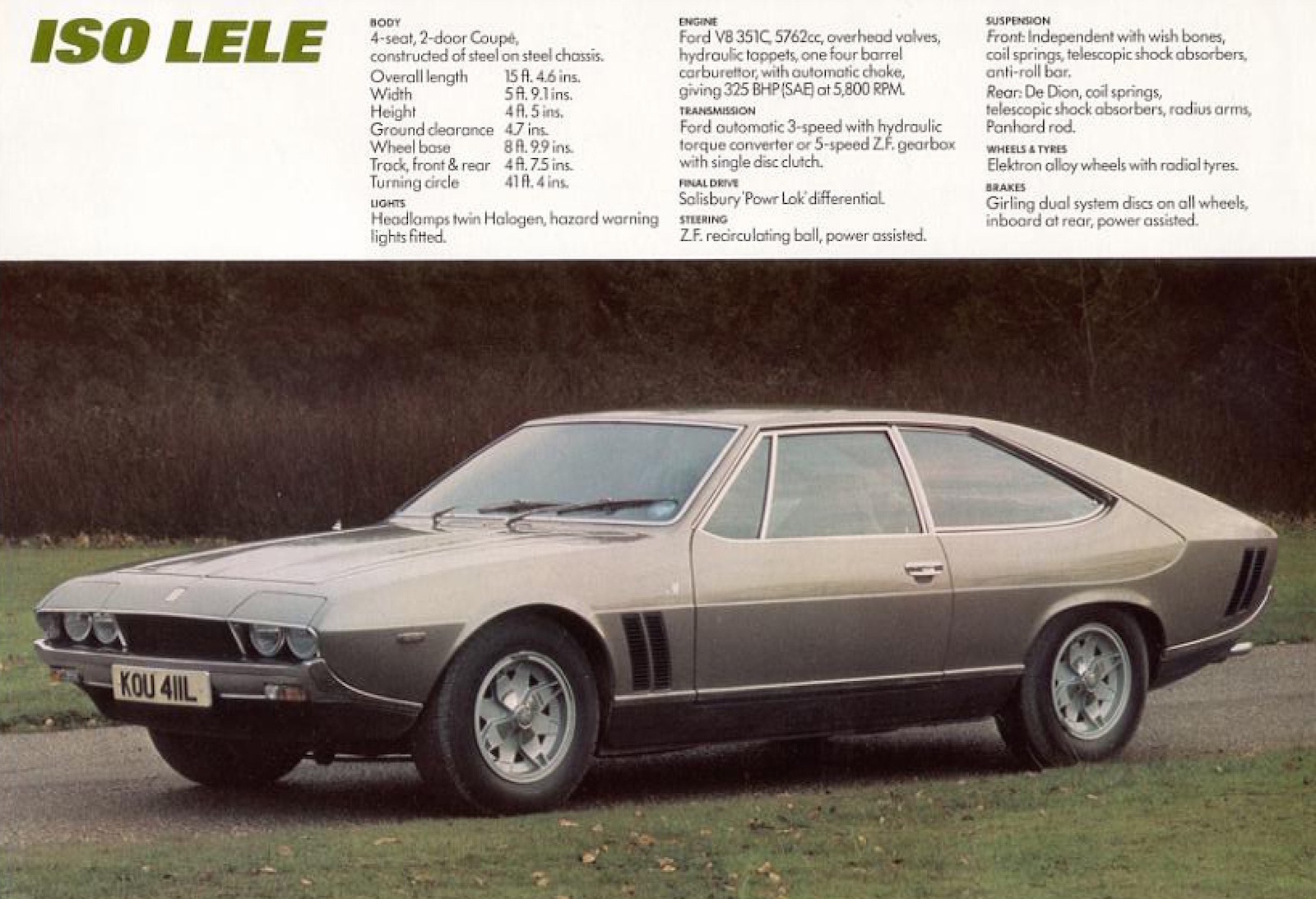
Iso Lele
Rivolta’s automobiles also helped define a cultural image, the GT as a symbol of cosmopolitan confidence and effortless speed. His vehicles were designed not merely for racing or posing, but for covering long distances quickly and comfortably—a philosophy that became central to the identity of grand-touring cars through the late 20th century.
Although Renzo Rivolta died in 1966 and Iso ceased production in the 1970s, his impact remains alive. The survival and growing collectability of his GT cars testify to the strength of his vision. Meanwhile, the Isetta’s legacy lives on in urban microcar design and in the history of BMW’s renaissance. Across both ends of the automotive spectrum—tiny city cars and powerful GTs—Rivolta left a unique and enduring legacy, proving that innovation, elegance, and practicality can coexist in remarkable ways.
Let us know what you think in the Comments.
Research and some text by ChatGPT 5.


Mike – Nice tribute to the man and the car which made me an ISO Rivolta devotee (yes, almost religious) from the moment I saw its photo on the cover of “Road & Track” way back in 1964. Ne plus ultra.
They made a mistake letting Giotto Bizzarrini leave with the design of the race car under his arm. Like Ferrari they could have had racing success to promote the road cars. Still, they recognized Giotto’s genius as well as that of Giugiaro.
I just spent the equivalent of 13.5 million lire (Italian value in about 1949), restoring one of Renzo Rivolta’s GTs.
13.5 million would be, roughly, the wealth of a small industrial business owner in that time period.
Was the restoration worth it, to me? YES.
JW Wood… do you happen to have before and after pics of that car to share?
We would love to see them.