by Mike Gulett –
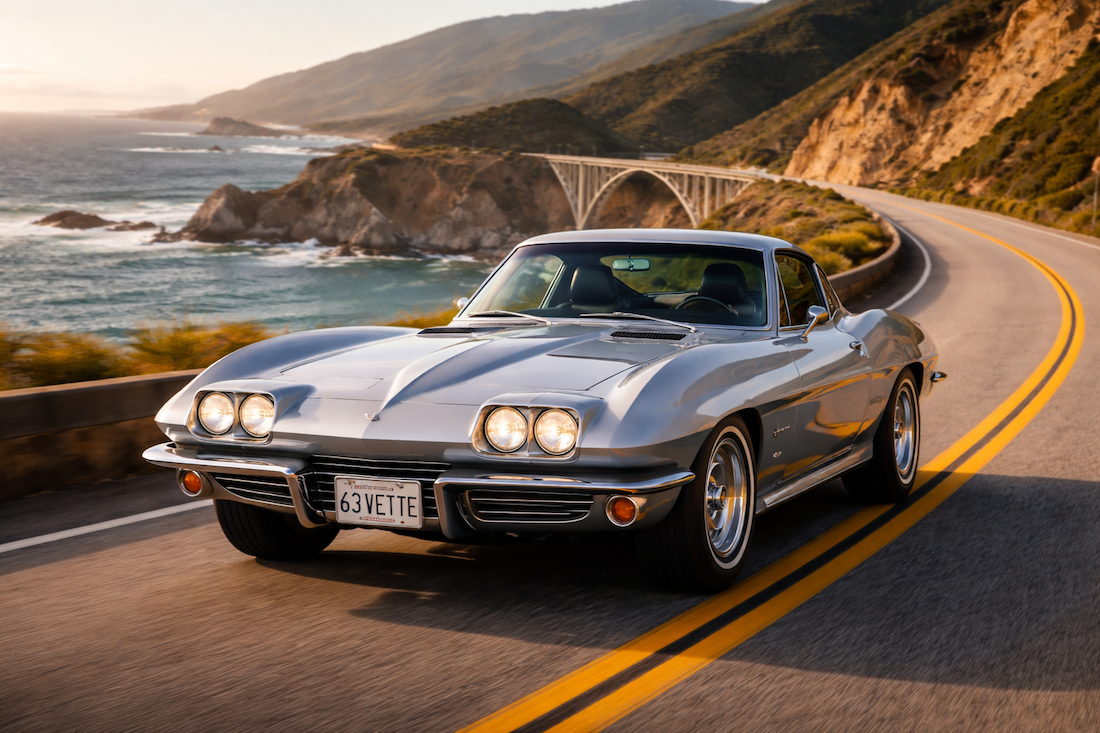
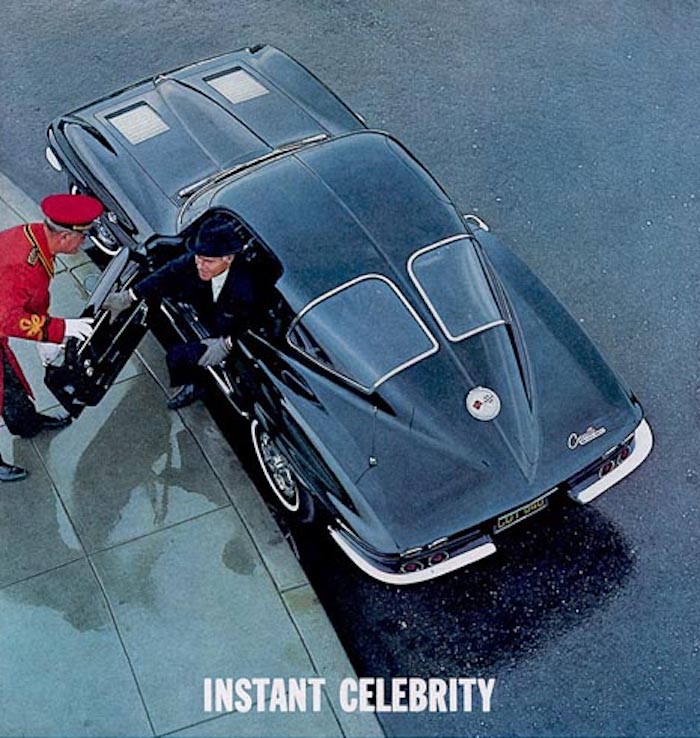
In 1963 I was 11 years old and living in South Gate, California a suburb of Los Angeles. I read every car magazine I could buy or borrow and I paid attention to the cars on the streets. One day some friends and I were riding our bikes and rode past a car dealer where sitting on the lot was the new Corvette Sting Ray. I was mesmerized because I had never seen a car like that before. Many Corvette fans will talk about the rear split window, as mentioned below, but for me the real shock was the overall body style — those fenders, hideaway headlights and a shape that seemed so very futuristic. I never thought any car company would produce a car with that shape.
In 1963, the Chevrolet Corvette Sting Ray arrived like a shock across the American automotive landscape. It redefined what an American sports car could look like, feel like, and aspire to be. If the 1950s Corvette had been America’s optimistic first attempt at a European-style sports car, the 1963 Sting Ray was something altogether different: confident, sculptural, and very modern, or futuristic as I said.
Car design evolution seems to have skipped a few generations.
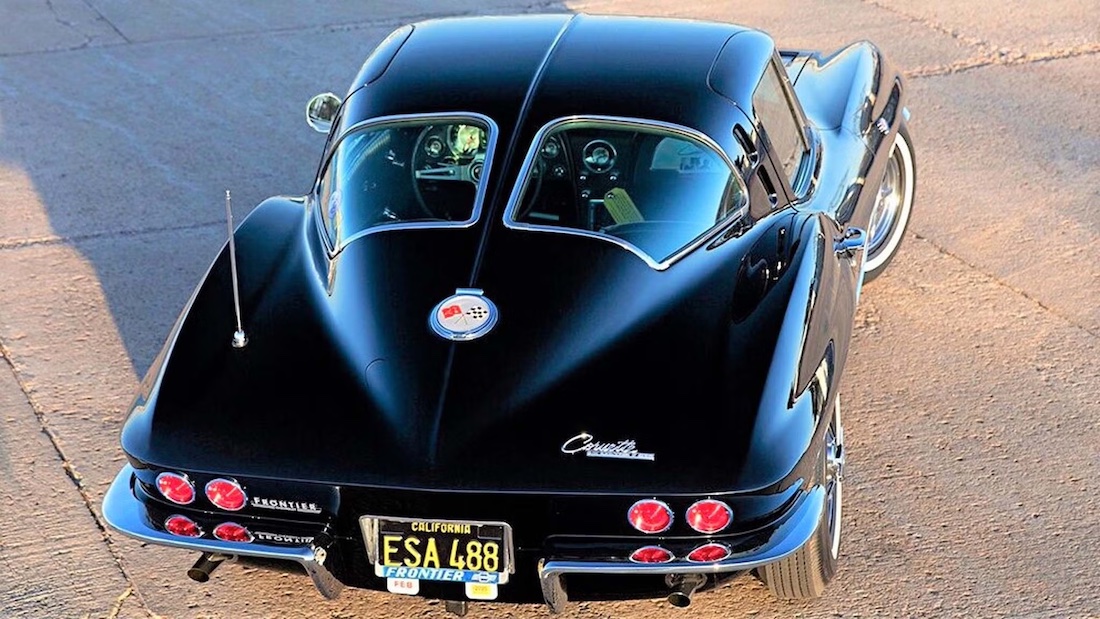
The Split Window – Many Opinions
Because the split window transformed the Corvette from a car into rolling sculpture (along with the rest of the body shape). The fact that it was dropped after just one model year only cemented its legend. Today, the split-window coupe is not just desirable; it is mythic in a way.
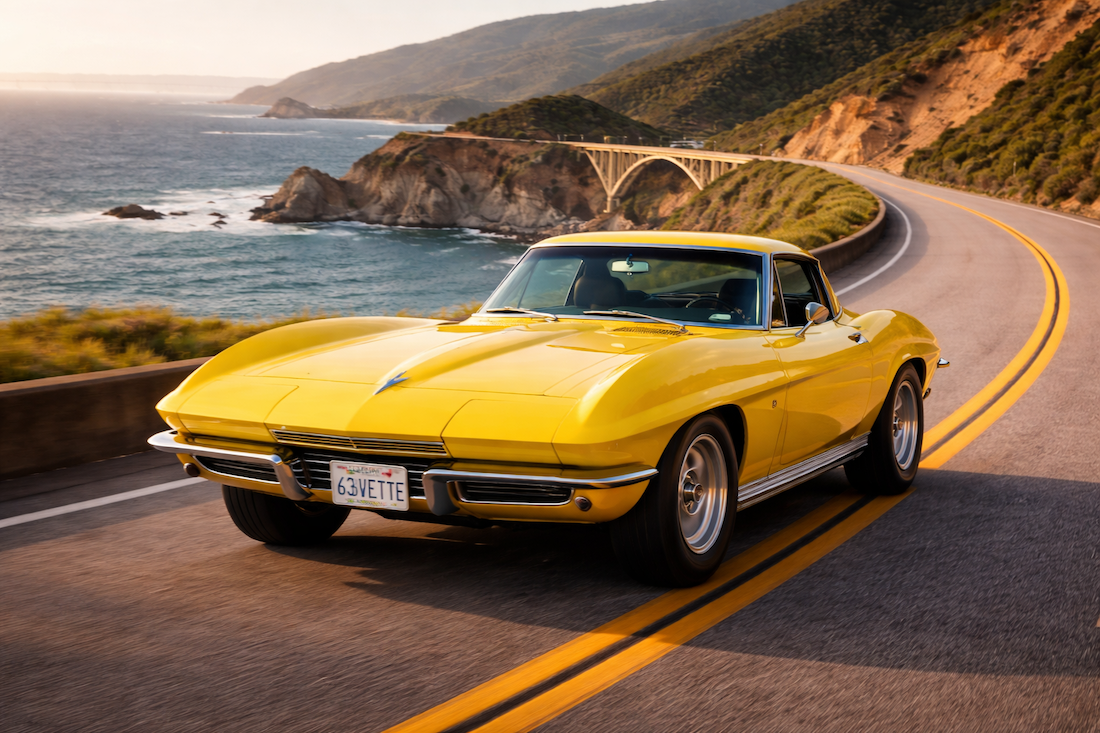
Form Follows Function
Under the skin, Corvette engineer Zora Arkus-Duntov ensured the car finally had the performance abilities to match its looks. Independent rear suspension replaced the old solid axle, significantly improving handling. This wasn’t just a dramatically better-looking Corvette—it was a better-driving one too.
But it was the design that captured imaginations:
-
Hidden headlights gave the front end a clean, purposeful look.
-
Sharp fender creases replaced the rounded forms of the 1950s.
-
Functional side vents hinted at purpose, even when decorative.
-
A tightly wrapped cockpit made the driver feel integrated into the car.
The Influence
Before 1963, American cars were often characterized by chrome, bulk, and ornamentation. After the Sting Ray, there was a noticeable shift toward:
-
Cleaner surfaces
-
More aggressive proportions
-
Aerodynamics
-
Driver-focused interiors
Even beyond America, the Sting Ray helped legitimize the idea that American design could be as sophisticated and as emotionally compelling as anything from Europe.
Its influence can be seen in everything from mid-1960s muscle cars to later generations of sports cars worldwide. The idea that a car could be both visually dramatic and functionally serious became a new standard that all car makers had to live with.
The Interior
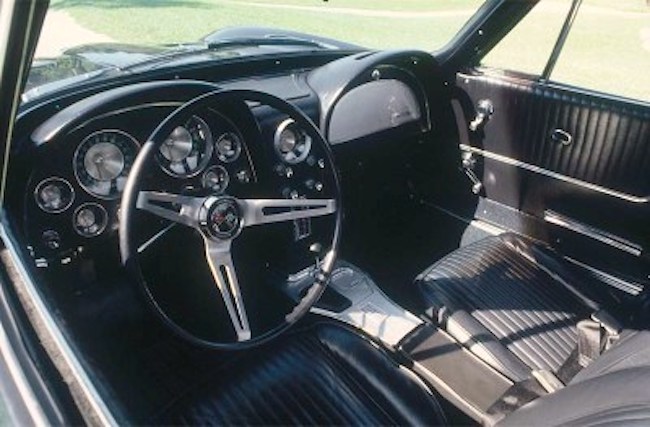
The dual-cowl dashboard wraps around both driver and passenger. Gauges are directly in the driver’s line of sight, controls are purposeful, and the seating position encourages driver engagement.
This driver-centric design would go on to influence sports car interiors for years to come.
Why The Sting Ray Still Matters
The 1963 Corvette Sting Ray endures not because it was perfect, it wasn’t, but because it was bold.
It took risks:
-
That controversial rear window
-
That radical departure from previous styling
-
Engineering changes that prioritized performance over tradition
And it succeeded then and still does today.
Now, it stands as one of the most important automotive designs of the 20th century—a moment when American car design stopped following Europe and started leading.
The 1963 Sting Ray did something rare, it didn’t just reflect its era — it defined it.
Peter Brock
When discussing the design of the 1963 Chevrolet Corvette Sting Ray, the spotlight usually falls on Bill Mitchell and Larry Shinoda. But there’s another person whose influence helped set the Sting Ray project in motion: Peter Brock.
He was not the final stylist of the production car, but something just as important — the originator of the idea.
The XP-87 Stingray Racer: Where It All Began
Brock was a young designer at General Motors—remarkably young, in fact—when he created the design that would become the conceptual idea for the Sting Ray.
In 1959, he sketched what became the Corvette Stingray Racer, a radical, lightweight race car intended to embody pure performance. This car was unlike anything GM had built before:
-
A low, aerodynamic profile
-
A pointed nose and tapered tail
-
Minimal ornamentation—just purposeful shape
-
A strong emphasis on lightness and speed
It looked fast in a way American cars rarely did at the time. More importantly, it felt like a racing machine, not a dressed-up boulevard cruiser.
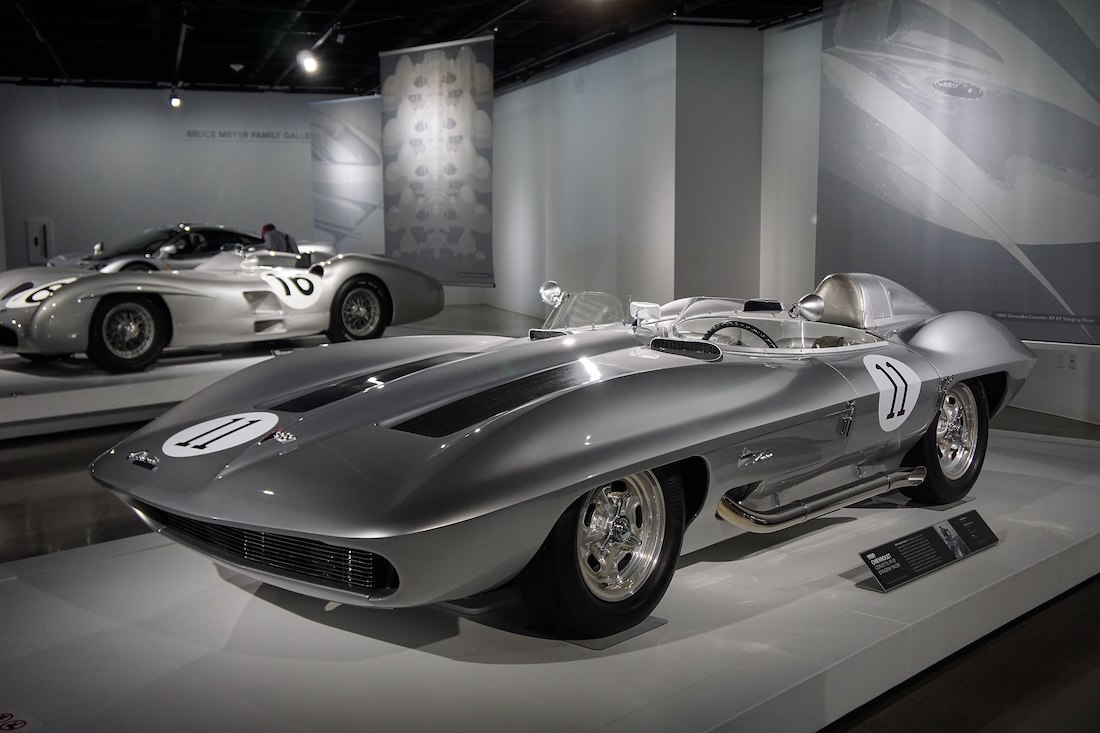
1959 Corvette XP-87 Stingray – photo by Steve Ginn
Bill Mitchell Glimpses the Future
When Bill Mitchell saw Brock’s design, he recognized its potential. The XP-87 wasn’t just a race car—it was a glimpse of what the Corvette could become.
Mitchell championed the car, refined it, and ultimately used it as the design direction for the next-generation Corvette. From there, Larry Shinoda and the GM design team evolved the idea into the 1963 production Sting Ray.
The long hood, the crisp lines, the sense of forward motion even at rest—all of it traces back to Brock’s original concept.
The Bridge Between Race Car and Road Car
What makes Brock’s contribution so important is that he helped change the Corvette’s identity from a stylish but somewhat soft sports car to a focused, performance-driven car with a strong visual appeal.
The XP-87 Stingray Racer created a direct visual and philosophical link between racing and production design—something that would become a defining trait of performance cars in the decades that followed.
Ahead of His Time
Peter Brock’s story doesn’t end with the Corvette. He later went on to design the legendary Shelby Daytona Coupe, one of the most aerodynamically advanced race cars of its era and a serious race winner.
Seen in that light, his work on the Stingray Racer makes even more sense. Brock understood aerodynamics and purposeful form before it became standard practice in American car design.
Why Peter Brock Matters
It would be easy to overlook Peter Brock because he didn’t shape the final production style of the 1963 Corvette. But without him, the car might never have taken the direction it did.
-
He introduced the core idea
-
He connected racing design to road cars
-
He influenced Mitchell’s vision at a critical moment
In many ways, Brock lit the spark and Mitchell and Shinoda built the fire. And that is why Peter Brock deserves a central place in the story of the Corvette Sting Ray.
Let us know what you think in the Comments.
Research, some text and some images by ChatGPT 5.2. Some images compliments of Chevrolet.


See attached file
RESPONSE.pdf
Here is this image.
Upon seeing it in late ’62 I was disappointed that:
-hood vbents were fake
-side vents were fake
-knock offs on hubcaps were fake (though I think they tried real knock offs briefly)
I am sure the Euros laughed at all this fake stuff
I remembere more vividly when I visited the Tech Center and Bill Mitchell took me for a
blast down the tiny test track there in the real original Stingray race car. He drove like a madman!
I was able to travel to Germany in 1989, when the wall came down and newly free East Germans were menacing Europe with their blue smoke trailing Trabants with big grins on their faces. I saw a memorial to Berndt Rosemeyer on the side of the autobahn just outside Frankfurt. I understand that his death came as a result of the engineers not taking into account the aerodynamic impact of the differences in pressure when his streamliner blew under an overpass and lost control. I wonder if this document Mike mentioned might have been borne from that accident…
You are right about the surprise at seeing the big . There was someone working on a cR change in the Corvette. I had a 56 . Still have a 56. .
e Corvette. I had gone over to the Sebring track although no races just to see it when the track was quiet. Did not expect anyone there. But a lot of activity in one of the hangers. It was Zora Duntof and the not yet released new
Corvette. Preparing it for Road Racing. Dontof was upset that I might sell a photo in advance of the release. Convinced him they were ok . I had been putting up with abuse by flat caps with string back gloves and their 4 cylinder MGs and Triumphs. Once was not sure I could get in a Sports Car Club meeting because I had a Corvette. Although the 56/57 Corvettes were beating 300 SLs on American tracks. The Corvette Duntof was working on did have disc brakes and independent rear . All arguments against the C1 Corvette. Note: Those C1 Corvettes are still raced today and are much lighter with the V8 engines about 2400 lbs or less and mine with 610 HP can do well.
Mike,
The 1963 Corvette Sting Ray is my favorite car of ALL TIME!!!! It and I came out of the oven in 1963. The only flaw in the car that I despise is the fake vent decals in the indentations in the hood. They removed the decals but kept the indentations for the ’64 hood, and from then on you had a smooth hood.
I was always familiar with that amazing jet fighter cockpit interior of the Sting Ray, but when at a car show and saw a ’63 Buick Riviera GS there for the very first time, I noticed that it, too, had sort of a jet fighter cockpit interior that really impressed me.
My dream one day is to have a ’63 Corvette Sting Ray Split-Window Coupe and a ’63 Corvette Sting Ray Convertible.
Glenn in Brooklyn, NY
Mike: I’m wondering if the C2 Corvette had any impact on Franco Scaglione when he designed Mr. Lamborghini’s first 350 GT. The pop up headlights, no pontoon fenders containing faired-in headlights, the fastback roof line. It looked nothing like contemporary Ferraris, Maseratis and Aston Martins.
As it was introduced at the Turin Auto Show one year after the Sting Ray was launched, one can speculate on it’s impact on Scaglione. Great designers are always inspired by the designs of others.
My understanding is that Bill Mitchell was also inspired by Boano and Pininfarina Abarth cars in the mid-1950s (see page 95 of Ludvigsen’s Corvette – America’s Star Spangled Sports Car) when he assigned Pete Brock to design to stillborn Q-Corvette. His design led to the Sting Ray racer and then to the C2 production Sting Ray. That Brock was able to create a fresh, new and unique design while influenced by the designs of others is a tribute to his incredible talent and foresight.
A female Gym teacher , Mrs. Hall had a brand new split window fuel injected Corvette. Every boy at school was taken aback .Not often did one see a girl driving such a car. No tonly did we desire her car….but she also. She was a KNOCK out beautiful woman. I’ll bet any of us still alive that attended Birmingham H.S. in Van Nuys ,Caifornia remember them both well.
By the way. Zora Arkus Duntov should have mentioned . Without Duntov the Corvette never would have made it to the high level that it ultimately did. The XP-87 would not have been what it was without him