by Mike Gulett –
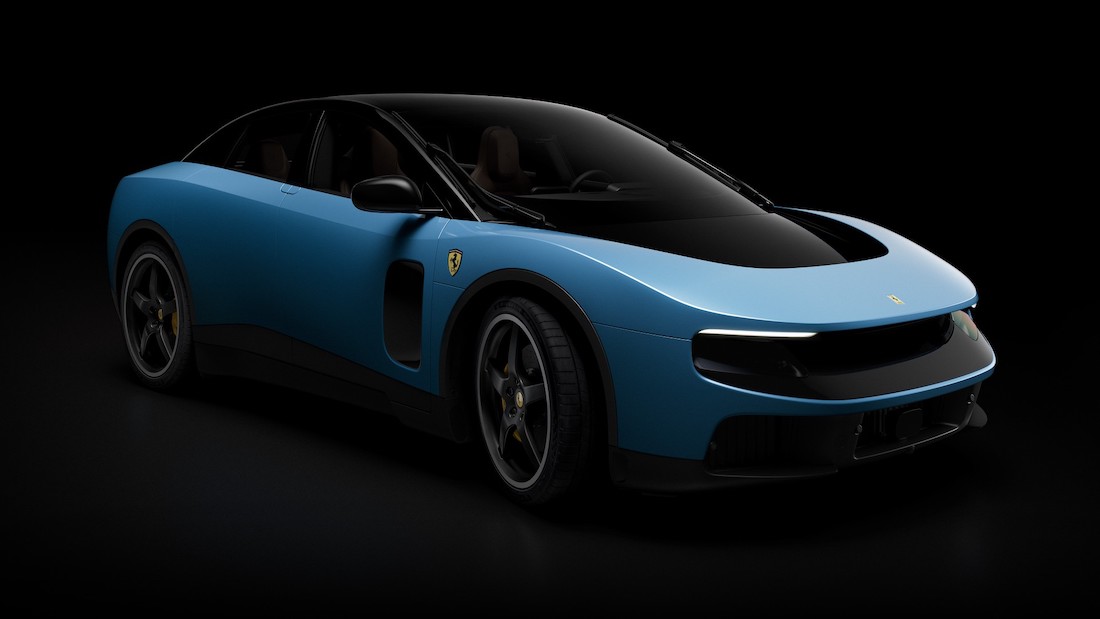
Are we running out of unique car design ideas? This is a question I have asked myself recently, especially after looking at pictures of the new Ferrari Luce.
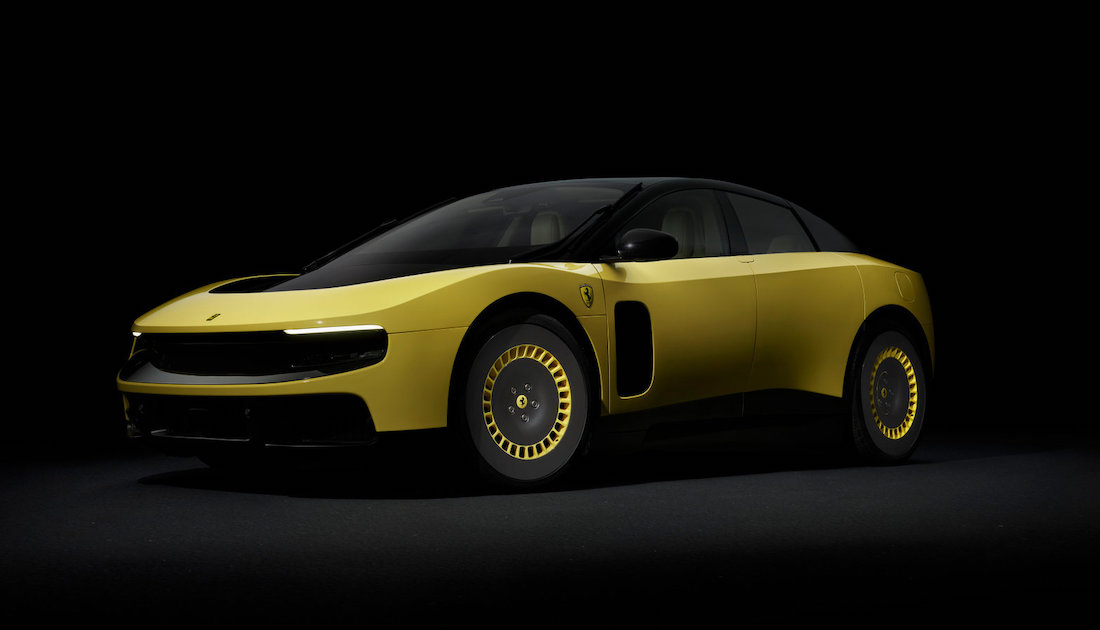
Ferrari Luce
Looking at the history of automobile design, many of the major visual themes have been explored, maybe completely:
- The flowing Art Deco streamliners of the 1930s: Chrysler Airflow.
- The chrome-and-tailfins of the 1950s: many Cadillacs.
- The muscular performance shapes of the 1960s and 1970s: Ford Mustangs and Chevrolet Camaros.
- The beautiful sports car shapes of the ‘60s and ‘70s: Jaguar E-Type.
- The wedge-shaped supercars: Lamborghini Countach.
- The aerodynamic, rounded forms of the 1980s and 1990s: Porsche, Ferrari and others.
- The minimalist EV aesthetic: Tesla and others.
After more than 130 years of designing and building automobiles, car designers are working within a well-explored style library. It is more and more difficult to create something new.
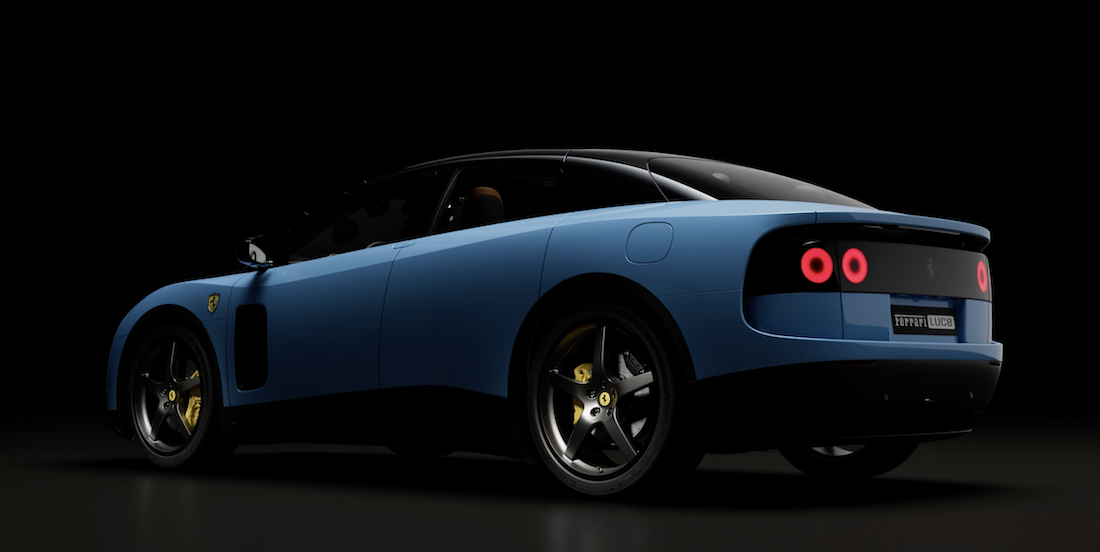
Ferrari Luce
The technical constraints also must be accommodated. Modern cars must satisfy crash regulations, pedestrian safety standards, aerodynamic efficiency, battery packaging requirements, and manufacturing cost targets. These limitations and requirements guide many designs toward similar looks.
Ferrari Luce
The new Ferrari Luce is a good example of why we may not be running out of design ideas but may be running out of good design ideas. The negative reaction to the Luce demonstrates just how difficult it is to introduce a genuinely different Ferrari design in a world where Ferrari lovers have strong expectations of what a Ferrari should look like.
- It isn’t a traditional mid-engine Ferrari.
- It isn’t really a sedan.
- It isn’t quite a wagon or shooting brake.
- It isn’t an SUV like the Ferrari Purosangue (although it could be considered a small SUV).
Instead, Ferrari and the design team led by Jony Ive and Marc Newson followed an architectural approach enabled by an electric drivetrain, emphasizing aerodynamics, cabin space, and a sort of teardrop shape.
Many Ferrari lovers have criticized the Luce because it does not resemble previous Ferraris. Some designers and collectors believe that it lacks the emotion associated with Ferrari’s long partnership with studios such as Pininfarina.
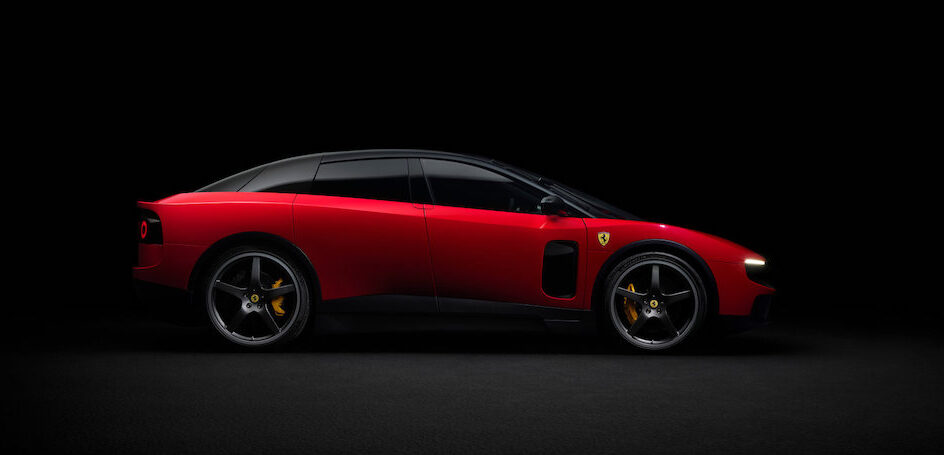
Ferrari Luce
The Luce raises an important question:
When enthusiasts say they want “new and different,” do they really mean it?
History suggests the answer may be “no”.
Some cars that were initially criticized for being too radical later became icons:
- Citroën DS
- Lamborghini Countach
- Porsche 928
- Ferrari FF
All were controversial when introduced. Today they are recognized as trend setters.
Whether the Luce ever joins that list remains to be seen. Its success may depend less on its styling than on whether Ferrari owners come to see electric propulsion and a new design language as compatible with the Ferrari experience. Ferrari is positioning the Luce as an expansion of the brand rather than a replacement for its gas powered cars.
It is possible that fifty years from now enthusiasts may look back at the Luce the way we now look at the Citroën DS or Porsche 928—not as a car that followed any tradition but as a car that created a whole new tradition. This may come true for the Luce but I have my doubts. Can we wait fifty years to learn to appreciate the Ferrari Luce?
The Ferrari Luce is more likely to wind up in the same category as the Ford Edsel and the AMC Pacer – bad designs when new and still bad designs decades later.
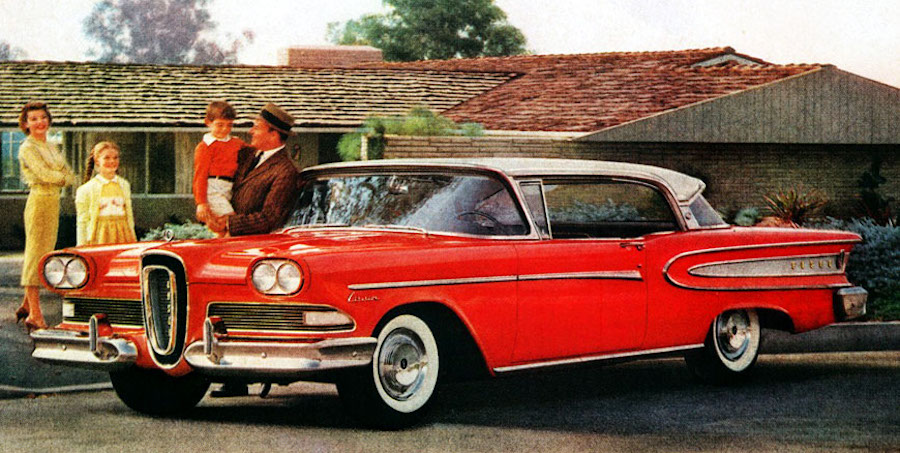
Ford Edsel
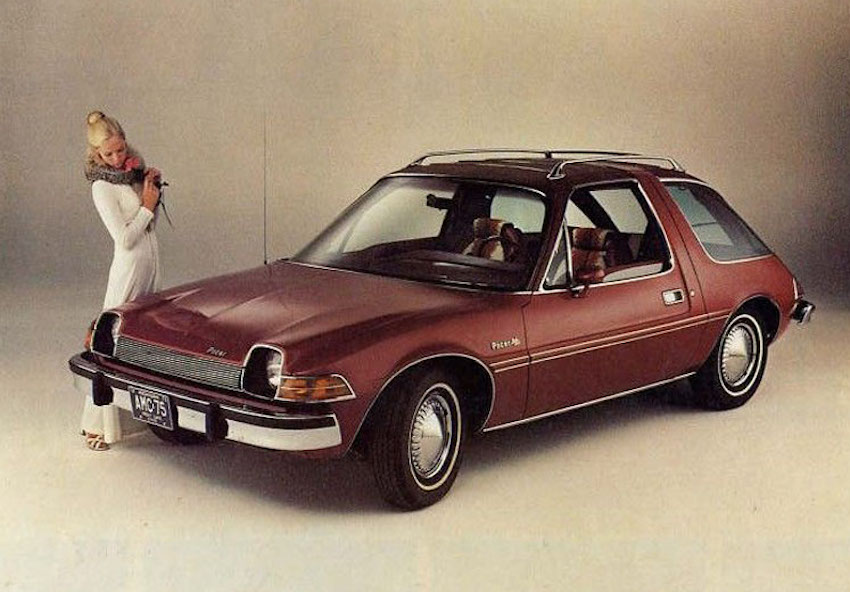
AMC Pacer
What do you think – should the Ferrari Luce be thought of in the same category as the Citroën DS and Porsche 928 or the Ford Edsel and AMC Pacer?
Let us know what you think in the Comments.

Research and some text by ChatGPT 5.2.
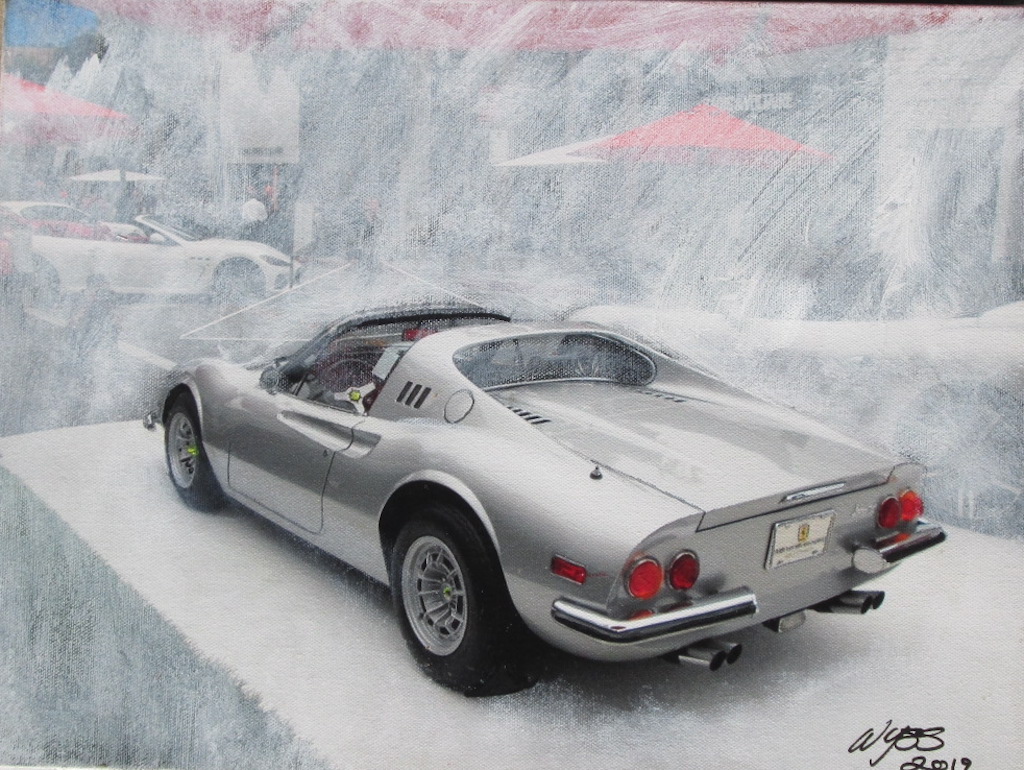


Last interesting car from Ferrari is the F 40.
This design and its price does not make me desire to own one. I get the sense of a banal equality.
WHY DID THE DESIGNERS BELIEVE THAT THEY WERE THAT GREAT AT DESIGNING !!!!!!!!!!!!!!!!!!!
What happened to listening to the customer. For decades manufacturers held events like the GM motorama to gauge customers response to new ideas. Today they just build anything without a care if the customer likes it or not. Pontiac Aztec for instance. Just because IPhones are cool doesn’t make them a successful car designers. Personally I’d rather have a clapped out 250 GTE than that brick shown up top.
JOHN,
‘Pontiac gave their customers exactly what they wanted with the Aztec. They did ask them. The only problem was that there weren’t enough of them.
REGARDING FERRARI DESIGN
The cure for cancer is complex, even experts, have difficulty in defining a direction. The same as the case with car design. Ferrari has had a design problem for a long time. Their problem is that they do not look like Ferraris. They are not strong design solutions that clearly represent a historic brand. The new cars that are pictured in this article have the same problem. It isn’t the design, it’s the fact that these cars simply do not look like Ferraris.
WHOSE FAULT IS IT?
The designers get information to move forward from the marketers. They get information from the salesforce, who gets it from the dealers, who gets it from the customers. Ferrari is known as one of the top brands in the world in spite of the fact that Ferraris have not looked like Ferraris for a number of years. The brand is living on the fumes, the idea that Ferrari is number one and it’s wonderful to own one. So what happens when the designers take the information and it’s wrong, or do it in the wrong way.?. We can see that a number of brands have been reinvented lately. Look what happened to Jaguar. It’s OK to reinvent a brand visually, with a design, but you better come up with a better one. You have one shot that may cost $1 billion of investment and if it’s wrong, you go in the dumper like Jaguar.
It appears to me that the Ferrari design staff is no longer skillful enough to come up with cars that look like a Ferrari, executed in a way that attracts buyers. Even the traditional ones. The new cars do not have the passion that the old ones did, expressed in the quality of the design. They are doing a lot of cars and it doesn’t seem as they’re related. There doesn’t seem to be a real aesthetic plan to evolve Ferrari designs. Clearly the magic is gone, and the cars in this article are generic. They’re good looking, they look new as they are based on simplicity as the industry moves away from the Complex forms and shapes that has been the fashion for a number of years now. They will hit a brick wall when they all try to do everything super simple as there is a lot less room there for the crowd in the automotive industry than there was in the complex culture that existed recently.
The bottom line is these designs do not look like Ferraris. If they are to be recognized as the new Ferrari, they’re just isn’t enough substance there that relates to the brand historically. Maybe that’s what they want to do, if that’s the case it appears that the strategy is wrong headed. These cars simply do not look like Ferraris in any shape or form.